In April, the carts at the edge of the Beşiktaş market fill up with pale green half-spheres floating in salted water. Artichoke hearts, already trimmed. A vendor sits behind them with a small sharp knife and hands stained dark from the oxidation, working through a pile of whole artichokes and dropping the cleaned bases into the water one by one. Most visitors walk straight past without registering what they are seeing.
This is a post about those moments. The carts, shop windows, aktar displays and butcher counters you pass in Istanbul that are doing something specific, something the city has been doing for a very long time, and that nobody stops to explain. I have tried to describe each thing the way it actually looks on the street, not the way a guidebook would frame it.
Trimmed artichoke hearts (enginar)
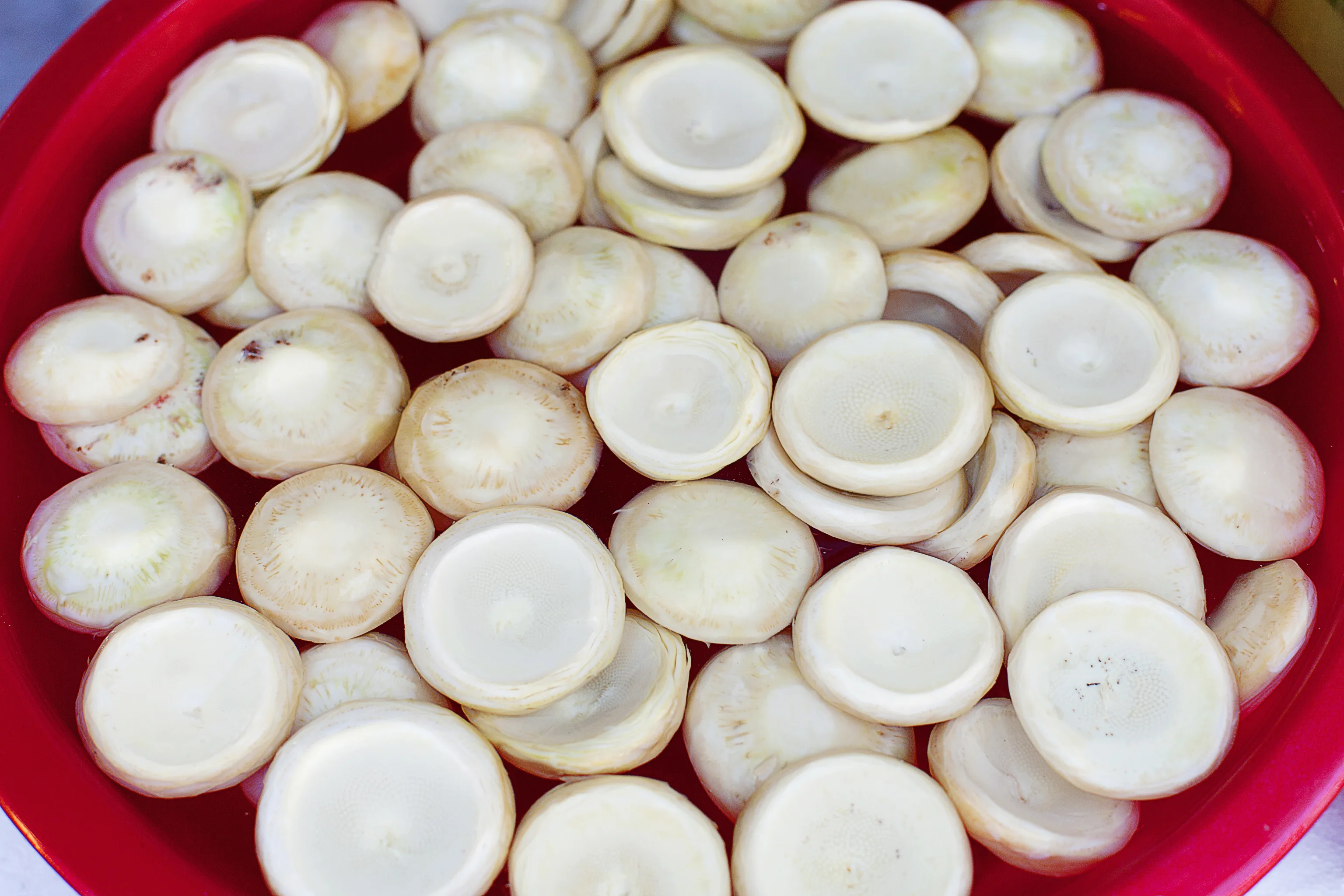
Pre-cleaned artichoke hearts in lemon water. April through May, most neighborhood pazars have them.
This is a spring thing. From late March through May, vegetable carts in Beşiktaş, Kadıköy, and most neighborhood pazars will have a bucket or tray of pre-cleaned artichoke bottoms sitting in lemon water. Cleaning an artichoke is an annoying job, so the vendors do it for you. A kilo runs around 150 lira. They go into zeytinyağlı enginar, artichokes braised in olive oil with fresh broad beans, potato, dill and a squeeze of lemon. It is one of the best things you can cook with a few ingredients, and it only really tastes right when the artichokes are this fresh.
Most visitors assume they are looking at some kind of pickle. Vendors do not usually explain.
Kokoreç stalls
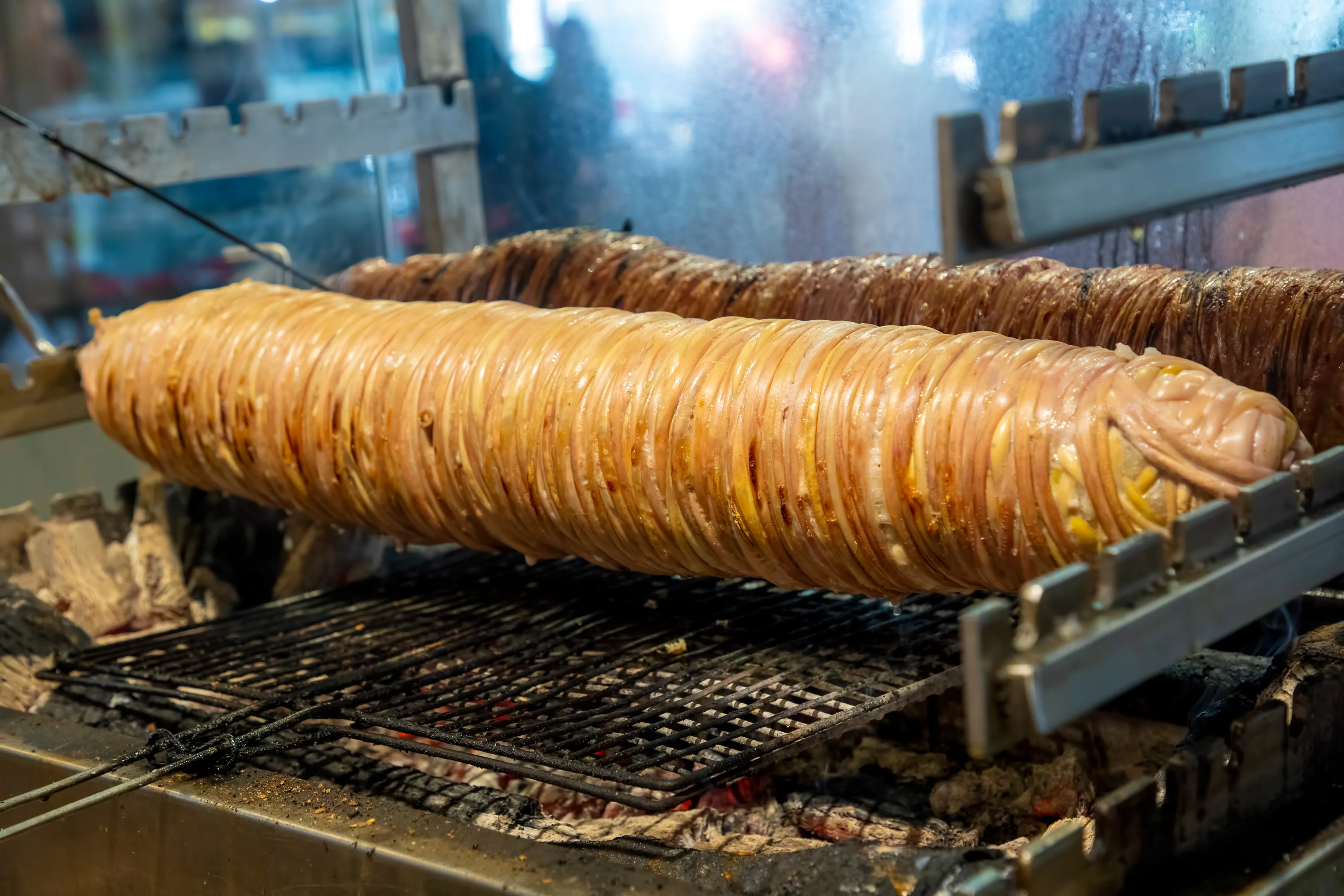
Kokoreç rolls over a wood fire. The smell is charred lamb fat and black pepper.
You see them in Beyoğlu, in Kadıköy, in any working-class neighborhood at 2am. A glass case with a long rotating spit, around which something brown and tightly-wound is slowly turning. That is seasoned lamb or sheep intestine, trimmed of fat, wrapped around a skewer of offal and cooked for hours. When you order, the cook pulls a section off, seasons it with pul biber, oregano and salt, and chops it on a heavy wooden board with two knives moving in rhythm. The smell is charred lamb fat and black pepper.
Kokoreç is late-night food, especially after drinking. It is also a dish most tourists notice, misread as döner, and avoid. See the street food ranking for where to actually try it.
Dried eggplants and peppers on strings
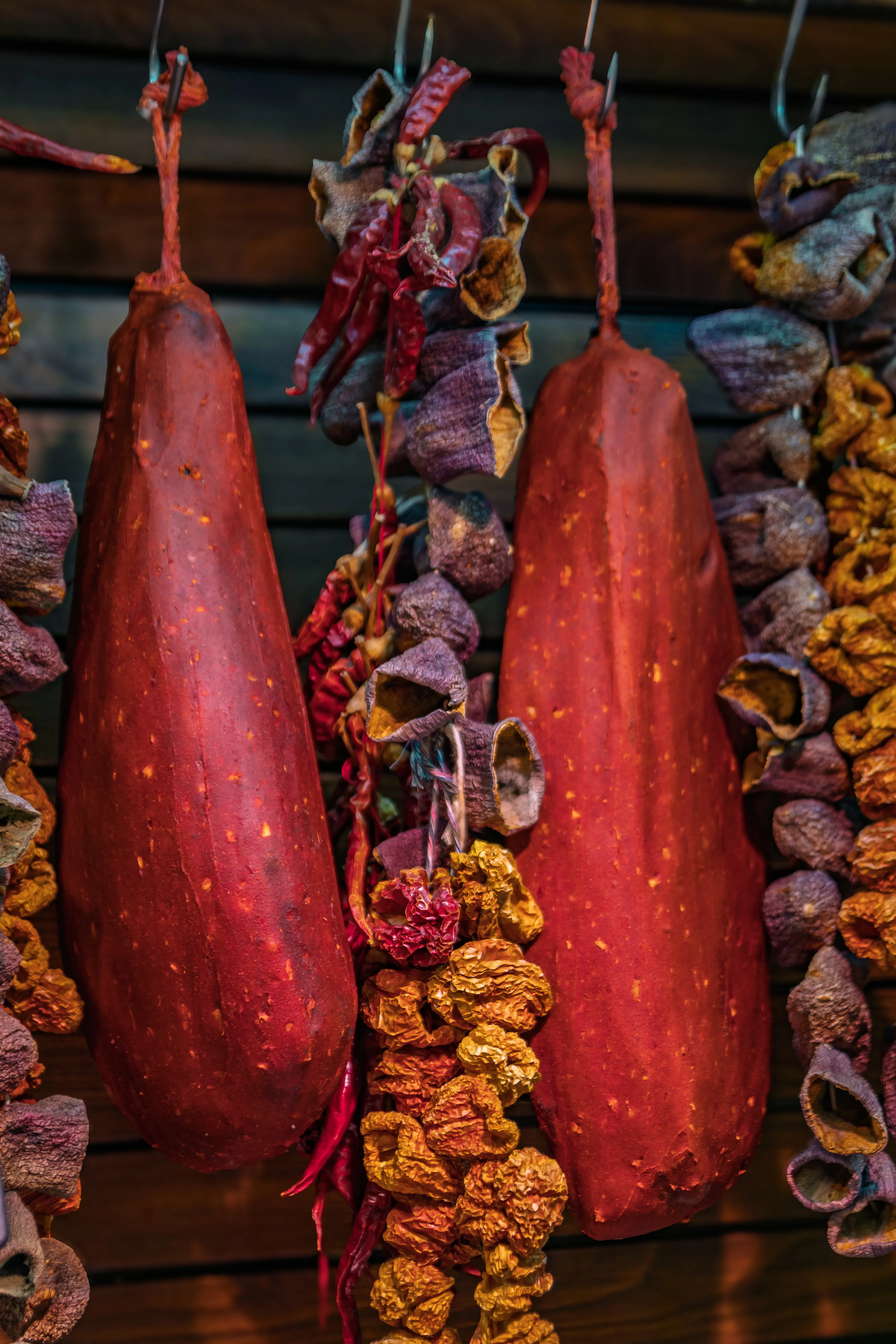
Sun-dried eggplants and peppers threaded on strings. In winter, these become kuru dolma.
Outside small dry-goods shops (aktar) and in the back lanes of the Spice Bazaar, you will see garlands of hollowed, dried vegetables hanging from the ceiling. Long strings of eggplants, red peppers, sometimes okra. Each vegetable has been trimmed, cored, threaded through with a needle, and hung in the sun to dry through summer and autumn.
In winter, you soak them in hot water to rehydrate, then stuff them with a rice-and-meat filling. The result is kuru dolma, dried-vegetable dolma, which is a completely different dish from the fresh-vegetable version most visitors have eaten. Gaziantep and the southeast are the regions this tradition belongs to, but Istanbul markets carry them because half the city has grandparents from somewhere else.
Dried sheep intestines
At older butchers and at some aktars near Tahtakale, you will find bags of what looks like bleached pale rope, coiled. This is sheep intestine, cleaned, salted, and dried. It is used as a casing for homemade sucuk, or stuffed with rice and spices to make bumbar, a regional dish that rarely shows up on restaurant menus but is a home-kitchen staple in parts of central Anatolia.
The smell at these counters is specific. A little sharp, a little animal. If you were not looking for it, you would probably register it as something vaguely unpleasant and keep walking.
Kabak lifi (pumpkin fiber)
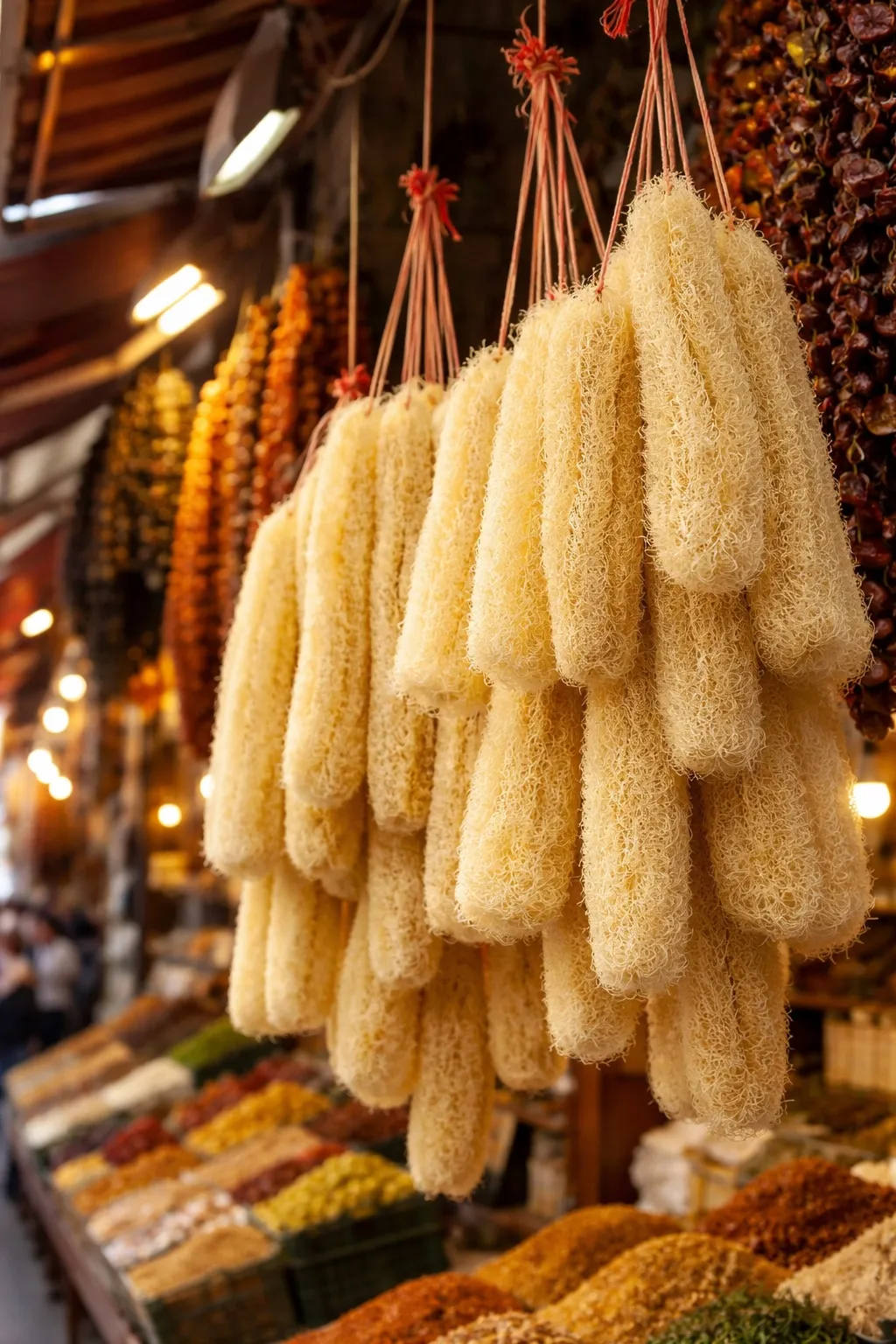
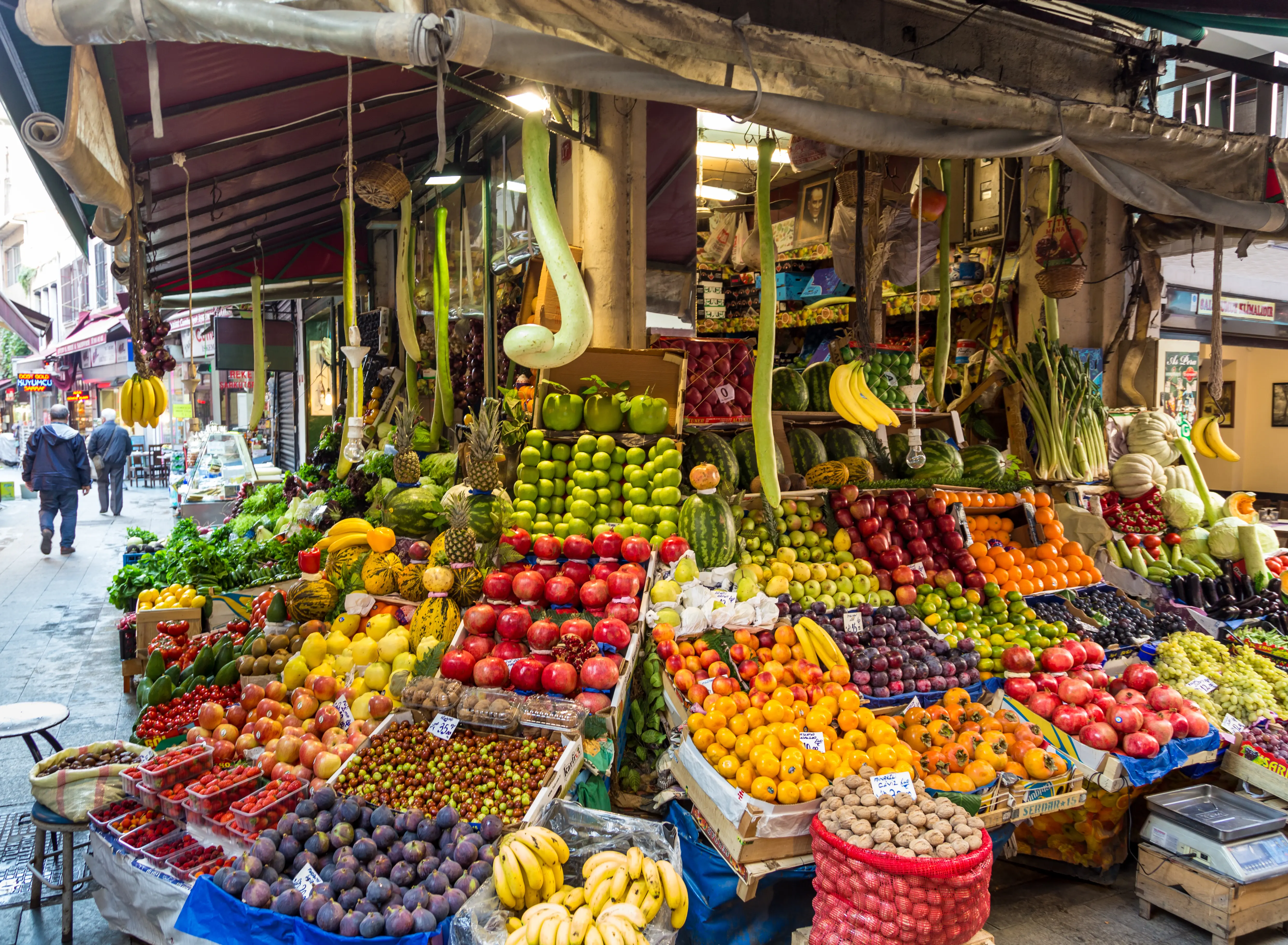
Dried luffa gourds hanging outside a bazaar shop. These are bath scrubs, not produce.
This one surprises people when they find out what it is. Nets full of pale, skeletal, vaguely vegetable-shaped objects hang outside hardware shops, corner stores, and many pharmacies, especially near hamams. They look like dried produce. They are actually the internal fiber of the luffa gourd, and they are bath scrubs. You wet them, rub them against your skin until they soften, and use them to exfoliate. Turkish mothers have bought these for their children for generations.
There is a decent chance you already own a luffa sponge. In Istanbul, it hangs on the street, unprocessed.
Salep powder
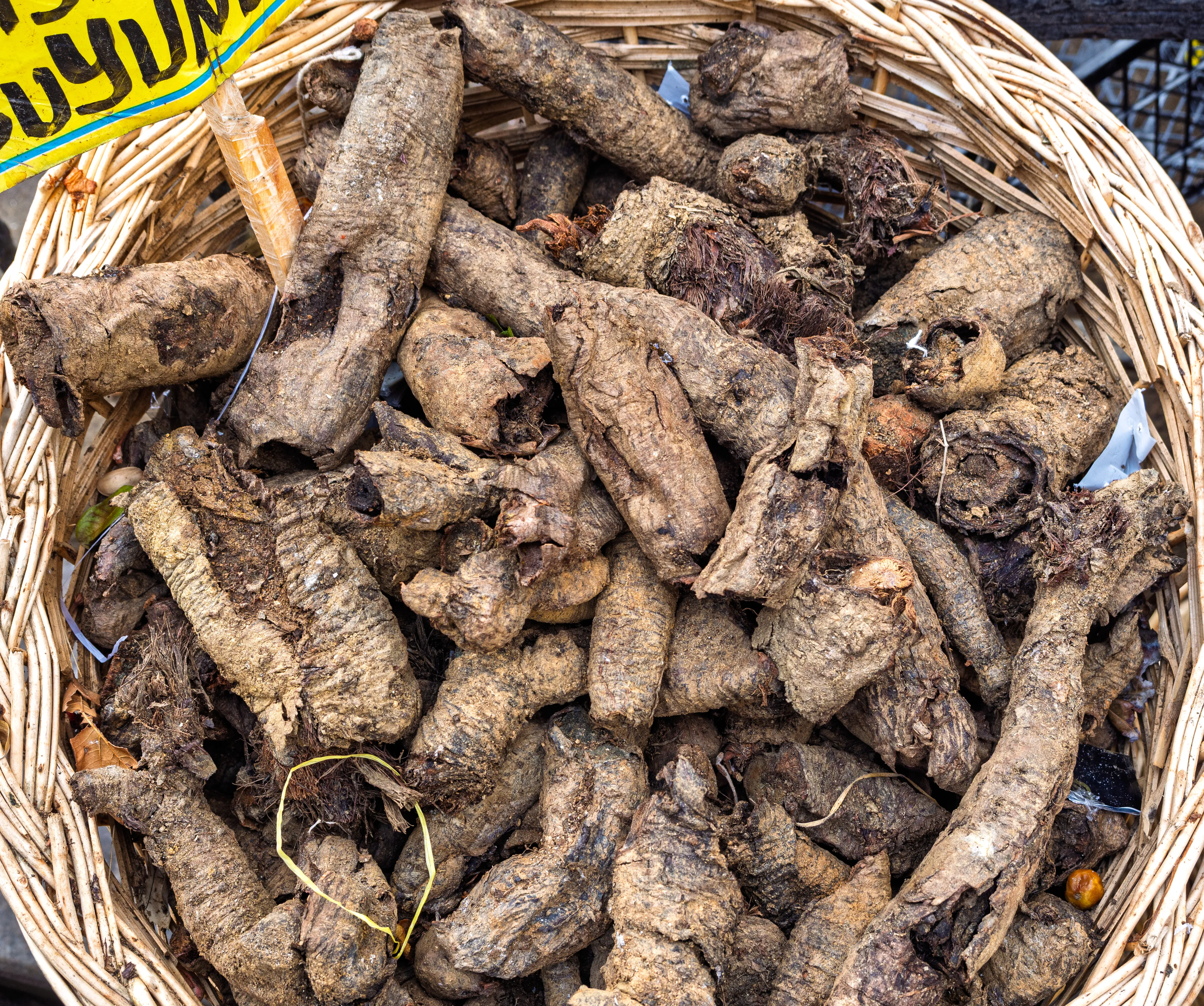
Dried wild-orchid tubers. The real ones are rare, legally restricted, and expensive.
Inside the Spice Bazaar, and at proper tea-and-coffee shops, you will see small tins and glass jars labelled salep. It is a fine, slightly grayish powder, and it is ground tuber of a specific species of wild orchid that grows in the mountains of Anatolia. In winter, salep is dissolved in hot milk with sugar and cinnamon and sold in small cups by street vendors and tea stands. The drink is thick, almost viscous, faintly earthy. It is also the traditional base for Turkish ice cream, which is why the ice cream is stretchy.
Most “salep” sold on the street now is a cornstarch-based imitation. Real salep is restricted because wild harvesting has threatened the orchid, and genuine powder runs around 400 lira for 100 grams. If it is cheap, it is not the real thing.
Tarhana
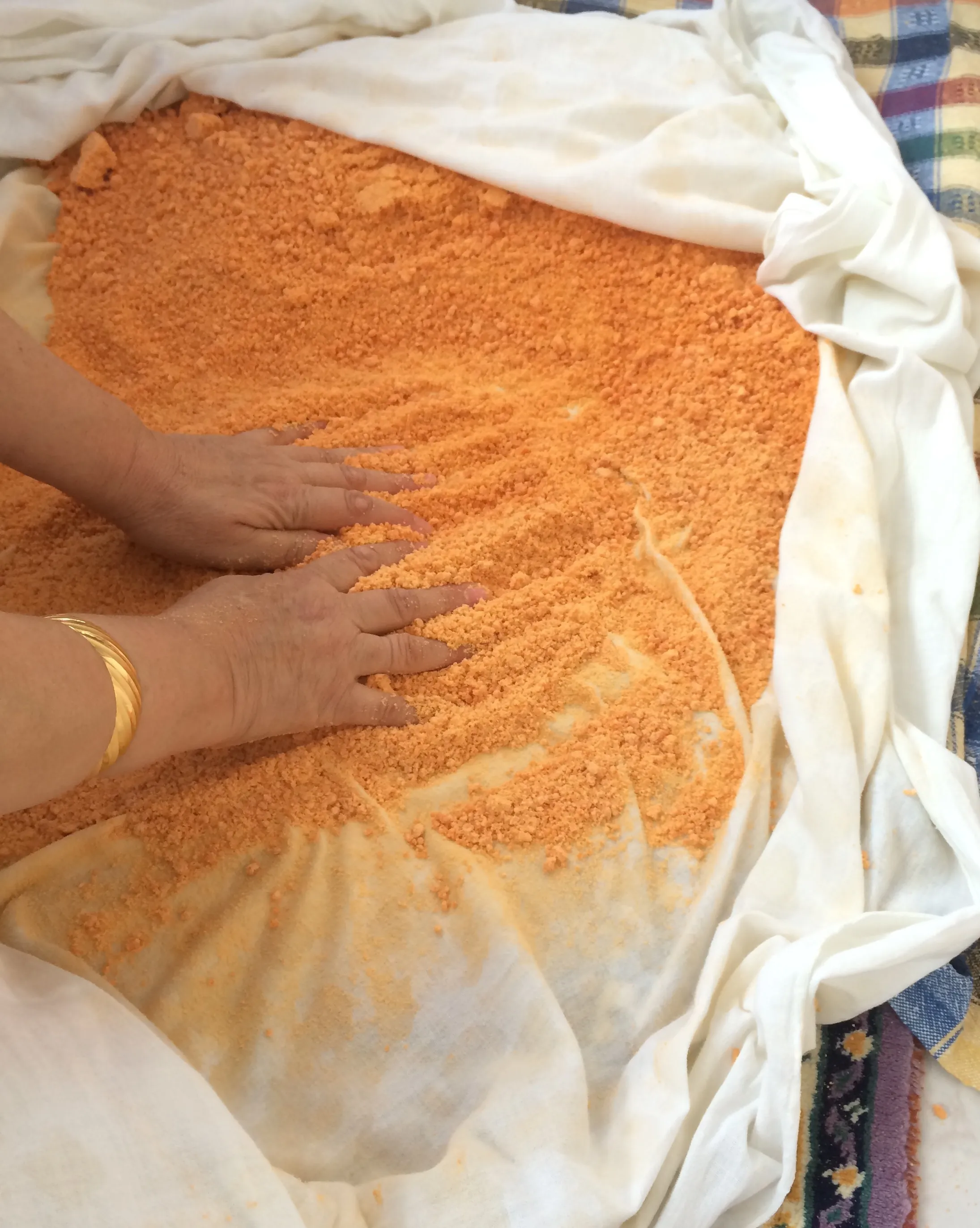
Tarhana, drying on cloth. This looks like nothing and tastes like a winter kitchen.
At village-style shops and most older markets, you will find hessian bags or clear plastic bags containing chunks of something that looks like crumbled stale bread in odd colors, reddish-brown, yellowish, sometimes pale green. This is tarhana: a fermented mixture of yogurt, tomato, red pepper, herbs and cracked grain, dried in sheets on cloth and broken into pieces. It is one of the oldest preserved foods in Anatolia.
You reconstitute it with hot water to make tarhana çorbası, a tangy winter soup that tastes like very little else and is a fixture of household kitchens across the country. Every region has its own recipe, every grandmother her own. Tourists walk past it because it photographs badly.
Sucuk in butcher windows
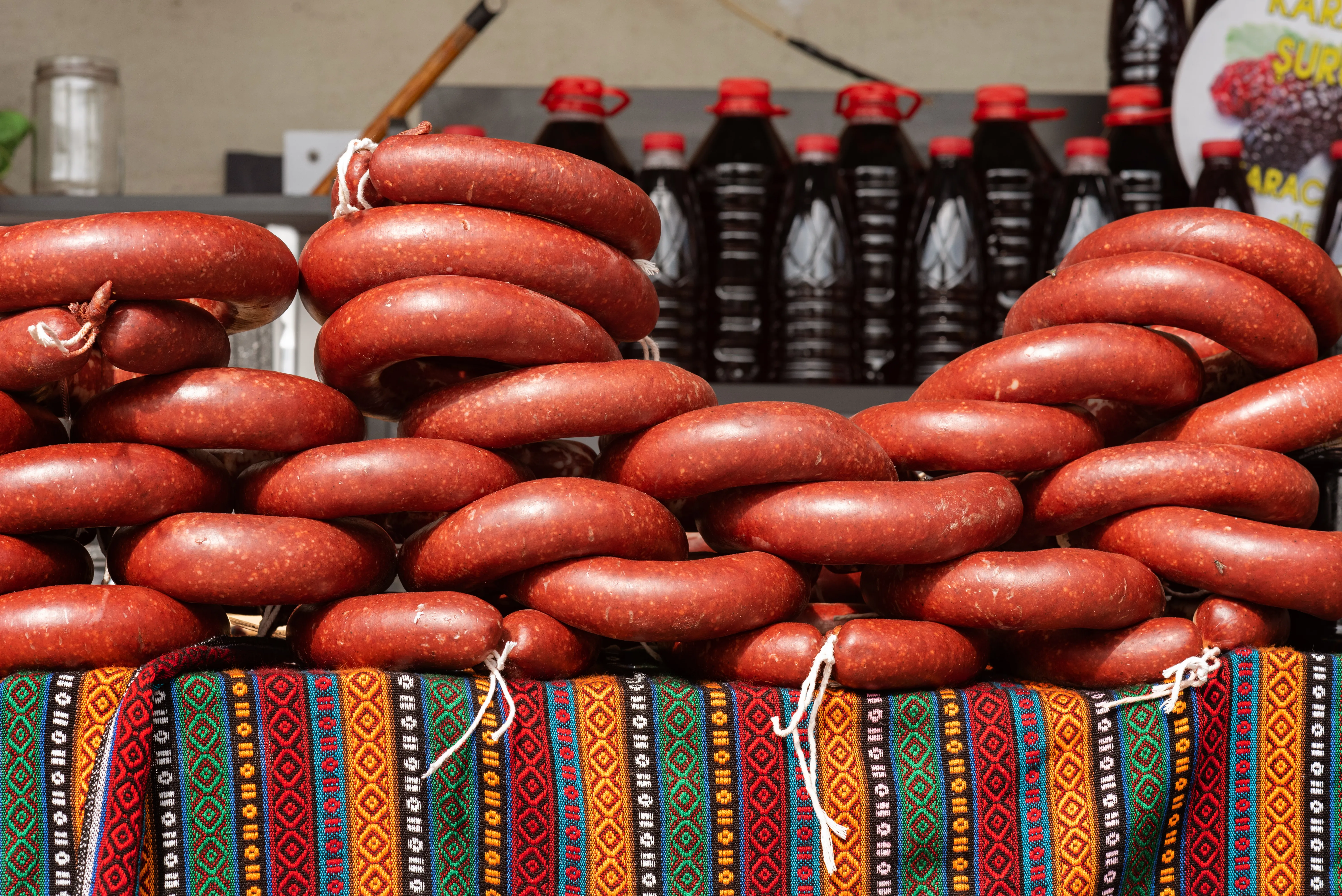
Sucuk, hanging for cure. The white bloom on the casing is a feature, not a problem.
The dark red, wrinkled, horseshoe-shaped sausages hanging in every good butcher’s window are sucuk. Dry-cured beef (sometimes with lamb), heavy on garlic, cumin, sumac and red pepper, hung for weeks until firm. The better versions have a visible white bloom of mold on the casing, which is the sign of a proper cure rather than a problem.
Sucuk is not a supermarket sausage. It is thinner, drier, and much more assertive, and the Turkish way of eating it is sliced into thin rounds and fried with eggs at breakfast. If you see sucuklu yumurta on a breakfast menu, that is the dish.
Pastırma
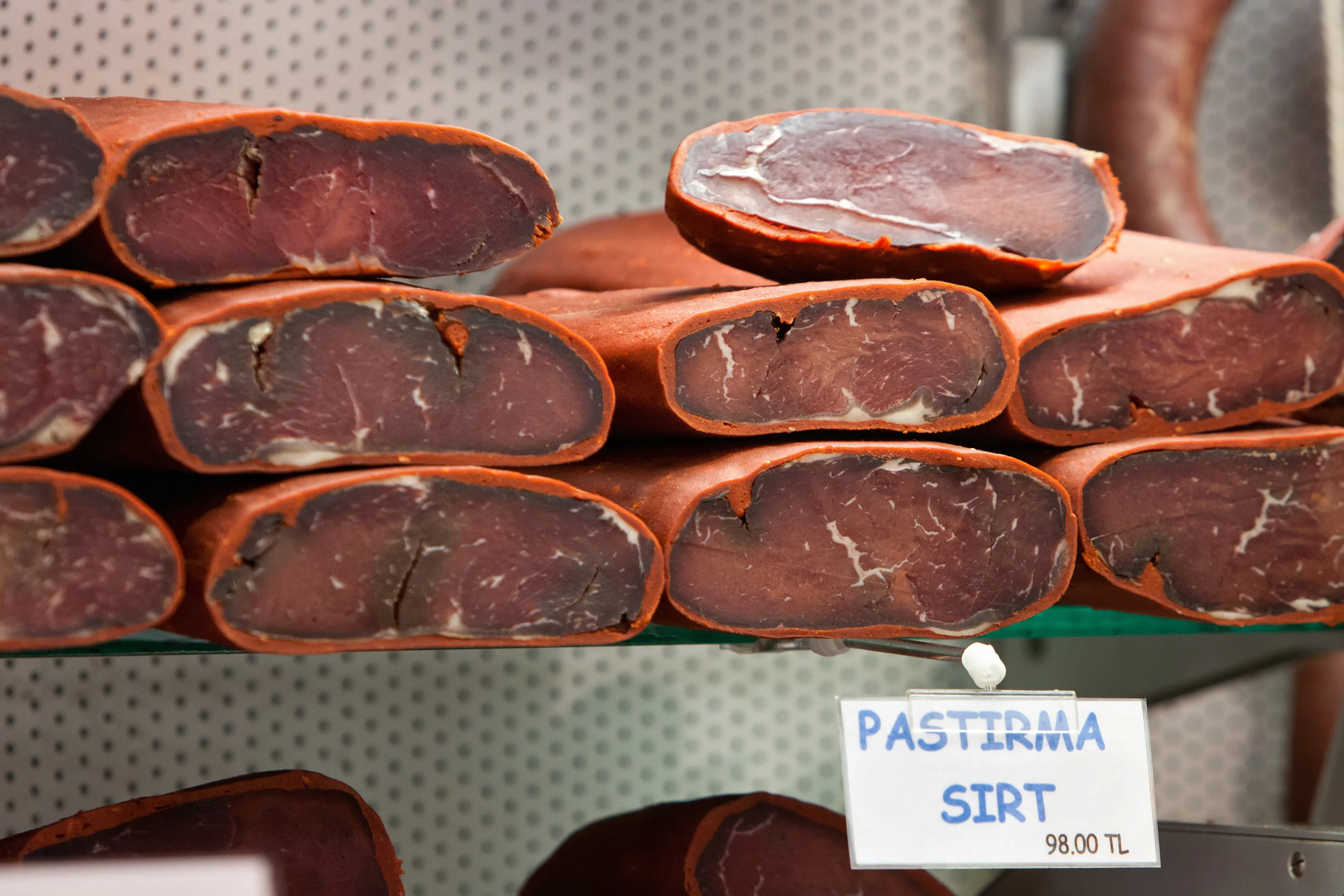
Pastırma: air-dried beef with a dark çemen paste crust. Cut paper-thin and eaten with eggs or bread.
Next to the sucuk in the same butcher shop, you will often see slabs of dark red meat coated in a thick brown-red crust. This is pastırma: beef, usually from the loin, salted, pressed, then coated in çemen, a paste of garlic, fenugreek, cumin and paprika, and air-dried in mountain winds. Kayseri is the classic region for it.
Pastırma is sliced very thin, almost translucent, and is eaten on bread, folded into omelettes, or cooked into kuru fasulye, the national slow-cooked white bean dish. The word “pastrami” borrows from it, but the two foods are not the same thing.
Turşu juice
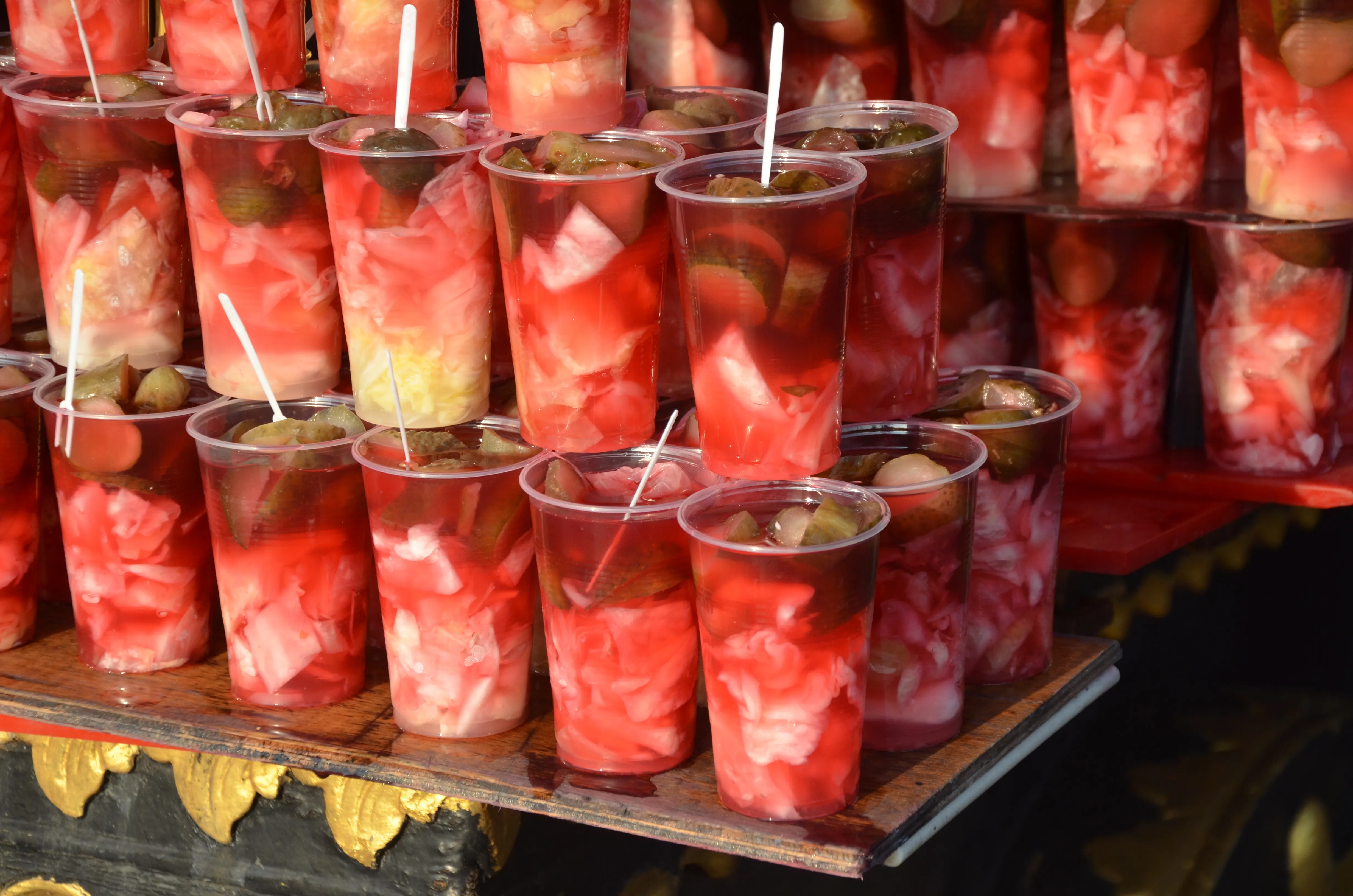
Turşu suyu, sold by the glass. Salty, sour, electric. A hangover cure by 10am.
Walk into any older Istanbul neighborhood and you will find a turşucu, a pickle shop. The window is stacked with large glass jars in a dozen shades of pink, yellow, green and deep red: cabbage, carrot, cucumber, green tomato, unripe plum, turnip, stuffed peppers, chilis. You can buy the vegetables by weight. You can also buy the juice on its own, served in a plastic cup or glass, usually dark red from the chili pickle brine, sometimes with a few slivers of pickled carrot in the bottom.
Turşu suyu is a snack, a hangover cure, and a small ritual. Locals drink it standing up. Most visitors do not notice the cups in the fridge.
The simit cart
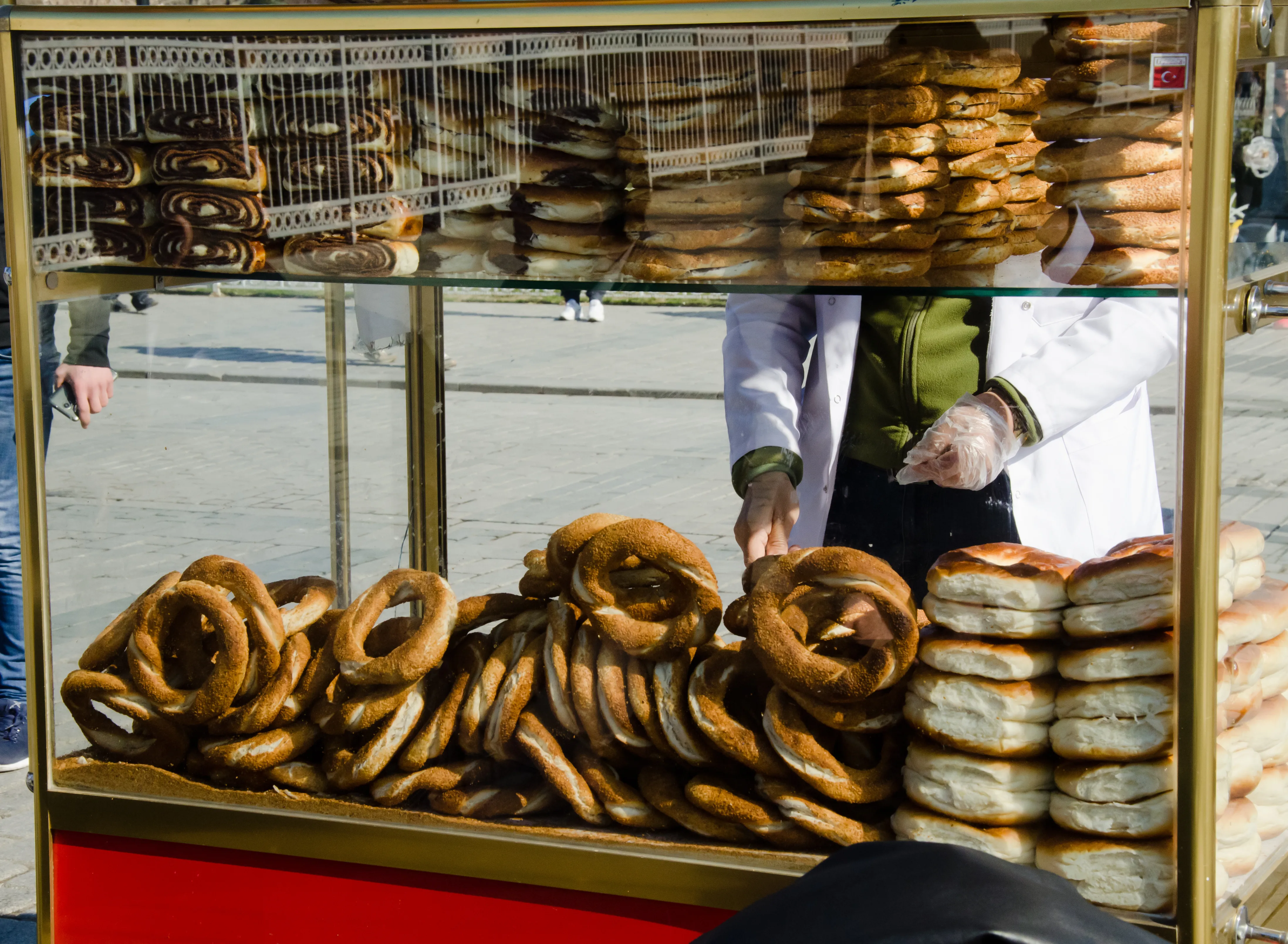
The universal Istanbul red cart. The simits at eye level are fresh; the ones on top have been there since sunrise.
A red pushcart, usually stacked with two or three towers of sesame-crusted bread rings. You see them at every major ferry stop and junction. Simit is so ordinary in Istanbul that nobody thinks of it as street food, which is why it is worth mentioning. A fresh simit and a glass of strong black tea from the çay stand next to the cart costs under two dollars and is what most Istanbullus actually have for breakfast on a weekday morning.
The local way to eat it is plain, or torn open and stuffed with a slice of white cheese (beyaz peynir) from a grocery shop, the bread still warm. Nobody eats it with cream cheese or smoked salmon, regardless of what the airport bakery tries to sell you.
Leblebi
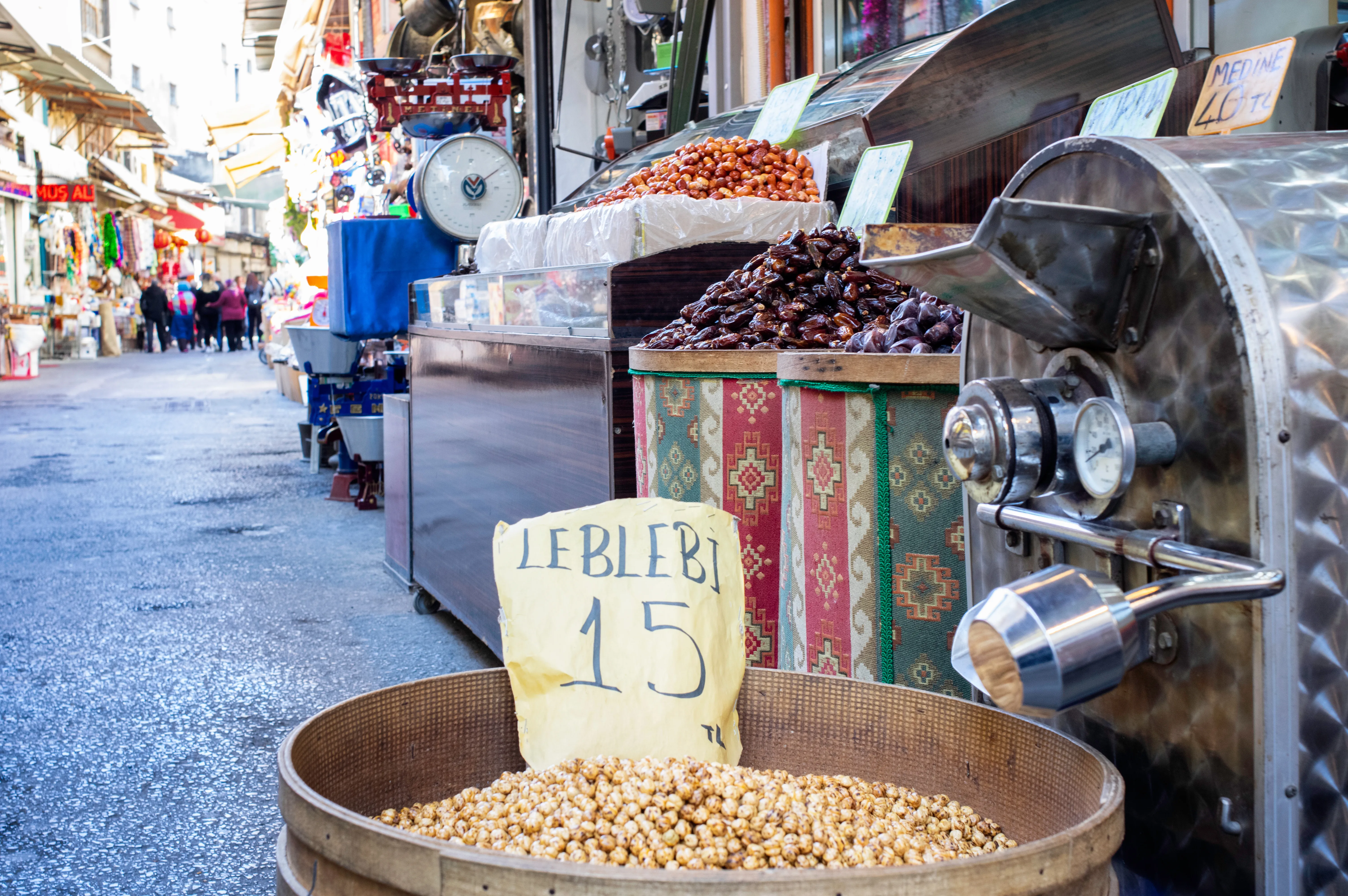
Leblebi, roasted and twice-hulled. Better than almost any trail mix, and cheap.
In the dried-fruit-and-nut shops along Hasırcılar Caddesi and throughout Kadıköy, you will see clear plastic bags of small, pale yellow, slightly chalky spheres. These are leblebi: roasted, hulled chickpeas. They are a standard office-drawer snack, a tea-time accompaniment, and the kind of thing an older relative will always offer when you show up at their apartment.
The texture is crunchy but dry, and they are almost addictively munchable. A kilo costs around 80 lira and lasts weeks. You can get them plain, salted, lightly spiced, or coated in a shell of white sugar or cocoa for children.
Midye dolma trays
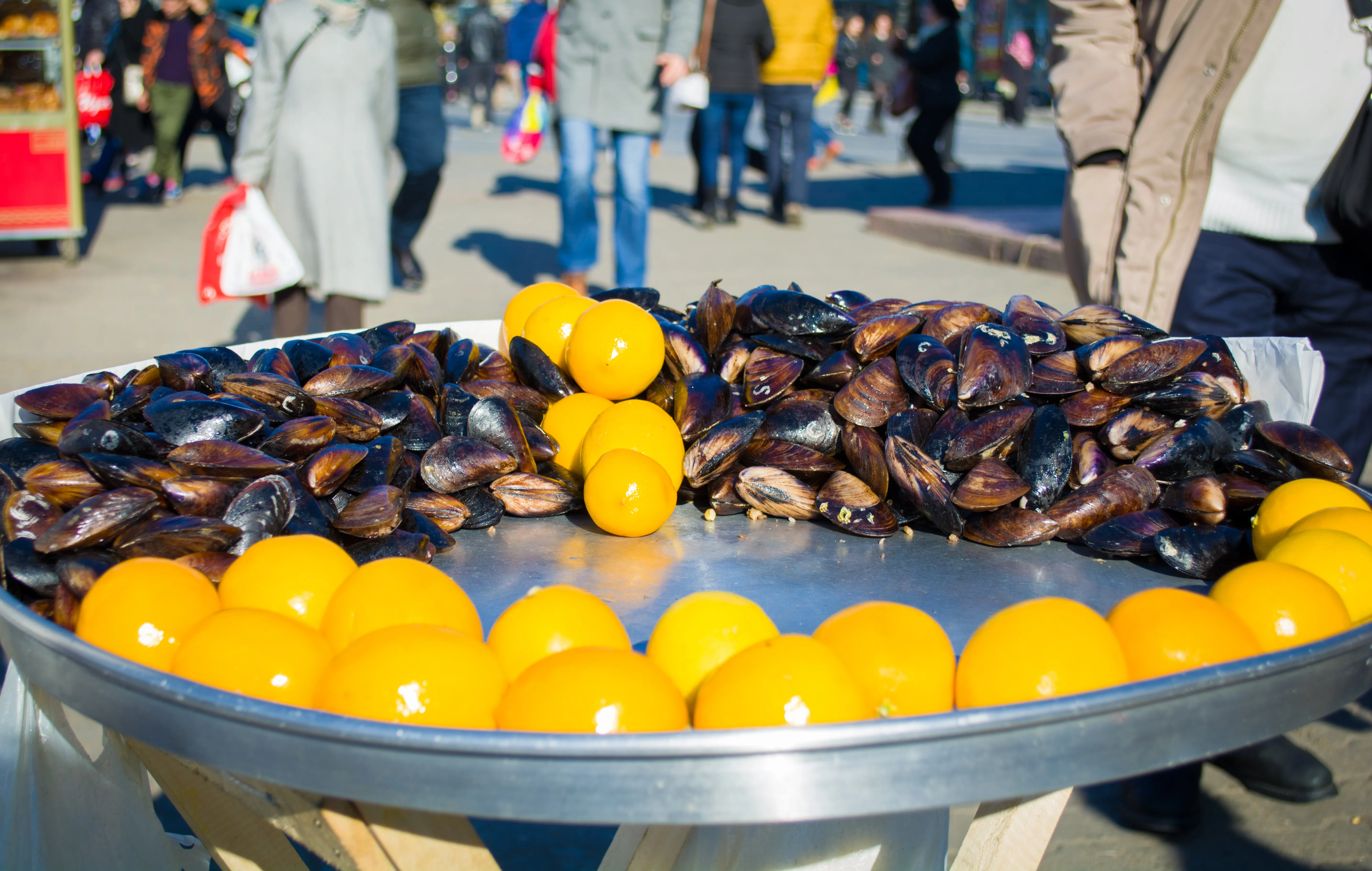
A midye dolma tray, lemons already arranged. The vendor is keeping count of the mussels you eat. So are you.
You have probably seen a street vendor with a cooler-tray of what looks like black, shiny, partially-opened mussels topped with spiced rice. The vendor cracks one open with his thumb, squeezes a lemon wedge over the filling, and hands it to you. You eat the mussel-and-rice off the shell in a single bite and hand the empty shell back.
Midye dolma are cold, which throws visitors who expect a hot mussel. They are also one of the great Istanbul street foods, particularly in Kadıköy and Beşiktaş, and they cost about 70 cents each. The trick is to go to a busy stall with visible turnover and a cold-tray that actually looks cold. If the tray has been sitting in the sun, walk past.
Pekmez jars
In almost every market, you will see dark glass jars of something nearly black, viscous, dense. This is pekmez: fruit molasses, boiled down from grape, mulberry, carob (keçi boynuzu), or pomegranate. It is a concentrated sweetener that pre-dates refined sugar in this part of the world.
Turks eat it with tahini for breakfast (a spoon of pekmez mixed with a spoon of tahini, scraped up with bread), mix it into marinades, and give it to children in winter because the iron content is high. Carob pekmez in particular has a strong, slightly medicinal flavor that takes a few tries. A jar costs 80 to 120 lira and will last half a year.
Chestnut carts (kestane)
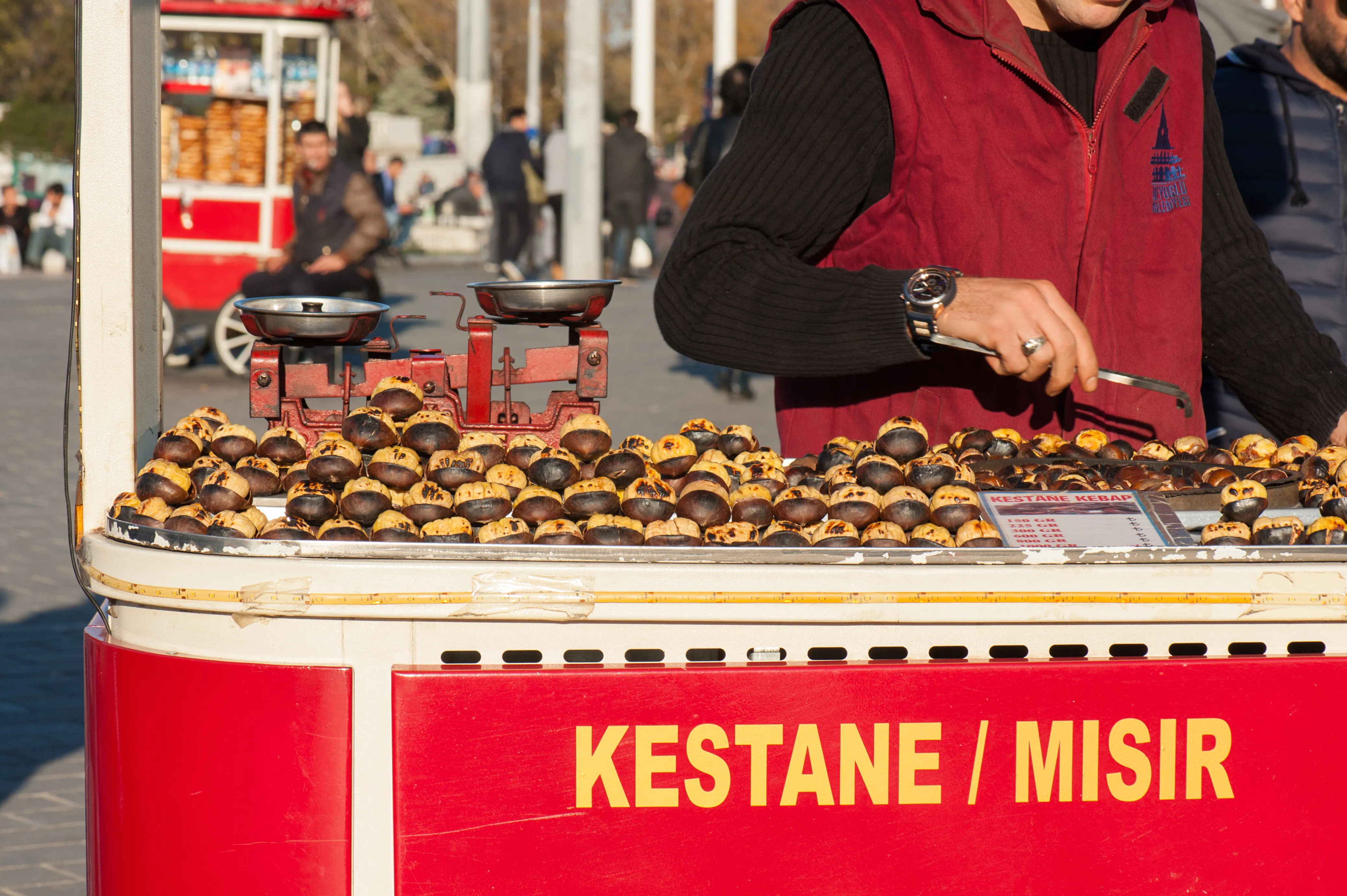
Kestane cart. The smoke from the coals is how you find it before you see it.
These appear in October and vanish by March. Small metal carts with a charcoal brazier and a shallow tray of slit chestnuts roasting above the coals, sending up smoke that you can smell from a block away. You buy a small paper cone for about 50 lira. The shells are hot. You peel them with your fingers as you walk, usually along the Bosphorus or up into Beyoğlu after dinner.
Chestnuts are not exotic. The cart is not marketed at tourists. It is just what a Turkish winter smells like.
The idea with all of this is not to collect a list of things to photograph. It is that once you notice a few of them, the rest start appearing. The dried vegetables on strings, the nets of luffa, the cups of turşu juice behind a pickle counter, the vendor cleaning artichokes at the edge of the pazar. Istanbul keeps most of itself in plain view. Nobody is hiding any of this. You just have to look at the thing in the window and ask what it is for.
For a deeper read on the dishes themselves, the Istanbul food guide covers what is actually on the menu. For the markets and where to buy most of the items above, the shopping guide has the neighborhoods and prices.
Keep reading
This is an editorial review. Some links on this page are affiliate links. If you book through them we may earn a small commission at no extra cost to you. It never changes which tours we recommend.