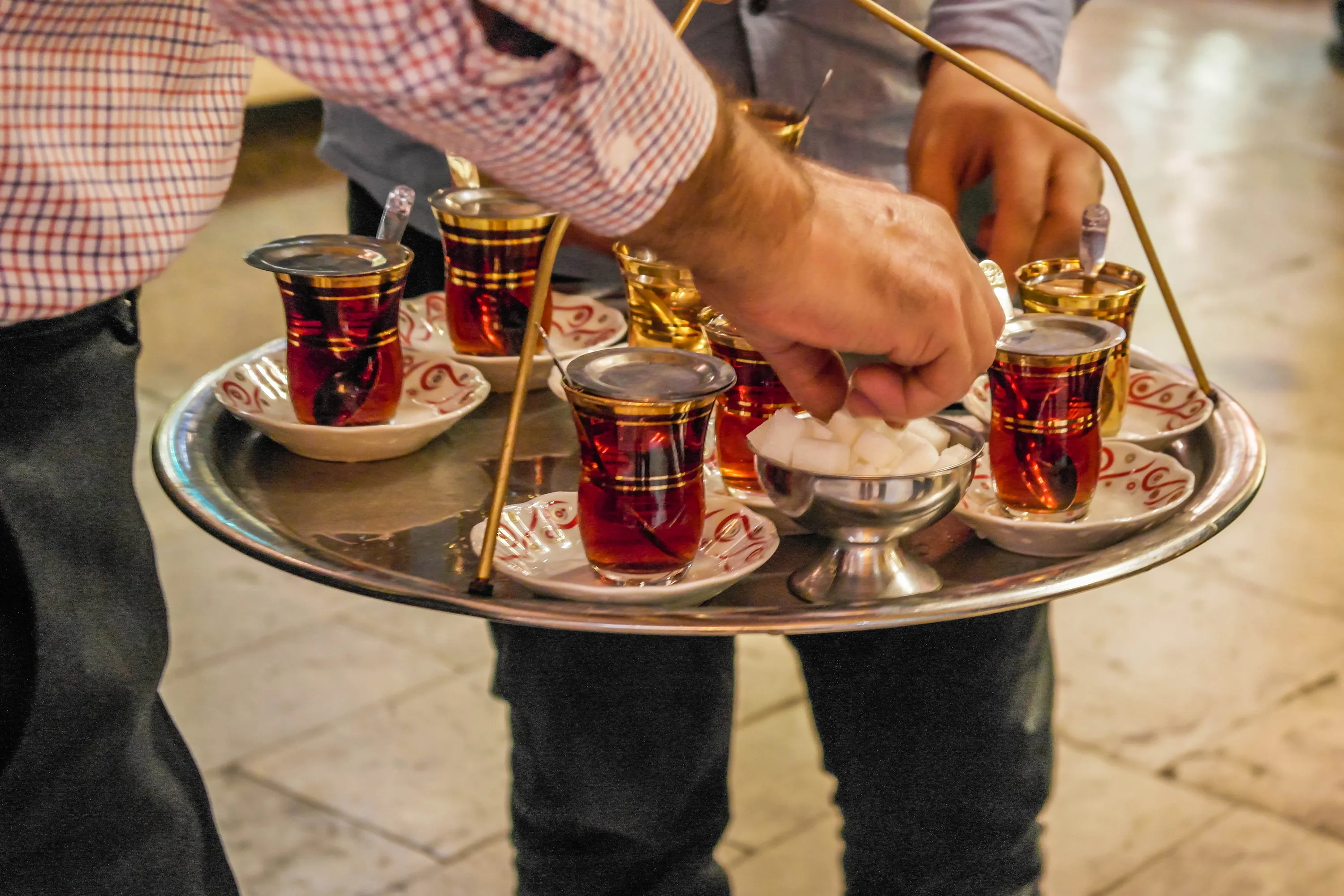
Istanbul has a way of making you stop looking at certain things. After the second or third day, the same scenes keep repeating. A man with a tray of tea glasses weaving through traffic. A plastic stool outside a shop with someone sitting on it. Loaves of bread hanging off the railing of a bakery. You start walking past them without really seeing.
Most of these scenes are the city quietly doing something practical, or carrying on a small habit that nobody has written down. Here are a few of them, and what is actually happening.
The simit seller
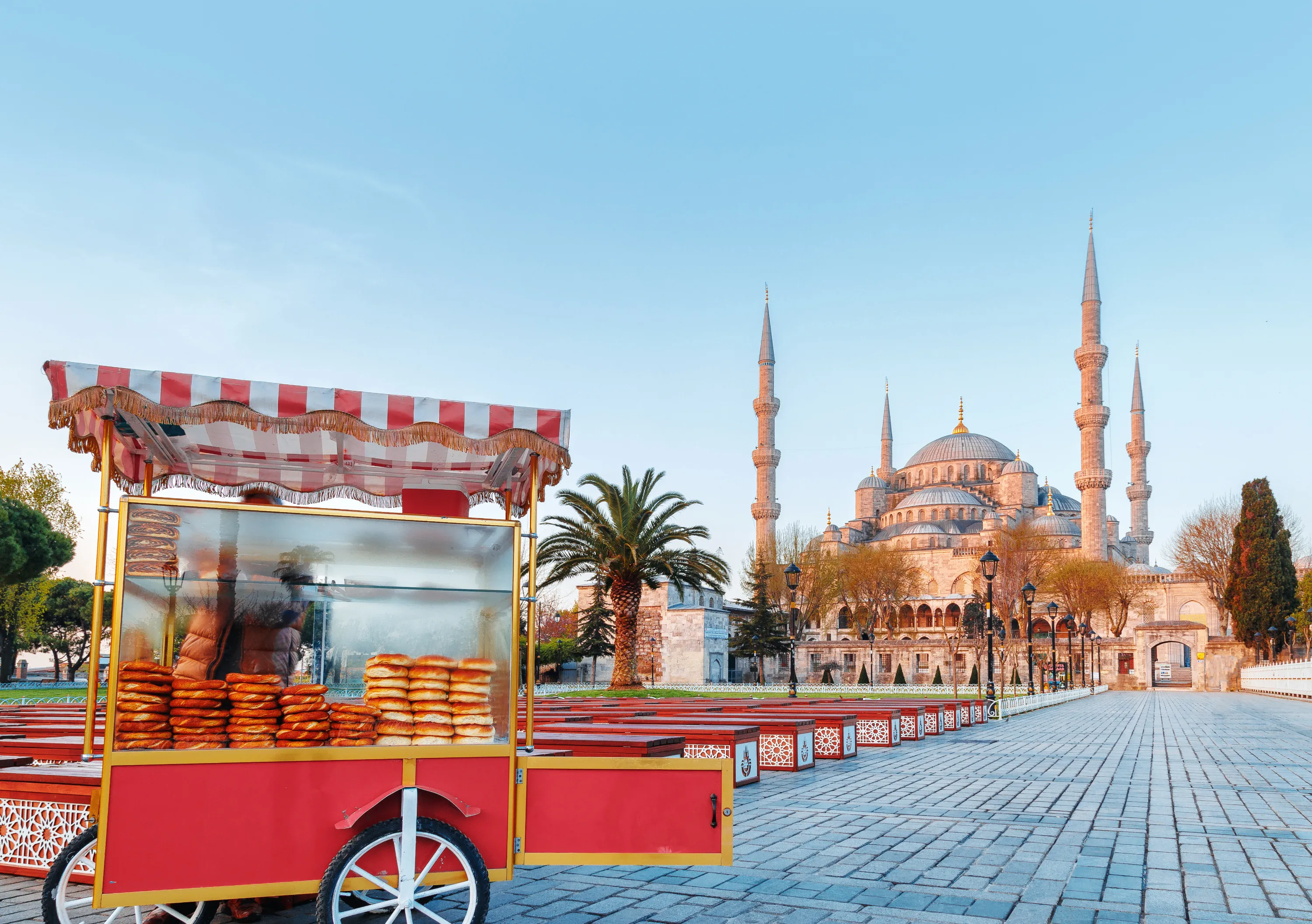
A simit seller at his red cart. The job has existed in roughly this form since the 1500s.
You will see him before you have finished your first morning in the city. A red pushcart at a ferry stop, or a wooden tray balanced on a man’s head, stacked with sesame-covered bread rings. The rings are always fresh before 10am. After that, the stacks get shorter, and by afternoon the remaining ones are harder and drier.
Simit is what most Istanbullus actually eat for breakfast on a weekday. Not the full spread, not pastries, just a simit and a glass of tea from the çay stand on the next corner. The price is municipally regulated, which is why you rarely get hustled on it. Around 10 lira.
If you watch long enough, you will notice that the vendor does not push the product. He usually sits beside the cart reading the newspaper, waiting. Locals walk up, hand over a coin, take one, and keep moving.
The tea-tray runner
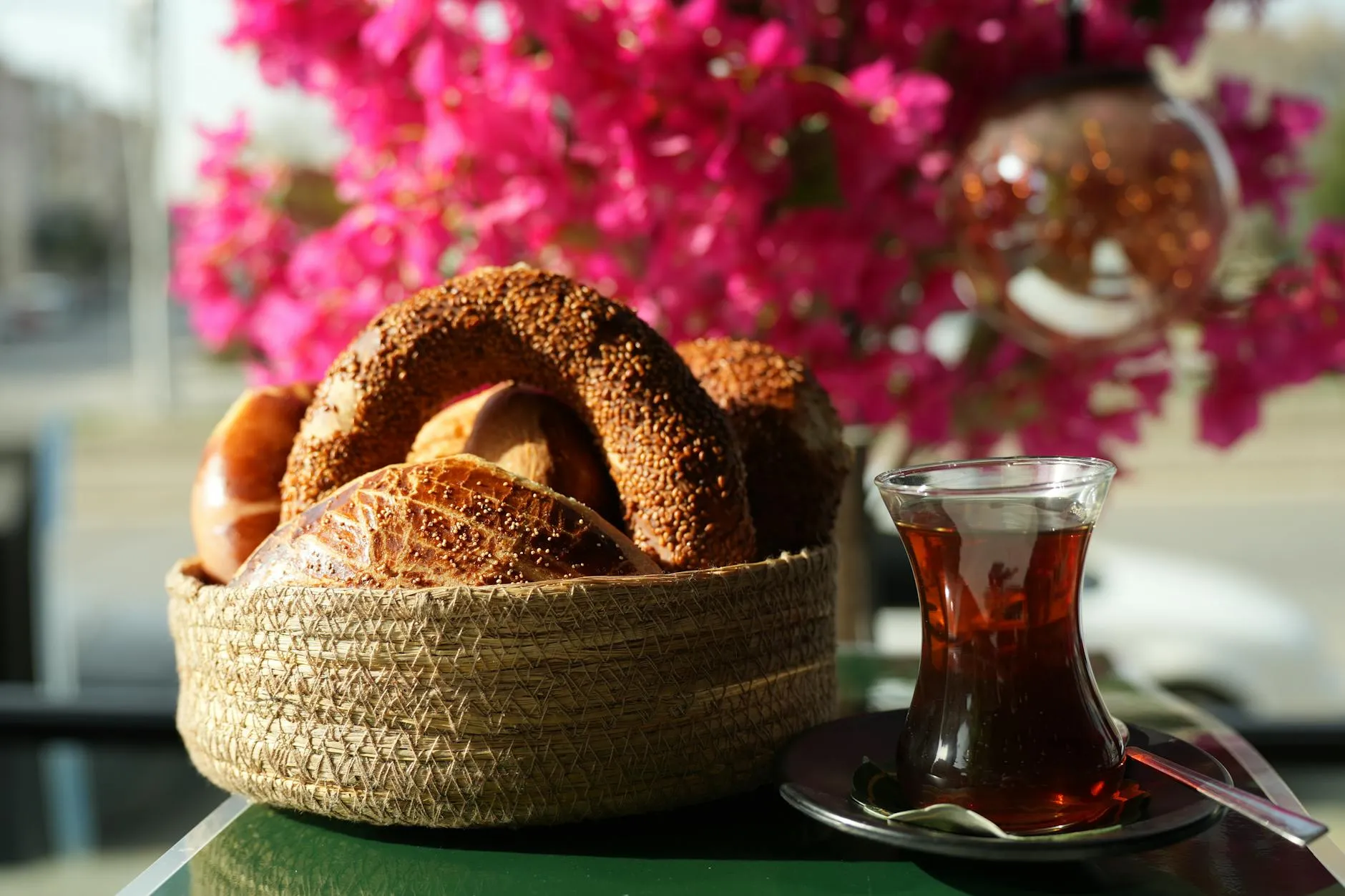
Tea comes in this shape for a reason: the narrow waist lets you hold a hot glass without burning your fingers.
At some point you will see a young man jog-walking across a busy street carrying a circular metal tray hanging from three chains, with five or six glasses of tea on it. The glasses clink, no tea spills. He disappears into a carpet shop or an office building. An hour later he comes back to collect the empty glasses.
This is how tea gets to every business in the city. A çay ocağı (tea stove) is a tiny one-room operation on almost every street, and the boy with the tray delivers orders on foot. A shopkeeper on the phone calls out “iki çay”, two teas, and they arrive in five minutes.
The choreography is the part nobody writes about. The tray runner has to cross roads, dodge scooters, and navigate uneven cobblestones without losing a drop. He does it a hundred times a day. If you ever find yourself at a shop and accept the tea someone offers, there is a good chance one of these boys brought it.
Small stools outside shops
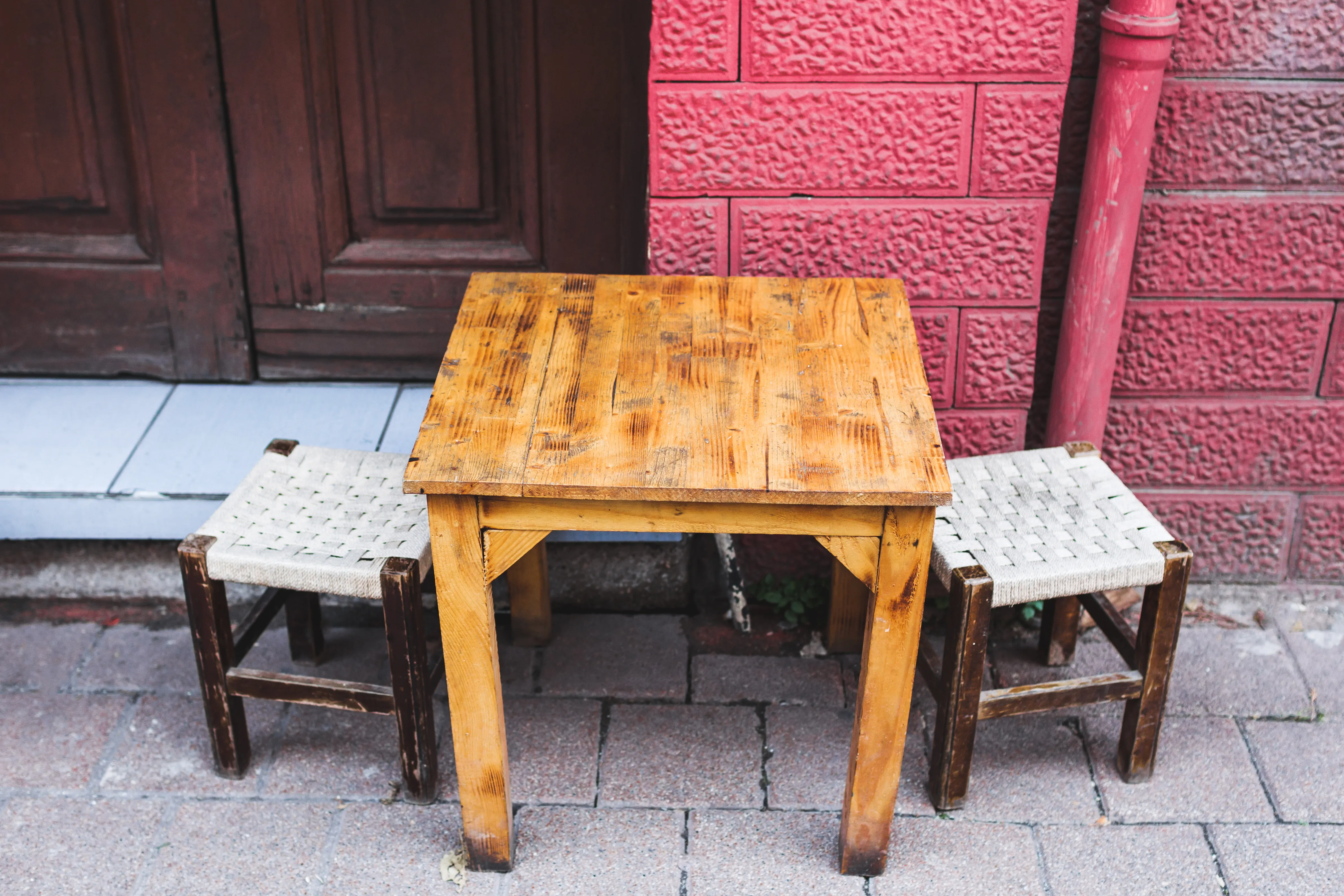
Low stools, low table, a game of tavla already set up. This is how most neighborhood chai houses look.
A plastic or wooden low stool sits on the pavement outside many shops. Sometimes two of them. Sometimes a shopkeeper is sitting on one, drinking tea and half-watching the street.
This is the shop’s front porch. The owner’s social space. When a neighbor walks past, they stop and sit. Tea appears. Small talk happens. A phone repair shop and a dry-cleaner across the lane might be effectively running a twenty-minute conversation for most of the afternoon.
The stool also says the shop is open even when it looks closed. If the stool is out, you can usually walk in.
Water bottles left for street animals
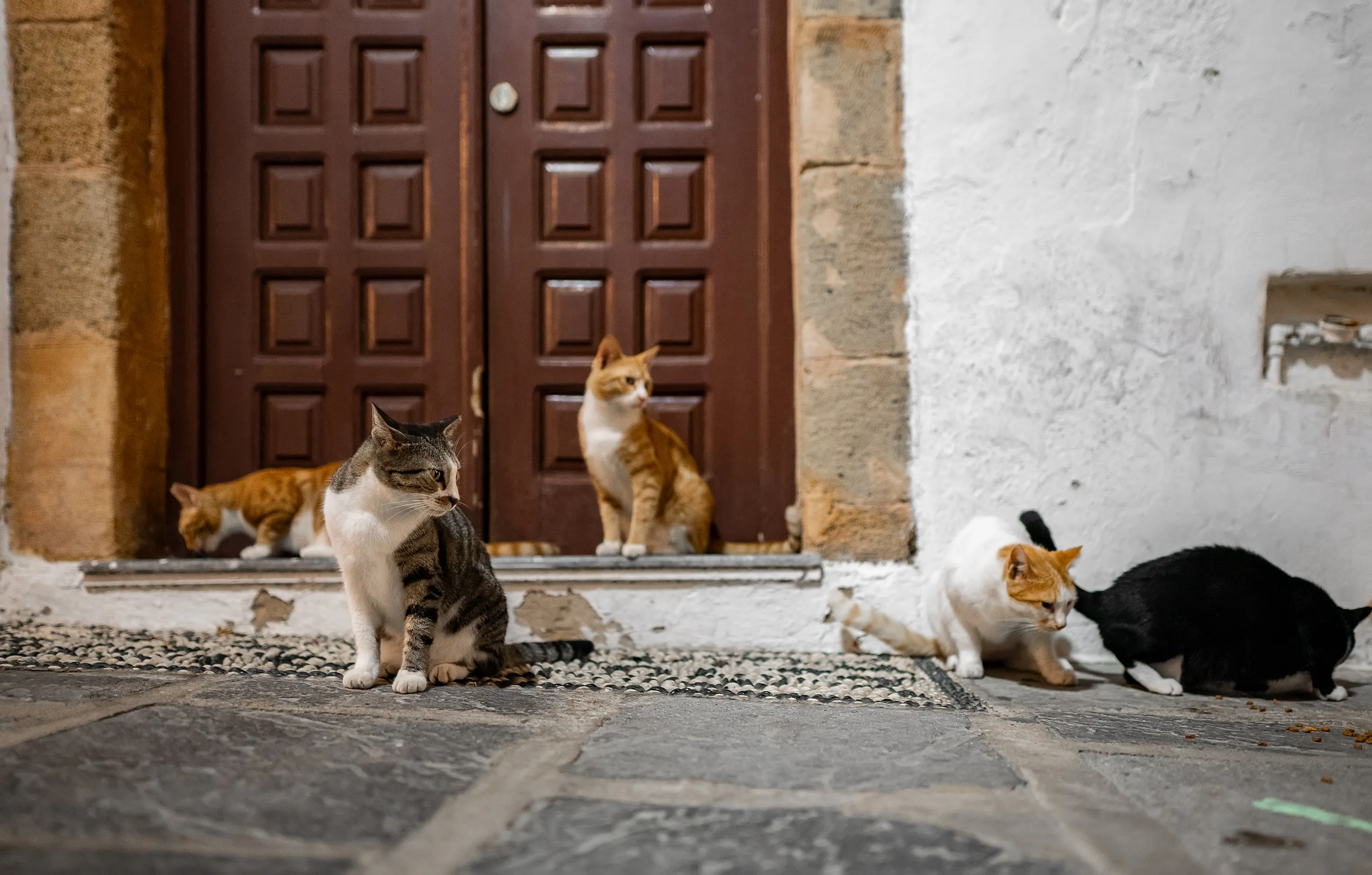
A typical Istanbul block has three or four of these. They belong to no one, and to everyone.
Along a lot of Istanbul’s pavements, especially on quieter back streets, you will see plastic bottles sliced in half, or small shallow bowls, filled with water. Sometimes a little pile of dry cat food sits next to them.
Istanbul has an informal treaty with its street cats and dogs. Nobody owns them, but most people feed them. Shopkeepers put out water in summer. Residents leave food at dusk. If a cat is injured, neighbors will pool money to take it to a vet. The animals have names, and the city’s municipalities actually vaccinate and sterilize most of them.
The bottles are small and easy to miss. Once you notice them, you see them on almost every block.
Nazar boncuğu, the blue glass eye
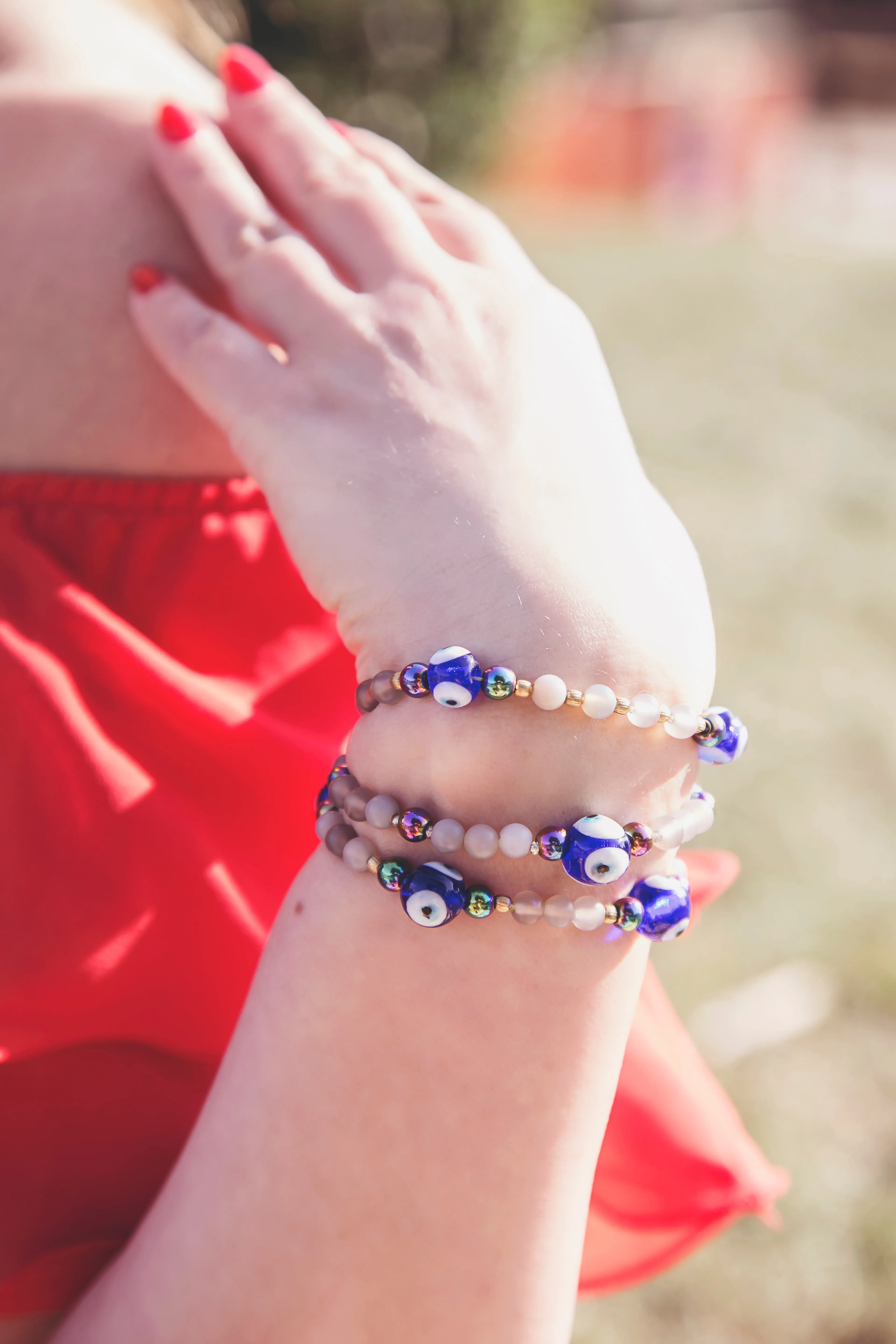
Nazar boncuğu, the evil-eye bead. Worn on a wrist, hung over a doorway, tied onto a newborn’s cot.
They hang everywhere. Over the door of an apartment, from the rear-view mirror of a taxi, on a baby’s clothing, woven into a bracelet, pinned inside the frame of a shop. A circle of concentric blue, white and black glass with a dot in the center, a stylized eye.
The nazar boncuğu is protection against envy. The idea, older than most of the religions practiced in this region, is that a covetous glance can bring bad luck, and the blue eye absorbs that look before it reaches the person it was aimed at. A broken nazar means the protection worked and the charm took the hit.
You do not have to be religious to hang one. Plenty of secular Istanbullus do. It sits somewhere between folklore and jewelry.
Shoe-shine boxes with brass fittings
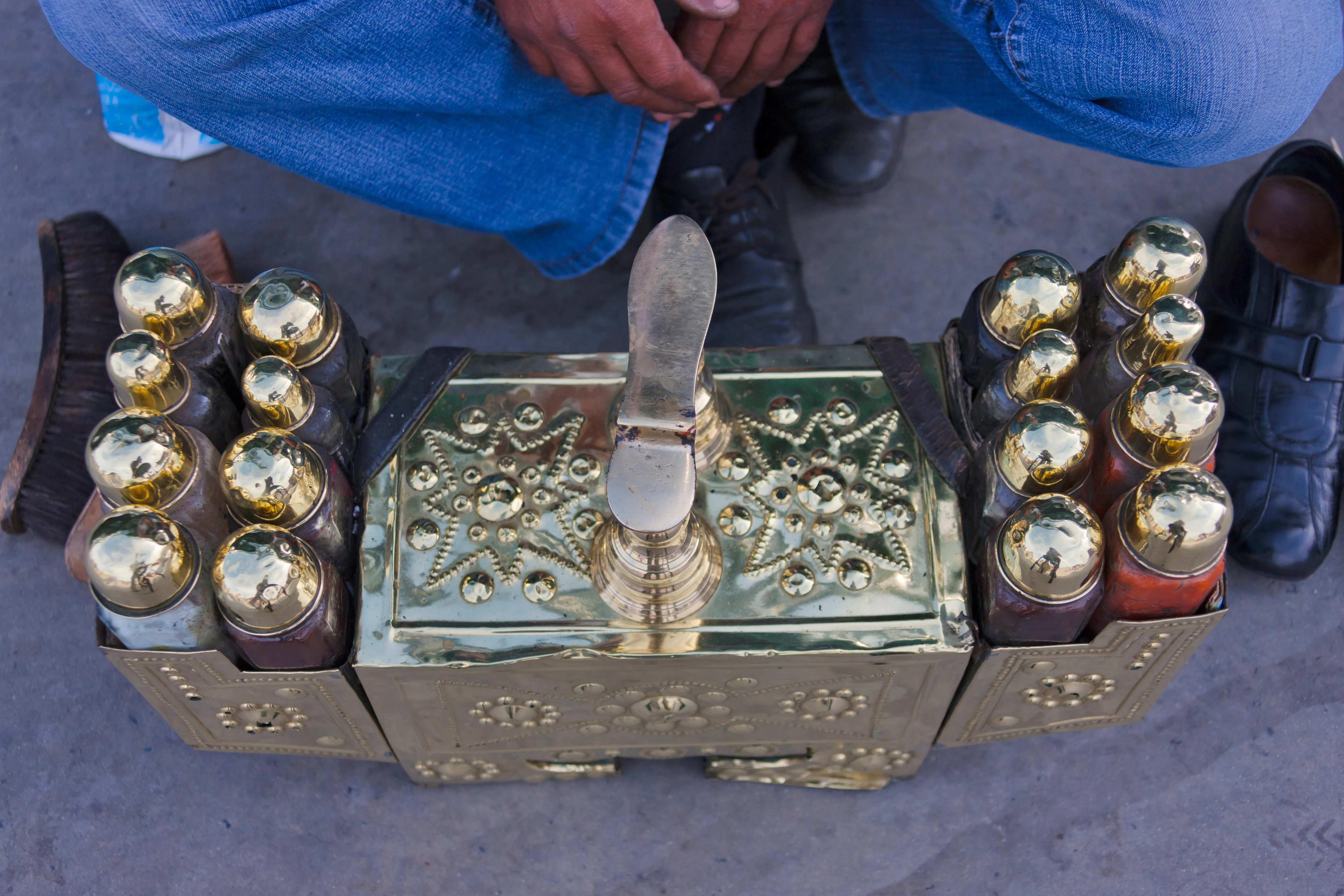
The ornate silver box of an Istanbul shoe-shiner. More ceremonial object than tool.
A man sitting on a low stool next to an ornate, polished brass-and-wood box. The box has glass-fronted compartments holding polishes, brushes, cloths. You can see your reflection in the sides.
This trade used to employ thousands of men across the city. Now it is mostly older men, and the boxes themselves are often antiques. If one of them drops a brush or cloth on the ground as you walk past and asks for help picking it up, that is a well-known soft scam. They will insist on polishing your shoes afterwards and then charge a lot.
A legitimate shoe-shine, if you want one, is around 50 lira. The boxes are worth looking at even if you keep your trainers dusty.
Laundry lines over the street
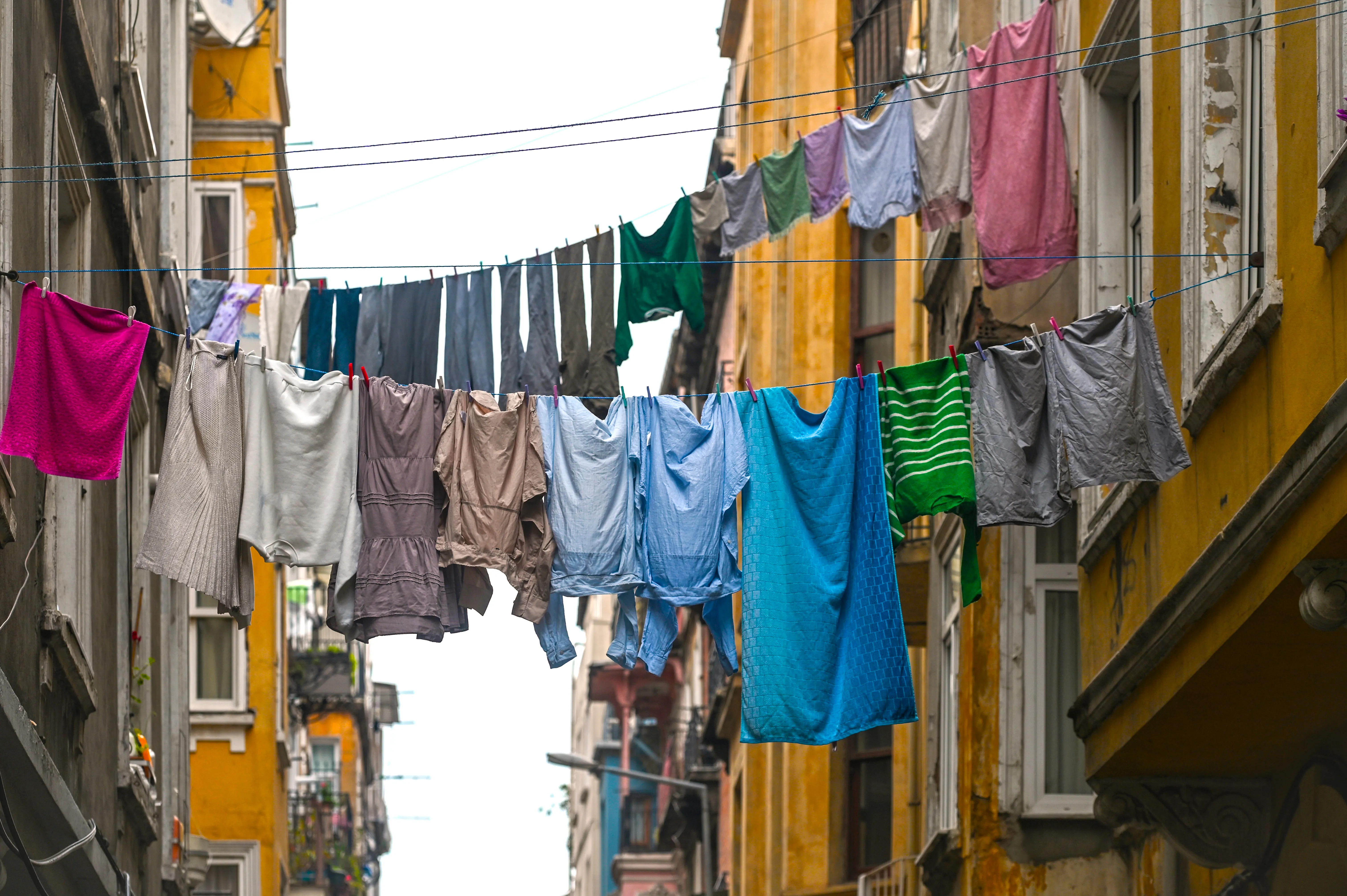
Laundry between two buildings. Nobody questions it. Nobody asks permission.
In the back lanes of Balat, Kuzguncuk, Cihangir and most old residential neighborhoods, you will see ropes slung across the lane from an apartment balcony on one side to an apartment balcony on the other. Clothes pinned along the line: shirts, children’s trousers, a pair of jeans, sometimes a tablecloth.
Small apartments do not have balconies big enough for a drying rack, and dryers are uncommon. Hanging a rope across a narrow street is practical. It also requires a level of trust and understanding between neighbors that you notice once you think about it: someone else’s underwear is visible above your head, and nobody minds.
If it starts raining, someone you do not know is already on their balcony pulling the clothes back in.
Backgammon in every tea garden
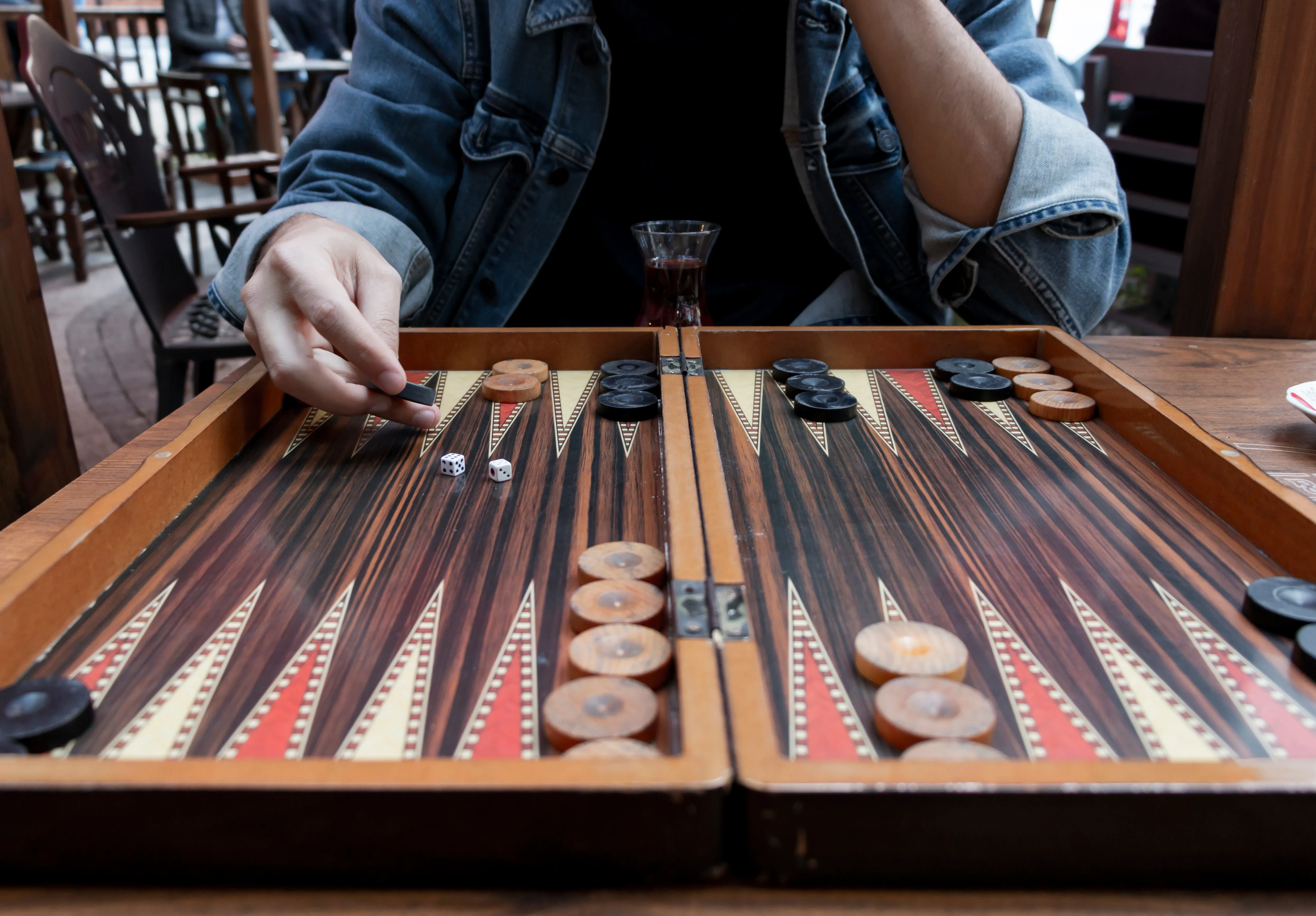
Tavla is the social infrastructure of every Istanbul café afternoon. Fast, loud, everyone over 40 plays.
In a çay bahçesi (tea garden) in Beşiktaş, Kadıköy, or up in Üsküdar, you will see tables of older men playing tavla, Turkish backgammon. The boards are folded wood, the dice rattle in little cups, and the games move fast. Two dice hit the board, a checker snaps down, the opponent mutters something, more dice.
Tavla is a national pastime in the way that chess is not. It is loud, quick, and heavy on small-scale trash talk. A round of Turkish coffee usually sits between the two players.
If you want to see a version of Istanbul that has very little to do with tourism, sit in a çay bahçesi on a weekday afternoon and watch an hour of tavla. You will pick up the rhythm before you understand any of the words.
Tea offered in every shop
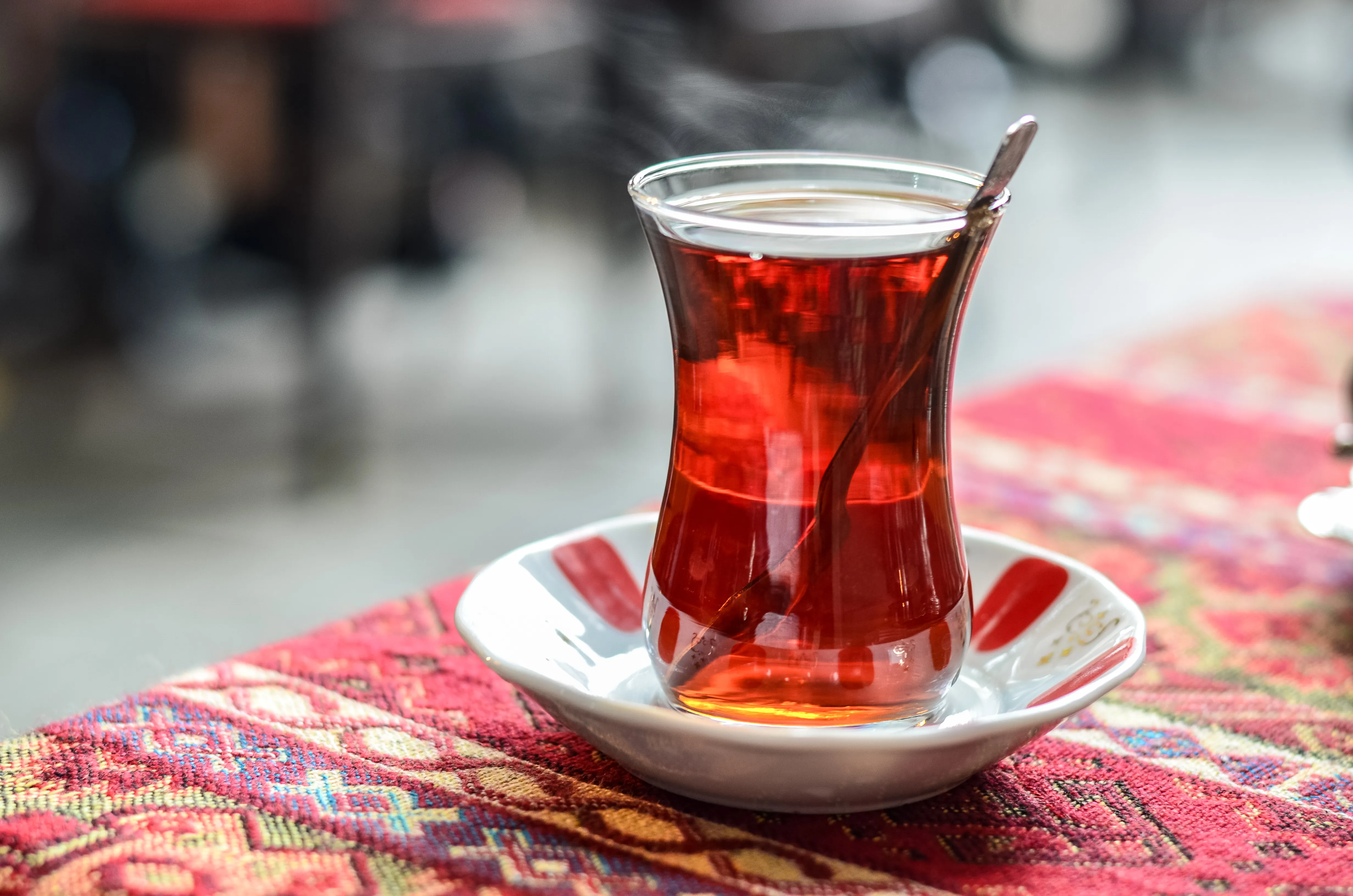
Istanbul drinks about 20 million glasses of tea a day. One of them is always in front of you.
Walk into a rug shop and within two minutes someone asks if you want tea. Walk into a phone repair shop, a notary, a tailor, a fabric store, a barbershop, and the same thing will happen, more or less.
Offering tea is not really a sales tactic, though it works as one sometimes. It is the default for how a conversation starts in most small Istanbul businesses. Accepting does not commit you to buying anything. Refusing is fine, but it is polite to refuse with the word sağolun (literally “be well”) rather than with a flat no.
If you do accept, you will usually see the shopkeeper call the order out of the door, and five minutes later one of the tray runners from earlier in this post will appear at the threshold.
Istanbul is a city where very little is random. The bottles, the stools, the trays, the hanging bread, the evil-eye charms and the cats crossing pavements all belong to a quiet system of small habits that the city has been keeping for a long time. You do not need to study any of it to enjoy being here. But if you slow down for a minute and look properly at what is actually on a normal Istanbul street, the place opens up a little more.
Keep reading
This is an editorial review. Some links on this page are affiliate links. If you book through them we may earn a small commission at no extra cost to you. It never changes which tours we recommend.