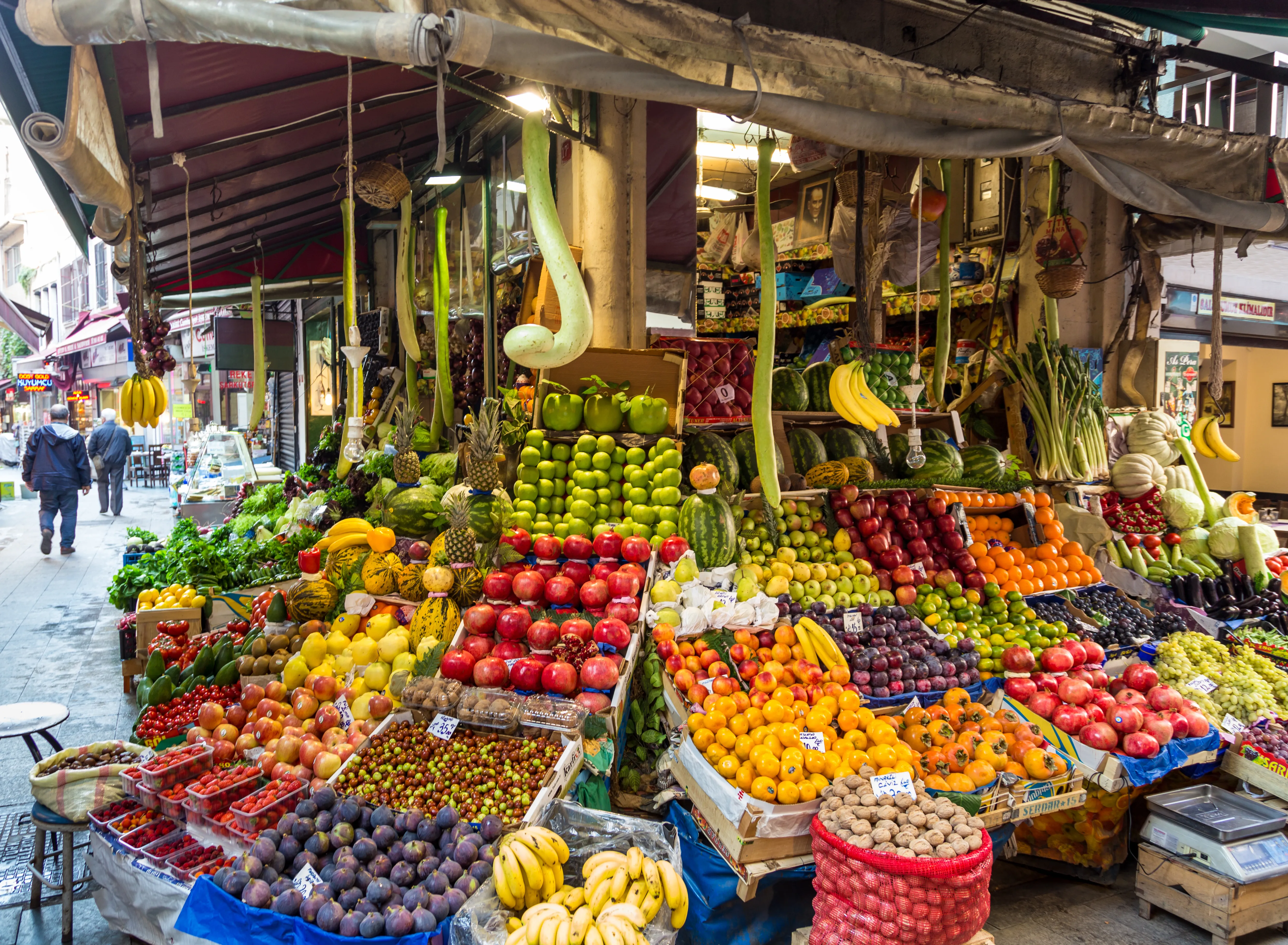
Istanbul has street food from breakfast to 4am and regional cuisines packed into walkable neighborhoods. It consistently ranks among the best food cities in the world, and the reason is structural: this is where Ottoman palace cooking, Greek and Armenian fish traditions, Black Sea cornmeal dishes and Gaziantep kebabs all land within a single tram ride.
Four days is the right length to eat this city properly. Not enough that you burn out on meat, enough that you can cross to the Asian side, try the meyhanes at night, and actually digest between meals.
This Istanbul food itinerary is grouped by neighborhood. Each day covers one area end-to-end, pairs eating with one or two sights so you do not overdose on food, and lists exact restaurants with Google Maps links. It is written for independent travelers who would rather skip the hotel concierge’s suggestions and eat where locals eat.
How to use this itinerary
Walking-focused days. Each day covers 2 to 6 kilometres on foot. Comfortable shoes matter more than presentable ones.
Light breakfast, heavy lunch, paced tasting. A proper Turkish lunch (lokanta or kebab house) is the main meal of the day. Skip heavy breakfast when you plan a serious lunch. Graze on snacks between.
Cash and card. Sit-down restaurants and cafés take cards. Street food (balık ekmek, midye dolma, simit) is cash-only. Carry 20, 50 and 100 lira notes.
Meal times run later than most Europeans expect. Breakfast from 9am to 11am. Lunch starts at 1pm. Dinner begins at 8pm and meyhanes peak 9pm to 11pm. The city eats late.
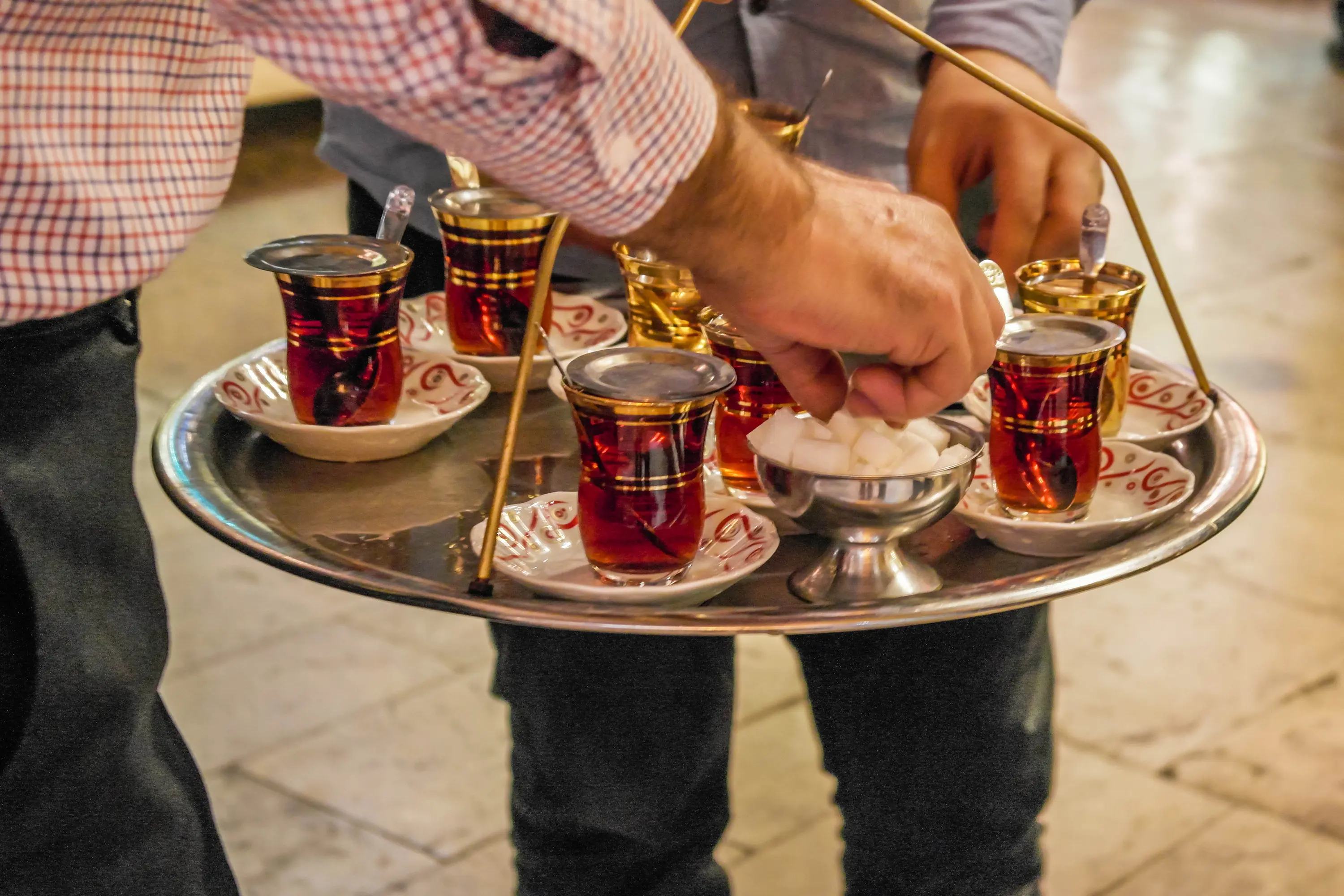
Tea. Turks drink tea through the day. If a vendor or host offers a small glass, accept. It is a social gesture, not a consumption question.
Ordering. Mezes are shared, so order three to four plates for the table rather than per person. Bread and water usually come free. Tip 10 percent at restaurants. Round up at street food.
Day 1 — Historic Peninsula (Sultanahmet & Sirkeci)
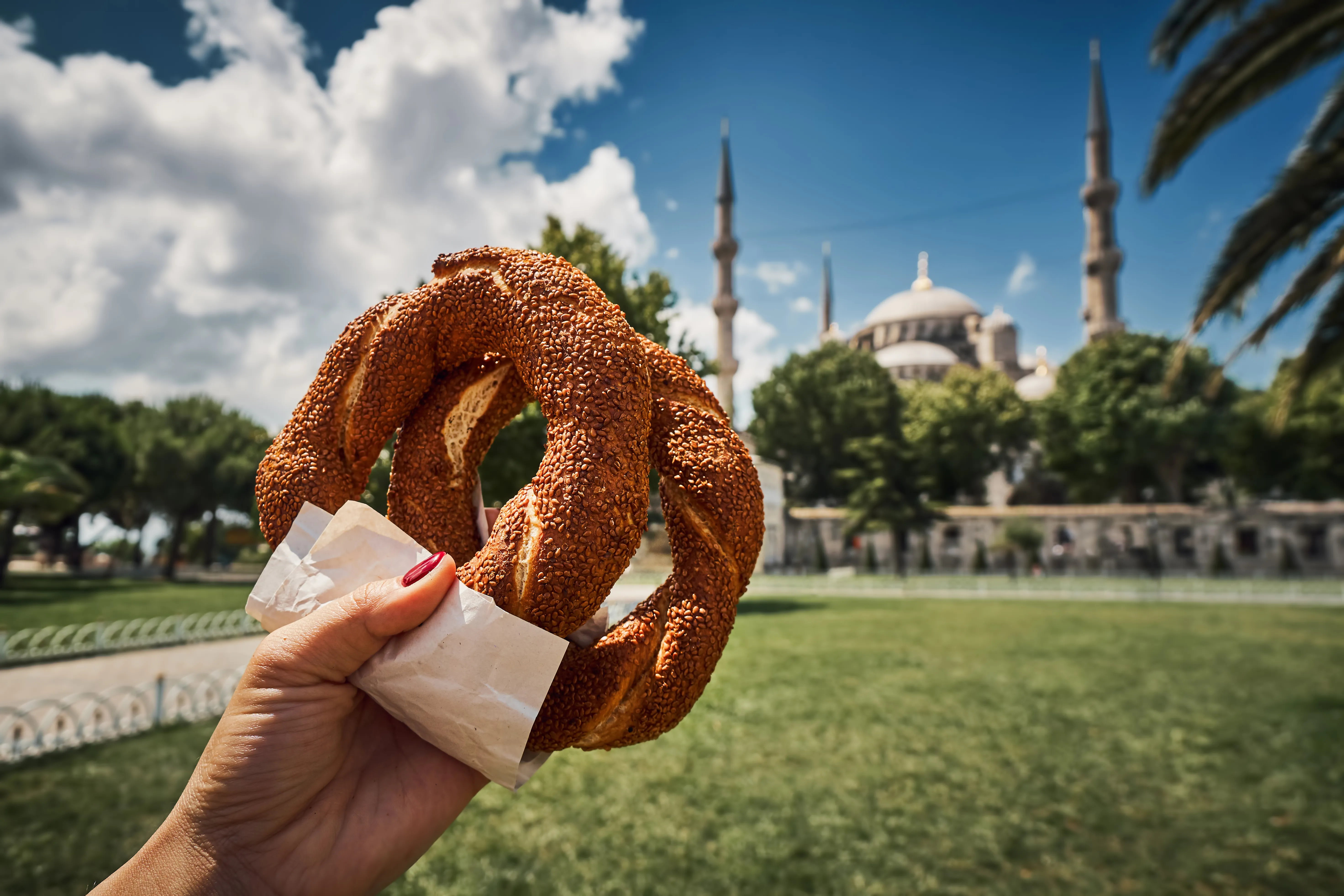
The first food and the first landmark of the trip, for under two dollars combined.
The day to see Hagia Sophia, the Blue Mosque, Topkapı Palace and the 500-year-old Ottoman food tradition that fed them. Food here runs old-city classic: köfte, palace dishes, baklava. The trap is eating at Sultanahmet Square restaurants with photo menus. The good spots are one block off the square.
9:30 · Breakfast: simit and tea near the Blue Mosque
A simit (sesame bread ring) from a red street cart and a small glass of hot black tea from the nearest çay stand. Under 2 dollars, eaten on a low wall facing the Blue Mosque. Earned credibility for not overpaying at a tourist café on your first morning in town.
10:30 · Hagia Sophia + Blue Mosque
Two hours for both, queues included. Arrive early; the tour buses land around 10:45.
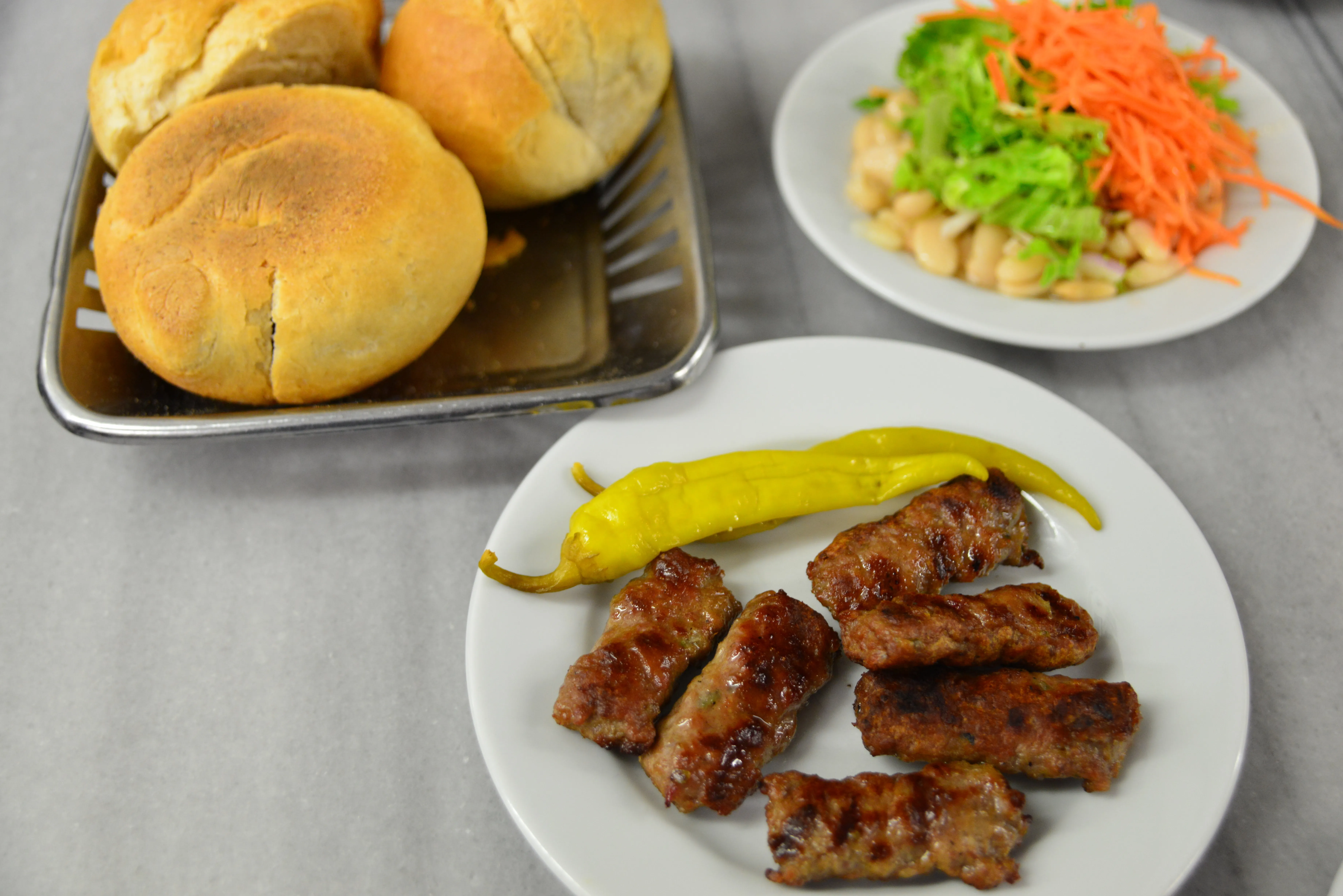
Köfte, piyaz, bread, pepper. The menu at Tarihi Sultanahmet Köftecisi, basically unchanged since 1920.
13:00 · Lunch: Tarihi Sultanahmet Köftecisi
Map · Divanyolu Cad. 12, Sultanahmet
A one-dish restaurant since 1920. Hand-rolled grilled köfte (meatballs) with piyaz (white-bean salad), pilav, ayran. Fluorescent-lit, spartan, unchanged. Order, eat, leave in 30 minutes. $8-$12 per person.
What to order: Köfte with piyaz, a plate of pilav, an ayran.
15:00 · Topkapı Palace
The imperial kitchen of the Ottoman empire. Budget 90 minutes for the standard route; add the Harem for another 30 if you care about the architecture. The Treasury is the room everyone stops in.
17:00 · Coffee and baklava: Hafız Mustafa 1864
Map · multiple Sirkeci + Sultanahmet branches
Since 1864. Reliable pistachio baklava, Turkish coffee with a piece of rose-water lokum. $5-$8.
What to order: Fıstıklı baklava (pistachio) and a Türk kahvesi. Add a small box of lokum to take home if you want to buy once and be done.
18:00 · Walk: Soğukçeşme Sokak to the Basilica Cistern
Soğukçeşme is the cobblestone alley between Hagia Sophia and Topkapı. Five minutes of walking. The Basilica Cistern underneath is open until 6:30pm, worth the 20 minutes.
20:00 · Dinner: Balıkçı Sabahattin
Map · Seyit Hasan Kuyu Sok. 1, Sultanahmet
A 1927 Ottoman mansion on a quiet back street behind the Blue Mosque. The best fish restaurant on the historic peninsula. No printed menu; the waiter brings the day’s catch on a tray and you pick. Mezes are a serious meal on their own. Reservation essential.
What to order: Whatever is freshest off the tray, grilled simply. Before it arrives, share six cold mezes: lakerda (salt-cured bonito), patlıcan salatası (smoked aubergine), topik (Armenian chickpea paste), ezme (tomato-pepper relish), haydari (yoghurt-garlic-dill), and çiğ köfte. $60-$80 per person with a bottle of wine.
If Balıkçı is booked: Matbah on Caferiye Sok. does proper Ottoman palace cuisine (hünkar beğendi, stuffed quince) from archival recipes, on a terrace next to Hagia Sophia.
Day 2 — Eminönü, Spice Bazaar & Street Food Trail
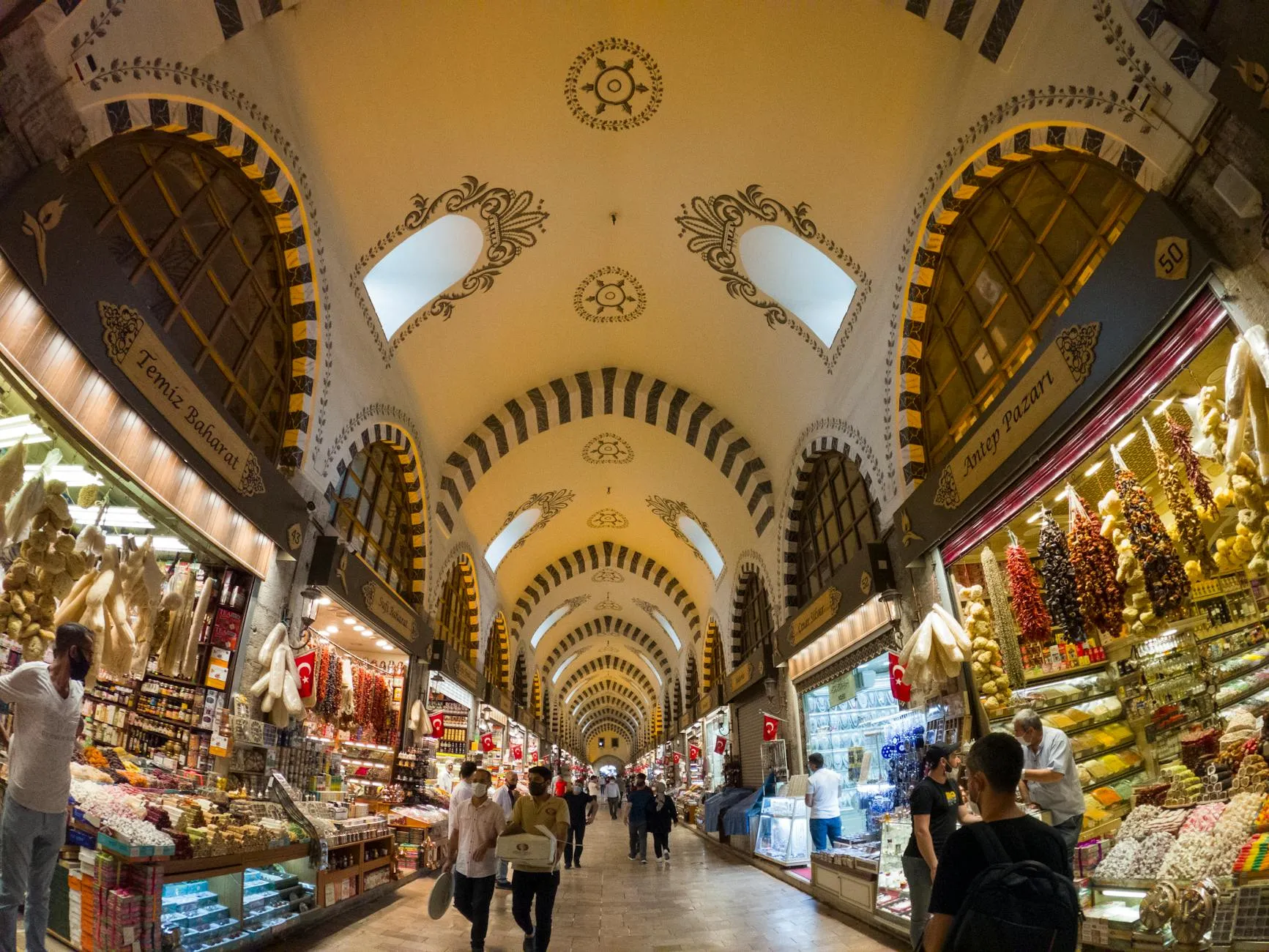
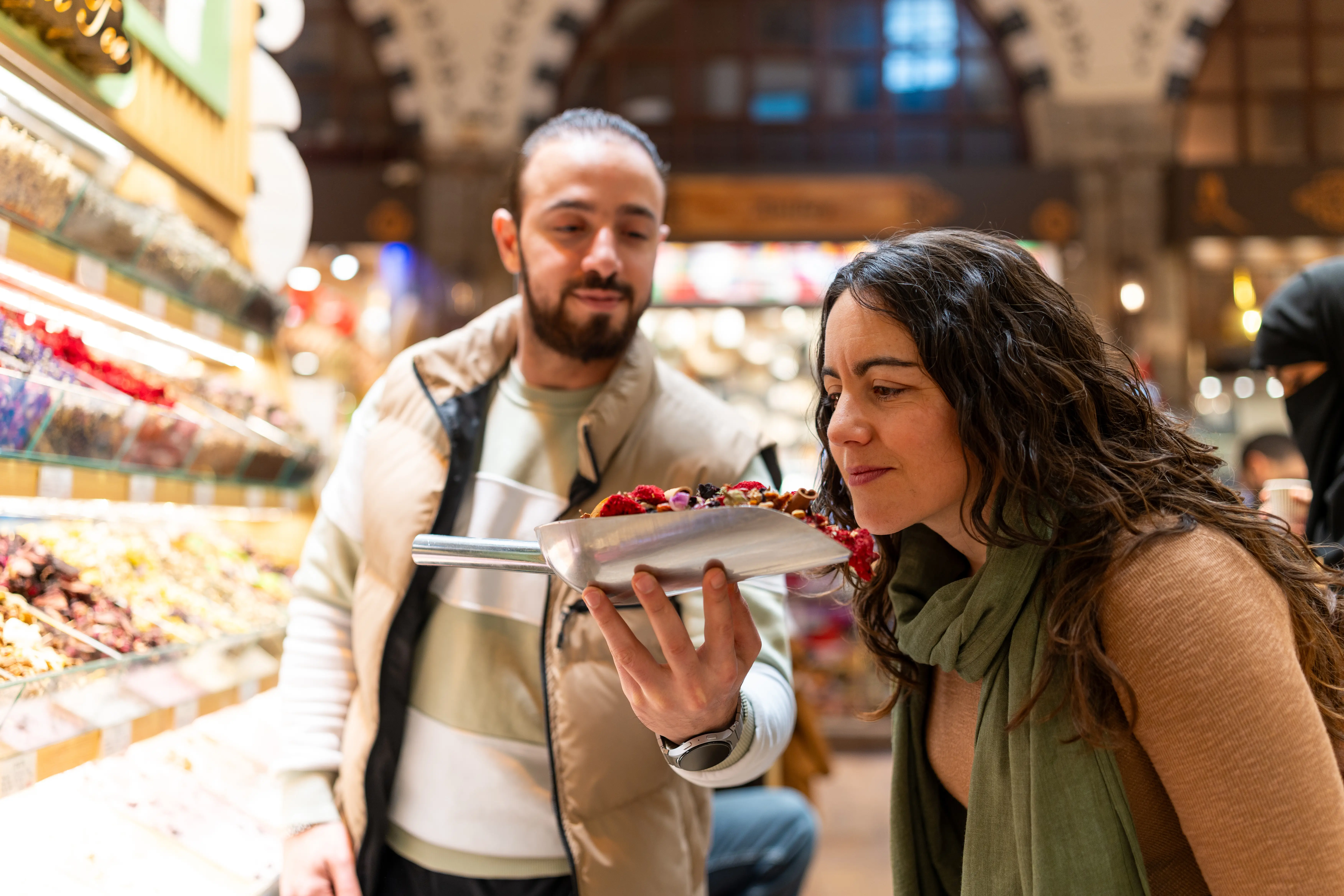
The Spice Bazaar’s vaulted nave. Photographs well, inflates prices toward the front, gets cheaper the further back you walk.
Day of markets and street food. The Spice Bazaar, the fish-sandwich boats at the Galata Bridge, and the backstreets of Tahtakale where the actual Istanbul shops for groceries. Lighter on the stomach than Day 1, heavier on the senses.
9:30 · Breakfast: Hocapaşa backstreets
Map · Hocapaşa Sok., Sirkeci
Five minutes from Sirkeci tram stop, a cluster of small restaurants on a pedestrian lane. Hocapaşa Pidecisi for wood-fired pide (boat-shaped flatbread with cheese and egg) is the morning anchor. $5-$7.
What to order: Karışık pide (mixed cheese and sucuk) or kaşarlı yumurtalı (cheese and egg). A glass of tea.
11:00 · Spice Bazaar (Mısır Çarşısı)
A 360-year-old covered market, 80 or so shops, opened in 1660. Walk the whole thing first. Stalls at the front are tourist-priced by 30-40 percent. The back half is cheaper. Outside the bazaar, on Hasırcılar Caddesi, is cheaper still.
What to buy: Urfa pepper flakes (pul biber), sumac, Antep pistachios, a mixed 250g box of lokum with pistachio centres. Skip the “Turkish Viagra” novelty teas.
12:00 · Coffee to take home: Kurukahveci Mehmet Efendi
Map · Spice Bazaar entrance, Eminönü
The Turkish coffee roaster founded in 1871 by the man who invented pre-ground Turkish coffee. Tiny shop, famous queue. A 250g bag to take home is the classic souvenir.
What to order: 250g of medium-roast Türk kahvesi. The shop opposite serves a single cup freshly brewed if you want one on the spot.
13:30 · Lunch: Hamdi Restaurant
Map · Kalçın Sok. 17, Eminönü
A fifth-floor kebab house overlooking the Golden Horn, Galata Bridge and the old-city rooftops. Opened as a stall beside the Spice Bazaar in the 1960s, now a five-storey institution. Book a window table. $25-$40 per person.
What to order: Fıstıklı kebab (pistachio-studded lamb), a lahmacun starter, shared mezes (haydari, muhammara). End with künefe.
15:30 · Tahtakale detour
Walk five minutes uphill behind the Spice Bazaar and you are in Tahtakale. Working bazaar, hardware shops, coffee roasters, börek bakeries. Almost no other tourists. This is where Istanbul’s coffee trade started in the 1500s. Stop for a tea at a streetside stand and watch the neighbourhood for 20 minutes.
16:30 · Rüstem Paşa Mosque
A small 16th-century mosque above the Hasırcılar bazaar. Interior tilework is some of the finest İznik work in Istanbul. Free. Quiet. Ten minutes inside is enough.
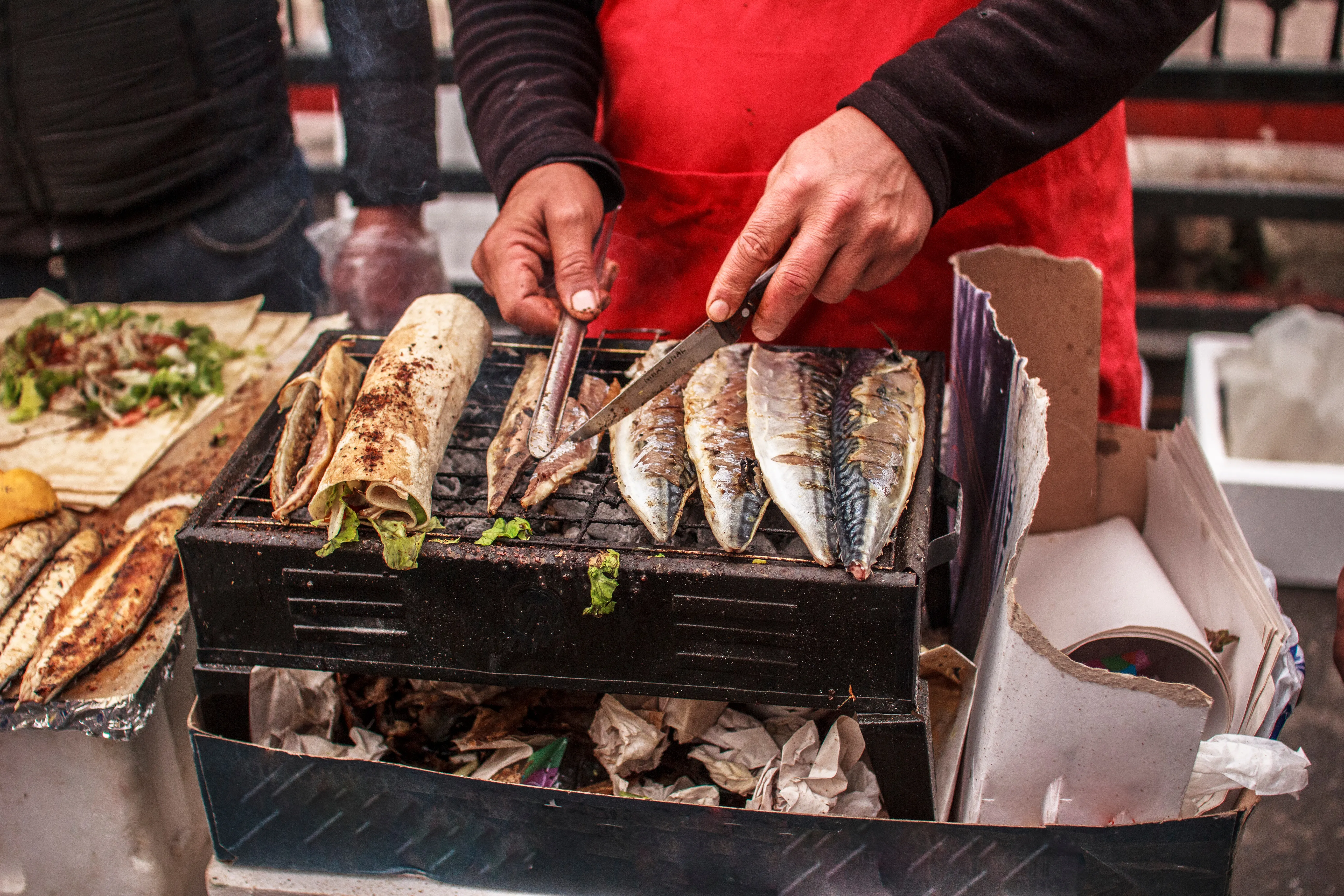
Mackerel going on the grill. The end of a food day in the old city, not the beginning.
17:30 · Waterfront street food: balık ekmek and midye dolma
The balık ekmek (grilled mackerel sandwich) boats are moored on the Eminönü side of the Galata Bridge. Three ornate, bobbing boats, white bread, raw onion, parsley, lemon. $3-$5. Midye dolma (mussels stuffed with spiced pilav) sellers set up along the waterfront from 5pm onward. 25-35 lira per mussel. Eat standing on the seawall.
What locals eat here: Rotate. A balık ekmek at one end of the pier, four midye dolma on the way back, a glass of turşu suyu (pickle brine) from the stand in between. The brine resets your palate. Try it.
19:00 · Cross the Galata Bridge on foot
The walk across is 400 metres, 10 minutes with stops. Fishermen line both sides dropping lines into the Golden Horn. The view back toward Eminönü at sunset is one of the best in the city.
20:00 · Light dinner or early night
You have eaten well today. A light dinner (maybe a börek from a Karaköy bakery on the way back to the hotel) is fine. Tomorrow is Karaköy proper.
Day 3 — Karaköy, Galata & İstiklal
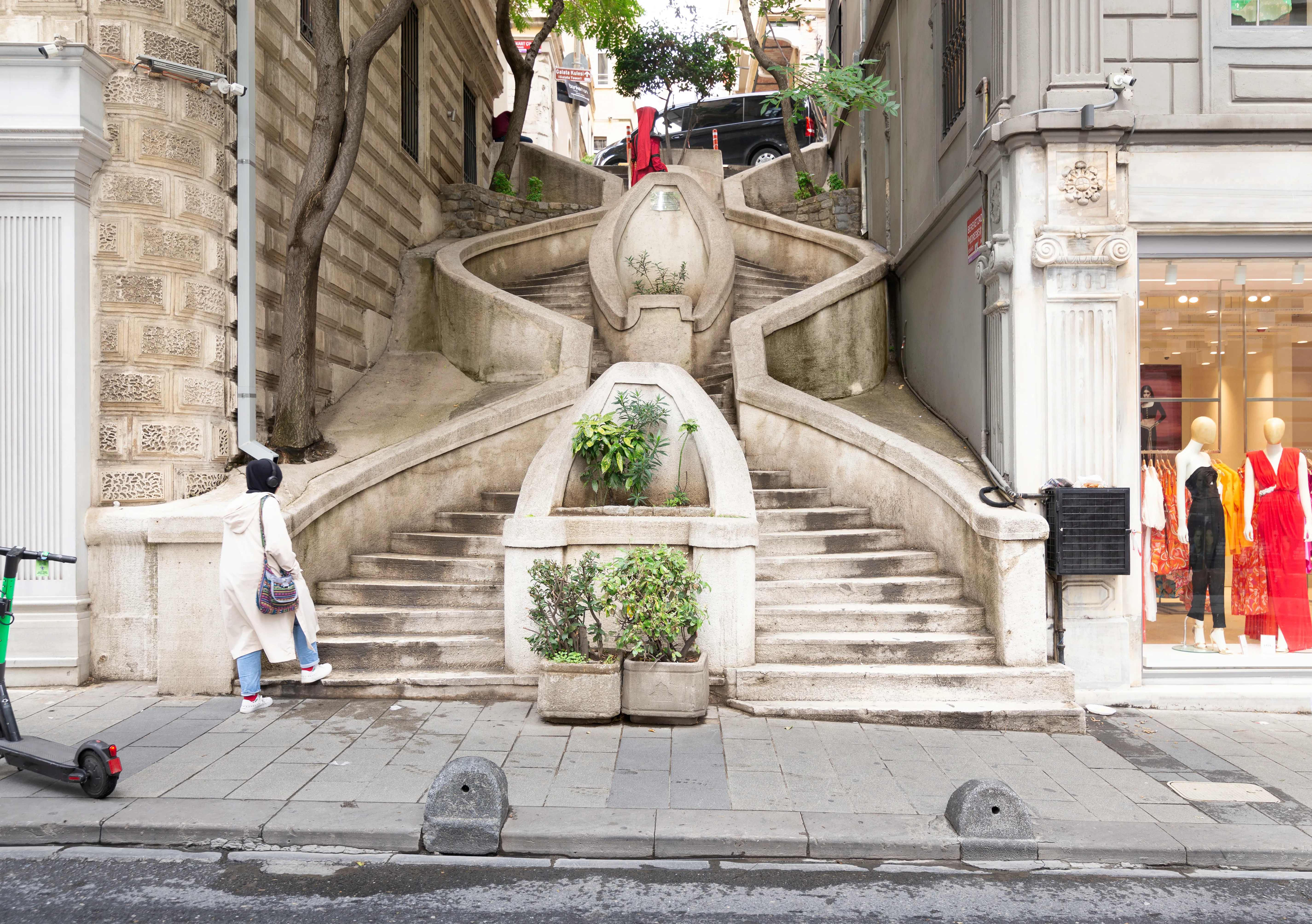
The Kamondo Stairs on the walk down from Galata to Karaköy. Iconic enough that the day feels like it already started.
Modern Istanbul stacked on old Istanbul. Karaköy’s Bib Gourmand restaurants and third-wave coffee at the bottom of the hill, Galata and its tower in the middle, İstiklal Caddesi and the meyhanes of Asmalımescit at the top. A long walking day.
10:00 · Breakfast: Van Kahvaltı Evi (Cihangir)
Map · Defterdar Yokuşu 52/A, Cihangir
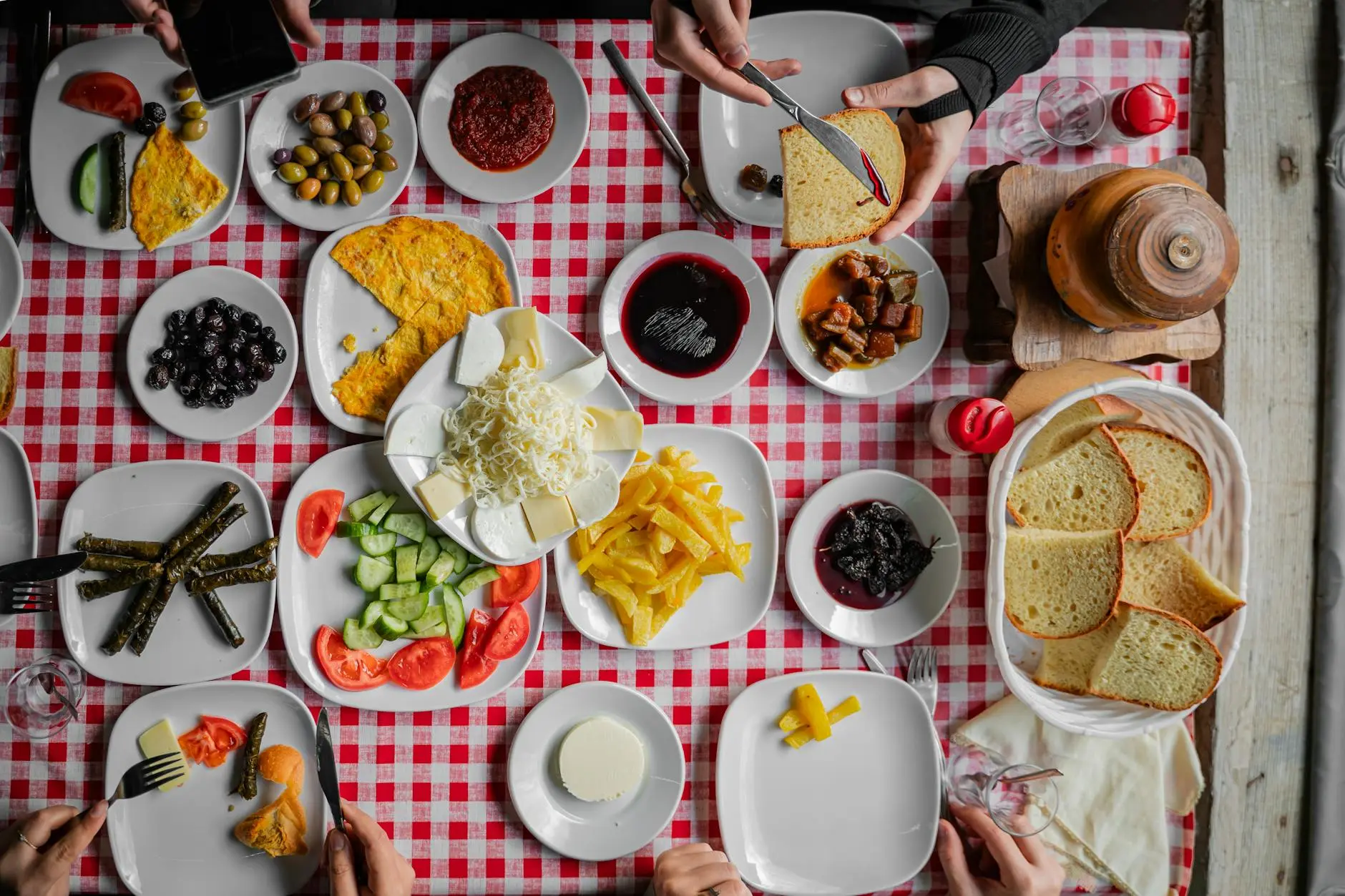
Cihangir’s Kurdish-breakfast house. Heavy local cheeses, kaymak (clotted cream), murtuğa (a wheat-flour porridge), eggs with herbs. Weekend queues are real; aim for a weekday 10am. $15-$22 per person.
What to order: Serpme kahvaltı (the spread). 15-25 small plates across the table, all you can drink tea, 90 minutes.
12:00 · Walk down to Karaköy via Galata
Cobblestones, steep descent, 25 minutes with stops. Pass the Galata Tower and the Kamondo Stairs on the way down.
13:00 · Lunch: Karaköy Lokantası
Map · Kemankeş Cad. 37/A, Karaköy
Michelin Bib Gourmand. A 2007 Karaköy pioneer. Blue-tiled dining room, long daily-specials board, Ottoman classics done seriously. Lunch is the move; dinners are pricier.
What to order: Hünkar beğendi (slow-cooked lamb on smoked aubergine purée) — the best version in the city. Add a cold meze platter and a glass of something white. $25-$35 per person.
14:45 · Coffee: Kronotrop or Karabatak
Two short walks, both in Karaköy’s back streets.
Kronotrop is the country’s most respected third-wave roaster, founded by Çağatay Gülabioğlu (Turkey’s first Q Grader). Pour-over, single-origin.
Karabatak is a restored 19th-century metal workshop turned café. The room is the reason to come; coffee is solid.
15:30 · Baklava: Karaköy Güllüoğlu
Map · Rıhtım Cad., Karaköy
Istanbul’s reference baklava since 1949. Cafeteria-style: tray, point, pay at the till. Fifth-generation family operation.
What to order: Two pieces of fıstıklı (pistachio) baklava and one kuru (dry, firmer) baklava. Pair with a Turkish coffee. Eat standing at the high counter.
16:30 · Galata Tower + Kamondo Stairs
Climb the tower if you want a 360° view of the old city (tickets sell out; book an hour-specific slot on the day). Walk back down via the Kamondo Stairs on Banks Street, a 19th-century curving pedestrian staircase that is the most photographed in Istanbul.
17:30 · Tünel funicular up to İstiklal
The Tünel is 90 seconds from Karaköy to the southern end of İstiklal. $0.50 with an Istanbulkart. It is the world’s second-oldest underground, opened in 1875. You save 20 minutes of steep uphill climbing.
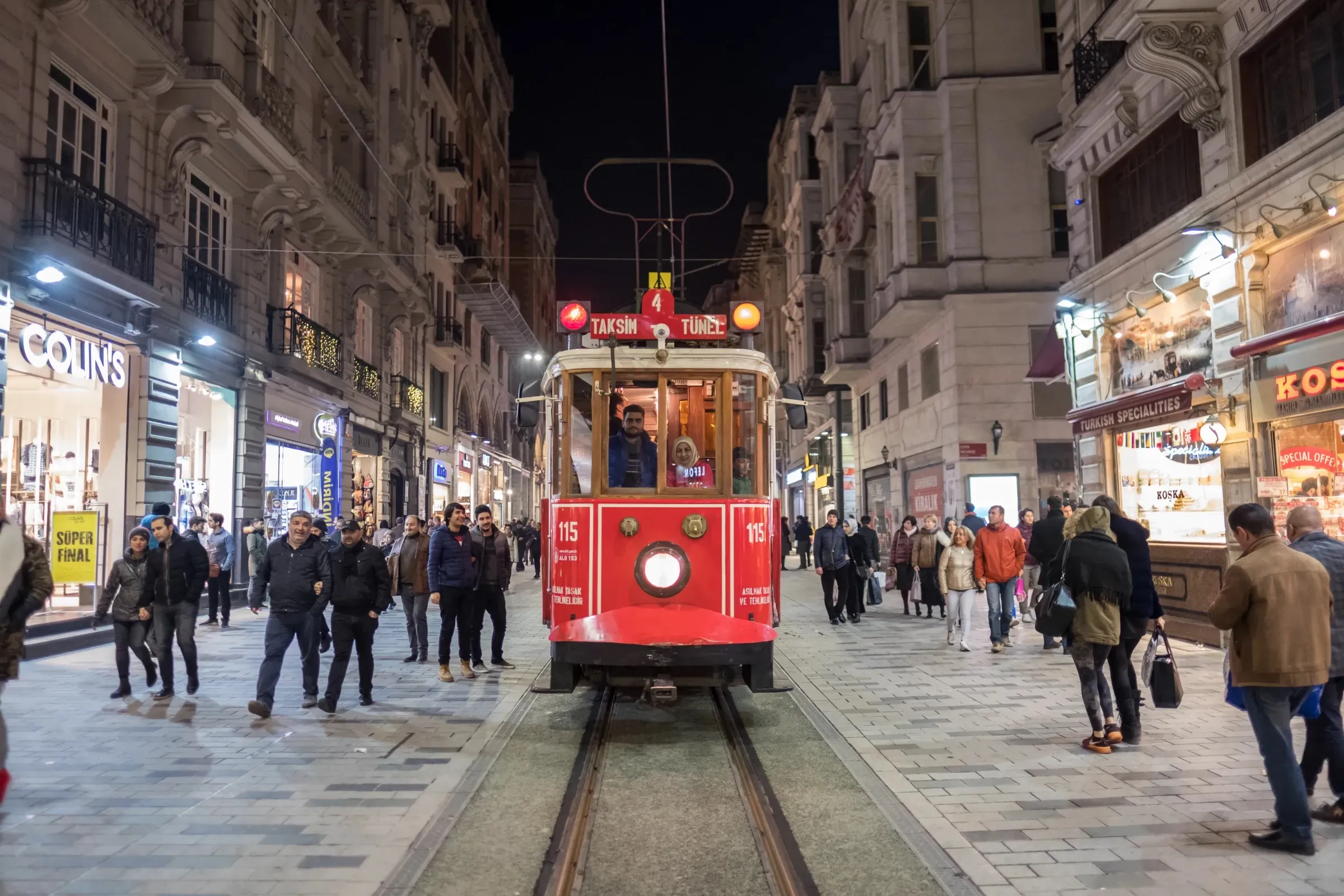
The nostalgic tram running up İstiklal. By 7pm this street is full of people; by midnight it is still full.
18:00 · Walk İstiklal Caddesi (Tünel → Taksim)
One kilometre of pedestrian street. Red nostalgic tram down the middle. Browse arcades (Çiçek Pasajı for nostalgia and photos; the food inside is tourist-priced, walk through but don’t eat). Stop at Şampiyon Kokoreç in the Balık Pazarı arcade for a half-bread kokoreç (seasoned lamb intestines, grilled, chopped on a board). $3-$4. Divisive; order anyway.
20:00 · Dinner: Asmalı Cavit (meyhane)
Map · Asmalımescit Cad. 16/D
Classic Asmalımescit meyhane. Posters of old Istanbul on the walls, seven or eight rakıs behind the bar. Three-hour dinner. $35-$55 per person including drinks. Book a day ahead for Friday or Saturday.
What to order: Six cold mezes for the table including köz patlıcan (roasted aubergine) and topik. One or two hot mezes (fried calamari, muska böreği). Grilled lüfer in autumn, çipura year-round. A bottle of rakı with ice and water on the side.
Backup meyhanes on the same street: Refik (since 1954, Black Sea mezes) and Yakup 2 (40+ years, point-at-the-counter ordering).
23:30 · Late-night islak hamburger
Map · Sıraselviler Cad. 2, Taksim Square
Kızılkayalar, open 24 hours, busiest at 2am. The islak hamburger (wet burger) is a small steamed slider drenched in garlicky tomato sauce. Eat two. An Istanbul-specific late-night food since the 1970s.
Day 4 — Kadıköy (Asian Side Food Paradise)
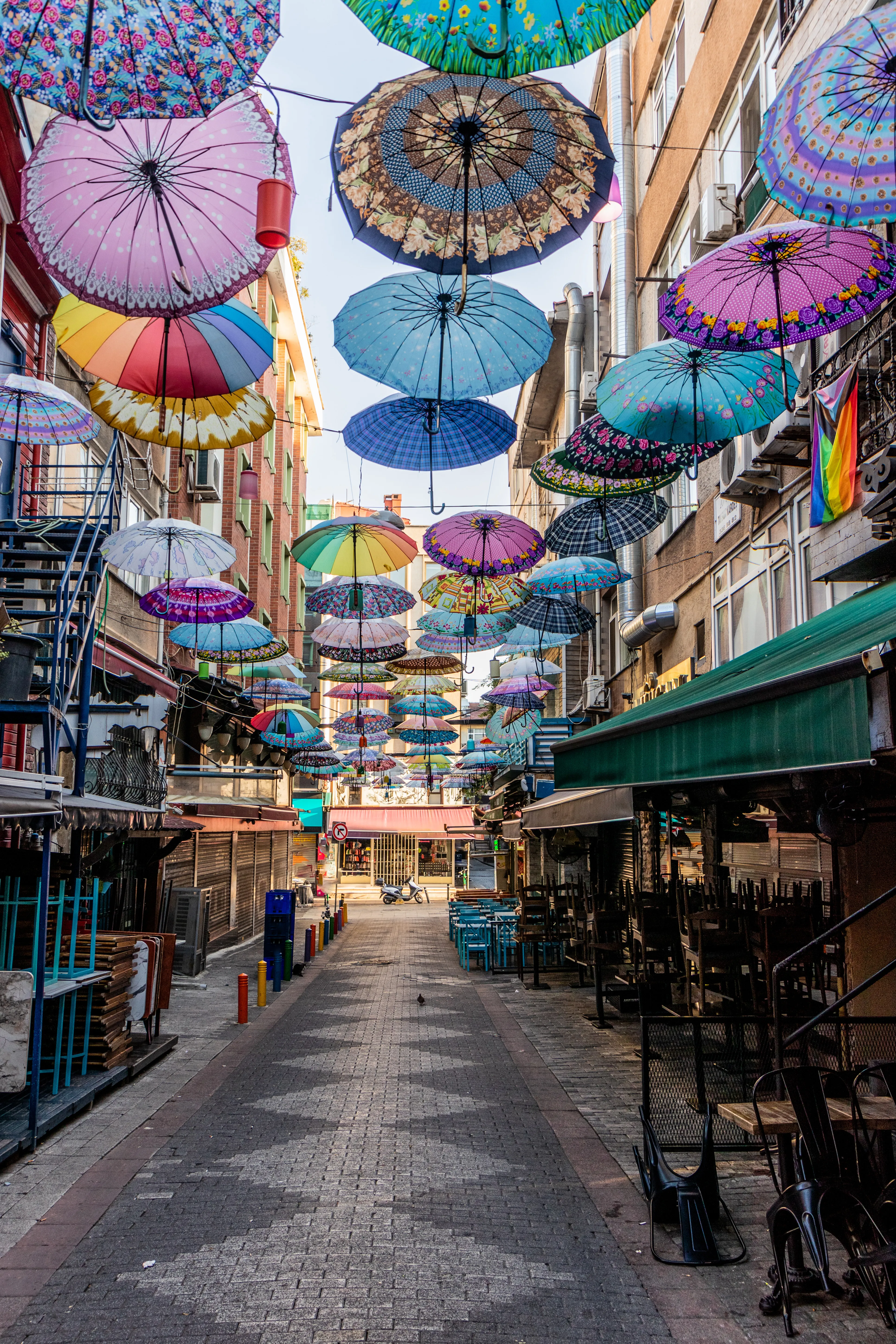
The Ziya Bey alley in Kadıköy. Not especially useful navigationally; every guidebook photographs it anyway.
The Asian side. Kadıköy has become the densest food neighbourhood in Istanbul over the last decade. The market runs denser than the Spice Bazaar, prices are lower, and the meyhane scene on Kadife Sokak is cheaper and looser than Asmalımescit. If you only have one full food day in Istanbul, this would be it.
10:00 · Ferry from Karaköy or Eminönü to Kadıköy
20 minutes, runs every 15-20 minutes, under a dollar with an Istanbulkart. Sit on the upper deck. Sunset ferries back are the bonus version later.
10:30 · Breakfast: Munchies (Moda)
Moda’s iconic breakfast-brunch spot. Sweet and savoury pancakes, proper eggs, solid coffee. Queue on Saturday mornings is real. Aim for 10am weekday, 12:30 weekend.
What to order: Savoury pancakes with sucuk, plus one of the egg plates. Filter coffee.
Alternative: 180 Coffee Bakery — a third-wave café attached to a working bakery. Cinnamon rolls out of the oven until noon.
12:30 · Walk up Moda Caddesi to the market
15 minutes of gentle slope. Pass bakeries and Dondurmacı Ali Usta (come back later) on the way.
13:00 · Kadıköy market (Kadıköy Çarşı)
A warren of pedestrian streets behind the ferry terminal. Güneşlibahçe Sokak, Muvakkithane Caddesi, Yasa Caddesi. Butchers, fishmongers, cheese counters, pickle shops, bakeries. Browse for 45 minutes. Taste what is offered. Buy 100g of olives, 100g of pistachios, a small box of lokum.
14:00 · Lunch: Çiya Sofrası
Map · Güneşlibahçe Sok. 43, Kadıköy
Chef Musa Dağdeviren’s regional Anatolian kitchen, featured on Netflix’s Chef’s Table. Steam trays at the front cover 30 or more rotating dishes most Istanbul restaurants do not attempt: obscure regional soups, wild-green stews, lamb cooked five different ways. Reliably the best single meal in Kadıköy. $12-$18 per person.
What to order: Point at four or five things you do not recognise on the steam trays. Add a lamb kebab from the grill side. Finish with sütlaç (rice pudding) or one of the quince desserts.
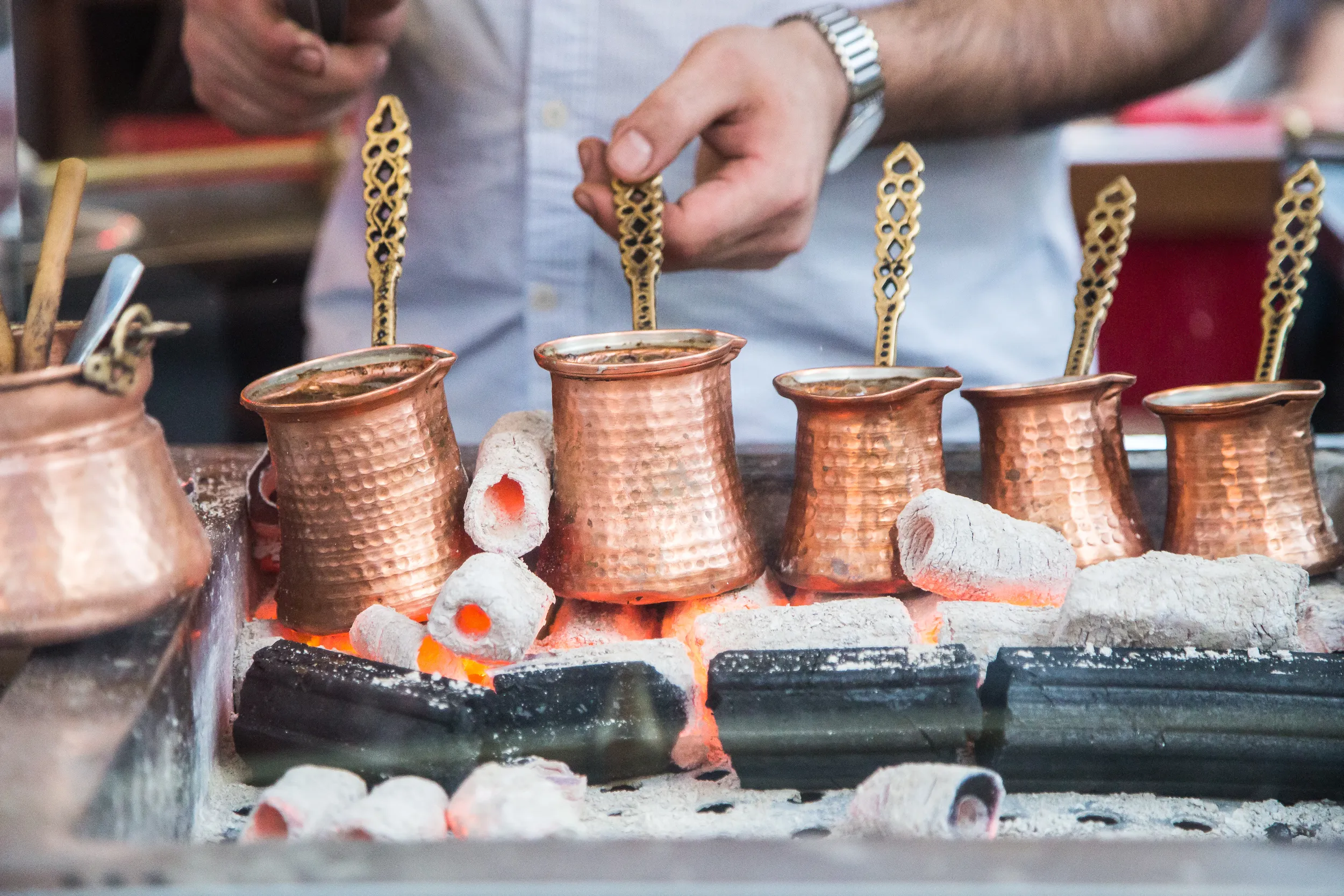
A proper Turkish coffee set: small copper cezve, small cup, a piece of lokum on the saucer.
15:30 · Turkish coffee: Fazıl Bey’in Türk Kahvesi
Map · Serasker Cad. 1, Kadıköy
A 1923 coffee house in the middle of the market. Roasts and grinds its own beans on antique machines on the ground floor, which is why the whole street smells like coffee. The Turkish coffee is the benchmark.
What to order: Türk kahvesi, orta (medium sweet), with a glass of water and a piece of Turkish delight.
16:30 · Tellalzade Sokak (antiques) and Moda seafront
Tellalzade is a cobblestone street of antique shops between the market and the bar street. Gramophones, old radios, vinyl. Browse for 20 minutes. Then pick up the Moda seafront path at the southern end. The sunset view from Moda Point is the best on the Asian side.
18:00 · Ice cream: Meşhur Dondurmacı Ali Usta
Map · Moda Cad. 176/B, Kadıköy
Run by five brothers, more than 40 flavours, open until 2am. The Moda ice cream standard.
What to order: Two flavours in one cup. Salep and sakız (mastic) in winter, melon and sour cherry in summer. Add crushed pistachio on top.
19:30 · Meyhane dinner on Kadife Sokak
Kadife Sokak, locally “Barlar Sokak” (Bar Street), is a two-block strip of meyhanes, pubs and rakı halls. Cheaper and looser than the European side. A full meyhane dinner runs $25-$45 per person.
Recommended: Ney’le Mey’le for a classic meyhane experience, or any meyhane on the strip with visible locals rather than a hostess pulling in passers-by.
What to order: Same meze logic as Day 3. Start with six cold plates (lakerda, haydari, çoban, mücver, stuffed vine leaves, topik). One hot meze. Grilled fish. Rakı. Fruit to finish.
23:00 · Late ferry back or stay on the Asian side
Last ferries to Eminönü and Karaköy run around midnight. If your hotel is on the European side, budget time. If the meyhane dinner runs late, a taxi back via the bridge is $10-$15.
Hidden gems in Istanbul
Places that do not appear on most lists. Worth a detour if you have extra time.
Hayvore (off İstiklal) — Black Sea regional cooking, almost unknown to tourists. Order mısır ekmek (cornmeal bread) and karalahana çorbası (black cabbage soup).
Pandeli — tucked above the main entrance of the Spice Bazaar, up a narrow staircase. Blue-and-white Iznik-tiled dining room, early 1900s Istanbul-Greek feel. Lunch only. Book ahead.
Ciya Kebap (opposite Çiya Sofrası) — the grill-focused sister of Çiya Sofrası. Regional kebabs from across Anatolia.
Mürver — Istanbul’s first live-fire restaurant, on a rooftop in Karaköy with a 180° view of the old city. Dinner only. Book ahead.
Pidesun (Kadıköy) — stone-oven pide specialist, cheap, eaten standing at the counter. Cheese-and-sucuk is the greatest hit.
Beşiktaş Çarşı on a Saturday morning — the European-side pazar that most tourists skip. Vegetables, cheeses, fresh-pickle stalls that are one or two generations deep.
Dürümzade (Map) — the Bourdain-famous charcoal kebab shop on Kamer Hatun Caddesi. Lunch or late-night. Cash only.
Must-try foods in Istanbul (quick list)
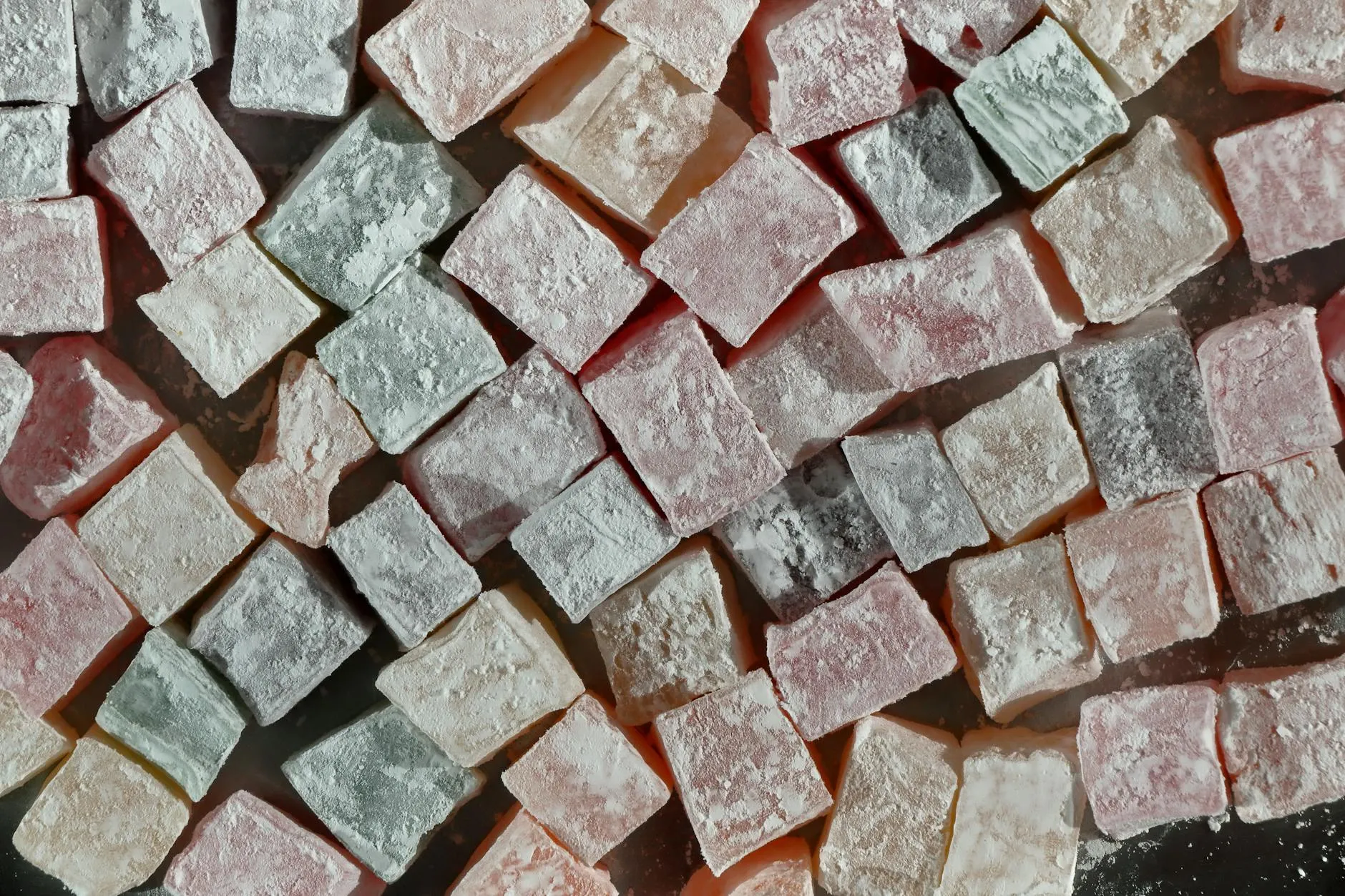
Hafız Mustafa’s sweet counter. The airport tray version is a different product.
A compressed what-to-eat-in-Istanbul list, with where each is best.
- Simit — sesame bread ring, best from a red street cart at 9am with hot tea.
- Balık ekmek — grilled mackerel sandwich, from the boats at the Eminönü waterfront or the fish market in Karaköy.
- Midye dolma — mussels stuffed with spiced pilav, eaten from illuminated street carts at night. Count them.
- Lahmacun — paper-thin flatbread with minced lamb, rolled around parsley and lemon. Under $4 at any proper lahmacuncu.
- Kokoreç — seasoned lamb intestines grilled over wood, chopped and served in bread. Şampiyon Kokoreç sets the standard.
- Islak hamburger — small tomato-sauce-soaked slider. Kızılkayalar at Taksim, preferably after midnight.
- Köfte — grilled hand-rolled meatballs. Tarihi Sultanahmet Köftecisi since 1920.
- Çiğ köfte — bulgur patties wrapped in lettuce, now almost always vegetarian.
- Menemen — soft scrambled eggs with tomato, green pepper, sometimes sucuk. Any Turkish breakfast will include this.
- Manti — tiny beef dumplings with garlicky yoghurt and red-pepper butter. Kayseri version is the reference.
- Hünkar beğendi — lamb stew on smoked aubergine purée. Ottoman palace dish. Karaköy Lokantası does the best version.
- Pide — boat-shaped flatbread with cheese, sucuk, egg or a combination. Closer to khachapuri than pizza.
- İskender — thin-sliced döner on cut-up flatbread with tomato sauce and browned butter. Dinner-heavy.
- Baklava — layered filo with pistachios and syrup. Karaköy Güllüoğlu is the benchmark.
- Künefe — shredded pastry over stretchy cheese, syrup-soaked, hot. Dinner dessert, never breakfast.
- Kazandibi — milk pudding with a caramelised underside folded on top. Underrated.
- Turkish coffee — thick, unfiltered, served with water and a piece of lokum. Fazıl Bey in Kadıköy.
- Salep — hot orchid-root milk drink, winter only. Real salep is rare; cornstarch imitations are everywhere.
Common mistakes to avoid
Traveler patterns that ruin otherwise great food days in Istanbul.
Eating in Sultanahmet Square itself. Most restaurants within 200 metres of Hagia Sophia or the Blue Mosque are tourist-priced and built for volume. Walk one block off the square (Caferiye Sok., Divanyolu, Akbıyık Cad.) and quality and price both improve.
Menus with photos of the plates. The single most reliable tourist-trap signal in Istanbul. Real restaurants do not need photographs to advertise the food.
Touts pulling you in from the street. If someone is standing outside a restaurant trying to get you in, the food cannot bring you in on its own. Walk on.
Prices quoted only in euros or dollars. A Turkish restaurant charges in lira. Foreign-currency menus are tourist-pricing.
Planning six meals a day. Istanbul portions are large and meze dinners run three hours. Two full meals plus snacks is the realistic maximum. Overplanning makes you miss the city between the meals.
Skipping the Asian side. A lot of four-day itineraries never cross the Bosphorus. Kadıköy alone is worth a full day. Day 4 above is the answer; do not replace it with a second Sultanahmet morning.
Booking dinner in a famous meyhane on a Friday at 10pm with no reservation. Nevizade and Asmalımescit both fill on weekends. Either book 1-2 days ahead or arrive by 7:30pm.
Buying spices at the front of the Spice Bazaar. The stalls closest to the Galata Bridge entrance charge 30-40 percent more than the back of the bazaar or the streets behind it. Walk further before buying.
Ignoring tea. Tea is free in many cafés after a meal. Drinking it is part of the meal format. Skipping it marks you as rushing. Slow down.
Eating breakfast at the hotel every day. Turkish breakfast outside a hotel is one of the best eating experiences in the city. Do it at least twice in four days.
Food tour or self-guided?
Both work in Istanbul. A small-group food tour on Day 1 or Day 2 front-loads the learning: a local guide explains what you are looking at, orders for you at a stall where no one speaks English, and gets you past the tourist-trap restaurants. If this is your first trip and you would rather not research every stop, it is worth the $85-$145 per person.
Self-guided is fine for confident travelers. This itinerary is built to work either way. If you want background on the individual dishes, the Istanbul food guide covers the dishes themselves. For the specific routes, the self-guided Istanbul food tour breaks three neighborhoods into stop-by-stop walks with restaurant names and ordering tips. The ranking of the best Istanbul food tours lists the four operators we recommend with price breakdowns.
For neighborhood-level depth, the three area guides cover what each day of this itinerary skims:
- Kadıköy food guide (Day 4)
- Sultanahmet & Eminönü food guide (Days 1 and 2)
- Karaköy & Taksim food guide (Day 3)
Four days, four neighborhoods, roughly 18 kilometres of walking, somewhere north of 30 individual food experiences. You will not eat everything on the must-try list in this time. You will eat better than 95 percent of visitors to Istanbul do. That is the point.
Keep reading
This is an editorial review. Some links on this page are affiliate links. If you book through them we may earn a small commission at no extra cost to you. It never changes which tours we recommend.