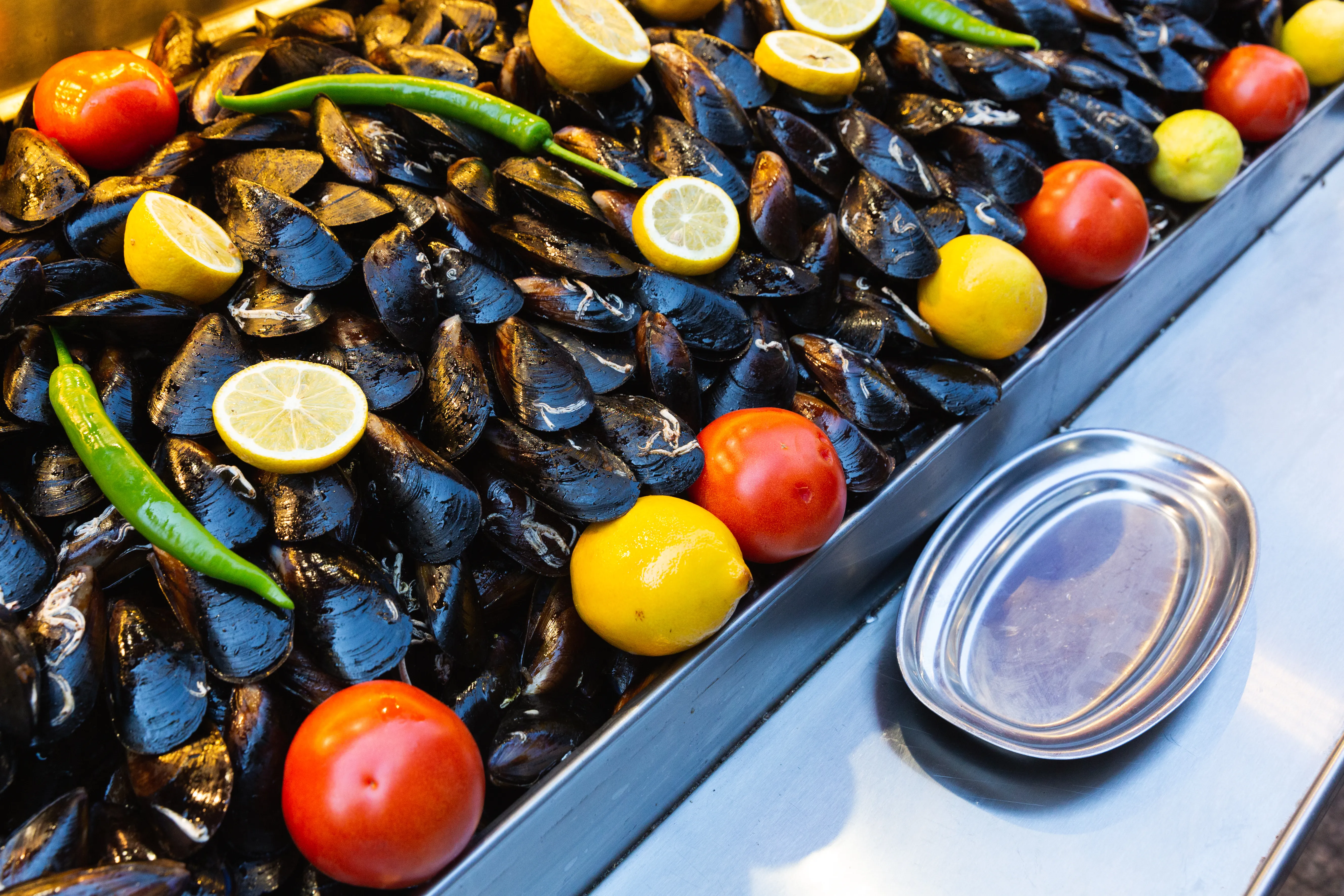
Istanbul’s street food is what keeps the city fed. It is cheaper than anywhere in Europe, it runs from breakfast to 4am, and the best of it is better than most sit-down meals. Most guides skip the part that matters, though, which is that the quality range is enormous. A great balık ekmek and a mediocre one cost the same dollar. Tourist areas are disproportionately stocked with the mediocre ones.
Below is a ranking. Everything on it can be eaten for under five dollars. The top ten are things worth going out of your way for. The rest are worth trying if you are passing through.
1. Midye dolma (stuffed mussels)
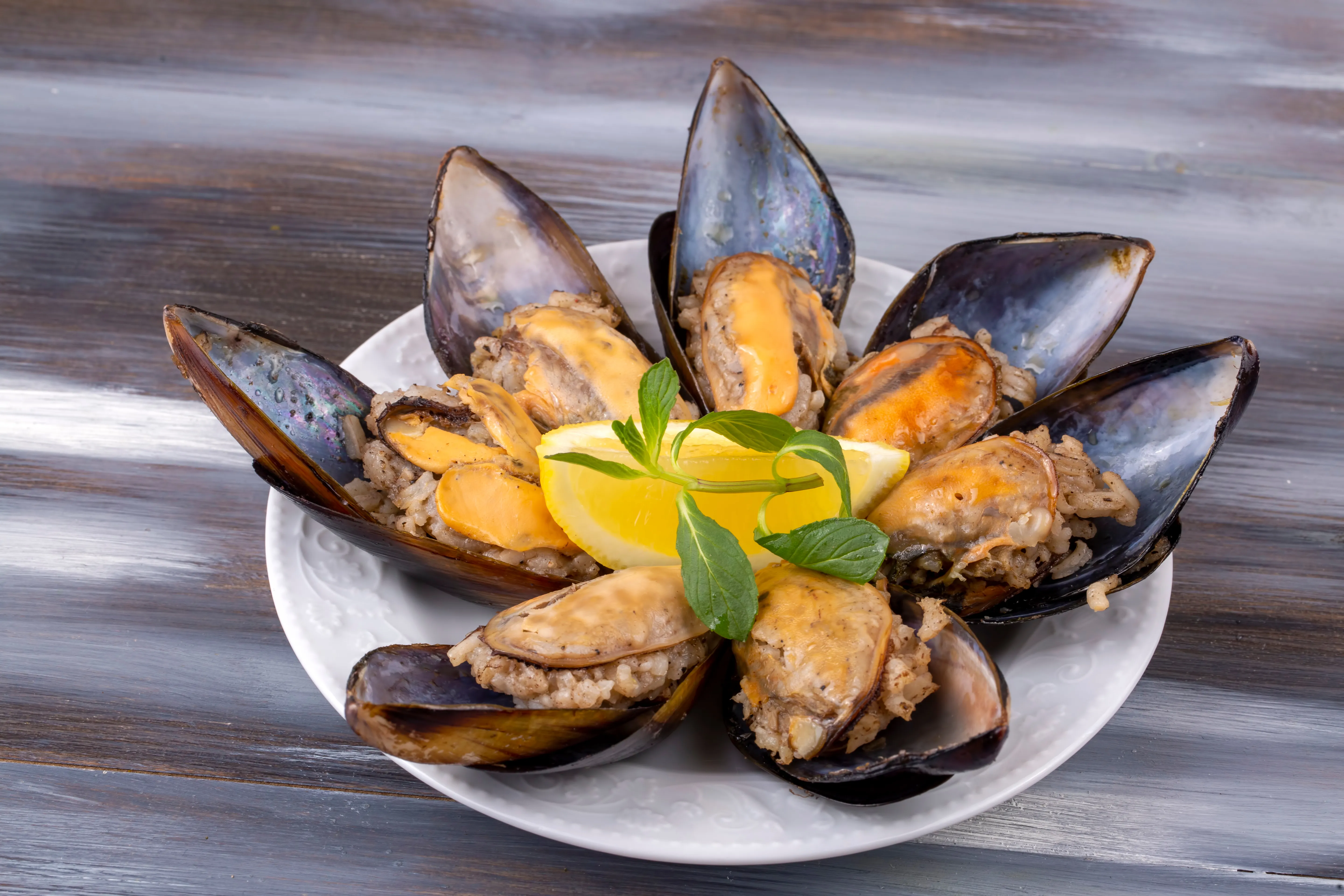
The plated version. Same thing as the street-cart version, just with fewer lemon squeezes per piece.
Cold mussels stuffed with spiced rice, cracked open in front of you, hit with lemon. The best ones have plump, glossy mussels and rice that is still loose. Cheap at around 20 to 25 lira (70 cents) each. Busy Kadıköy and Beşiktaş corners. Skip the Sultanahmet tourist versions.
Best at: the high-volume stalls in the Kadıköy market, inland from the ferry terminal.
2. Balık ekmek (fish sandwich)
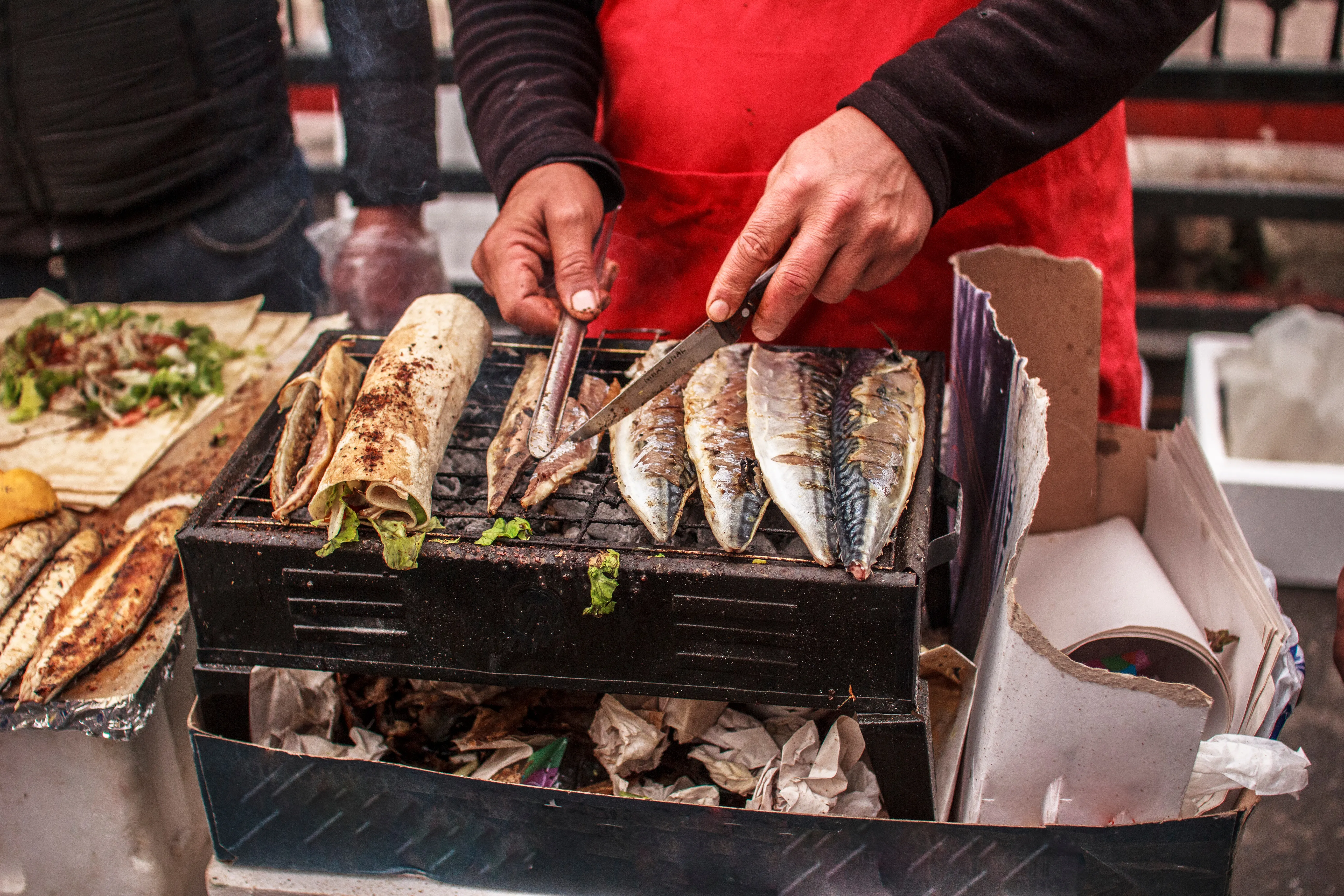
Mackerel going on the grill at Karaköy. The Eminönü boats are more photogenic; the Karaköy fish is usually better.
Grilled mackerel on white bread with raw onion, parsley, and lemon. The Eminönü boats are the postcard. The Karaköy side has better fish and shorter lines.
Best at: the unmarked stalls along the Karaköy fish market, a ten-minute walk from the Eminönü boats.
3. Kokoreç
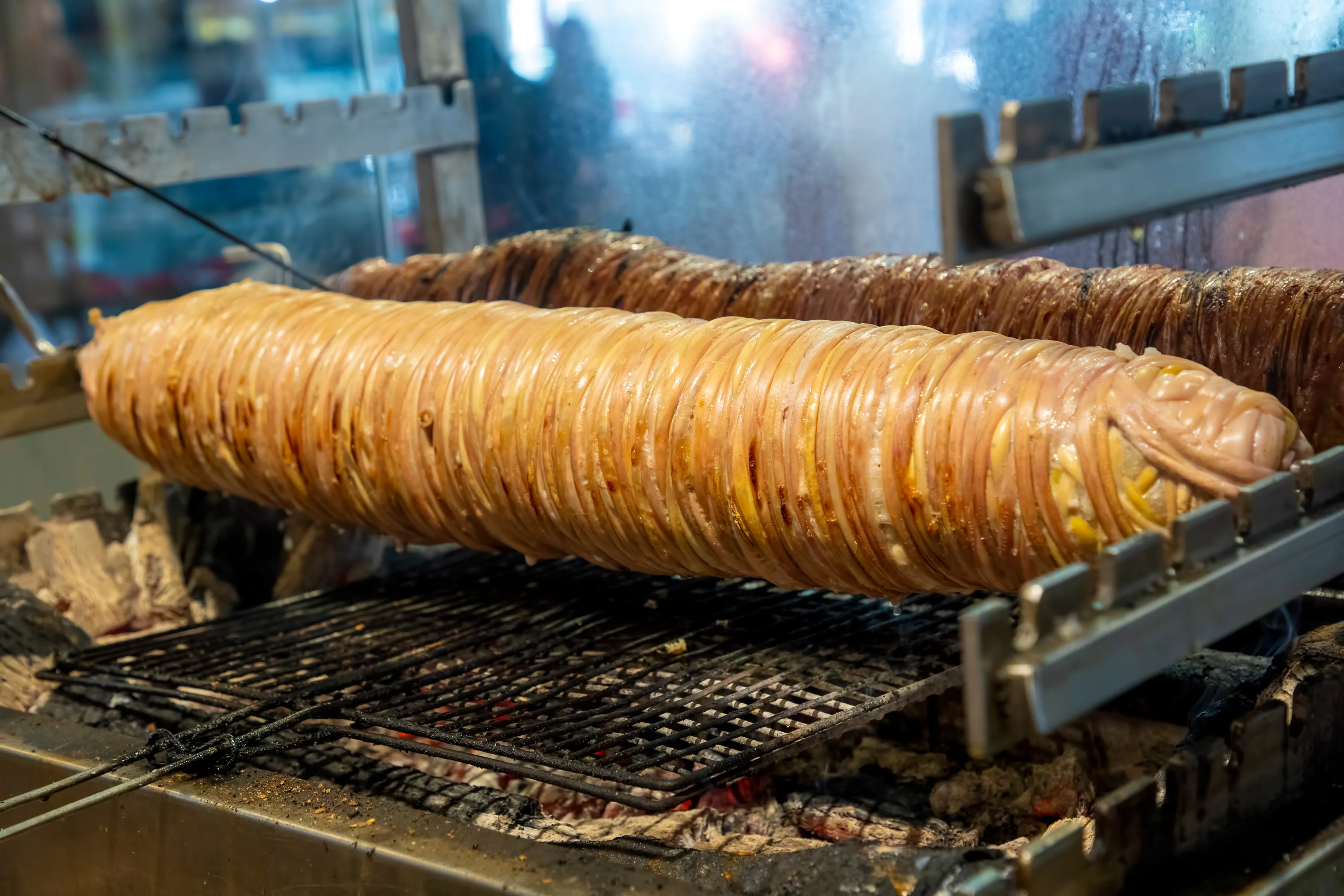
Kokoreç over a wood fire. A visible rotating spit is the signal that the shop is serious.
Seasoned, grilled lamb intestines, chopped finely and served in bread with oregano and chili flakes. This is the one travelers fear and then order twice. The texture is unexpectedly tender. The flavor is offal-forward but restrained.
Best at: any stall with a visible rotating spit and a queue, especially the old-school places in Beyoğlu’s back streets.
4. Simit
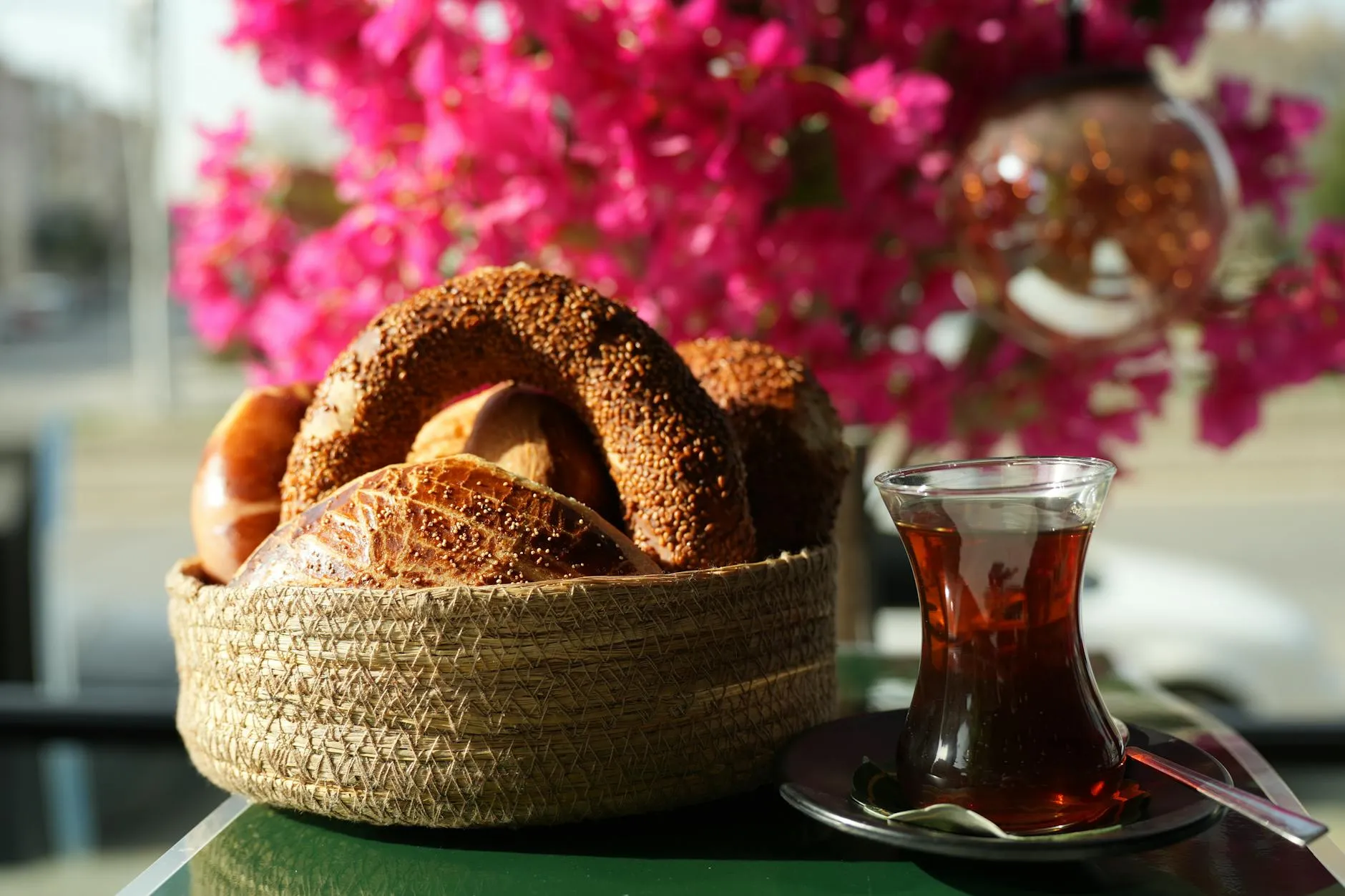
Morning simit with hot tea. The 5pm version is leather.
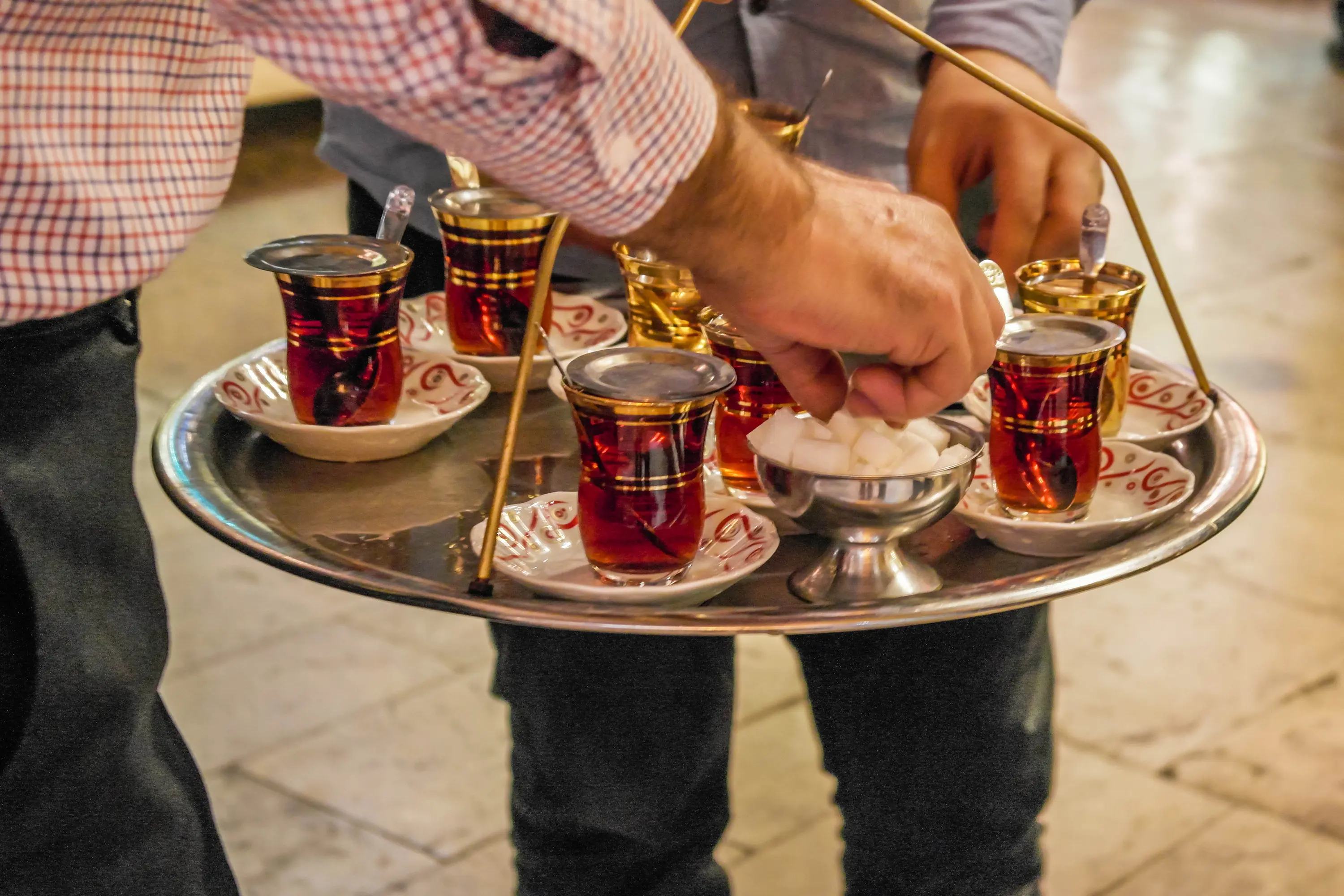
Sesame-crusted bread rings. The entire ranking depends on freshness. A 9am simit is a different food than a 5pm simit. Pair it with a glass of hot black tea from a neighboring çay stand for a dollar and change.
Best at: anywhere near a ferry terminal during the morning rush.
5. Kumpir (loaded baked potato)
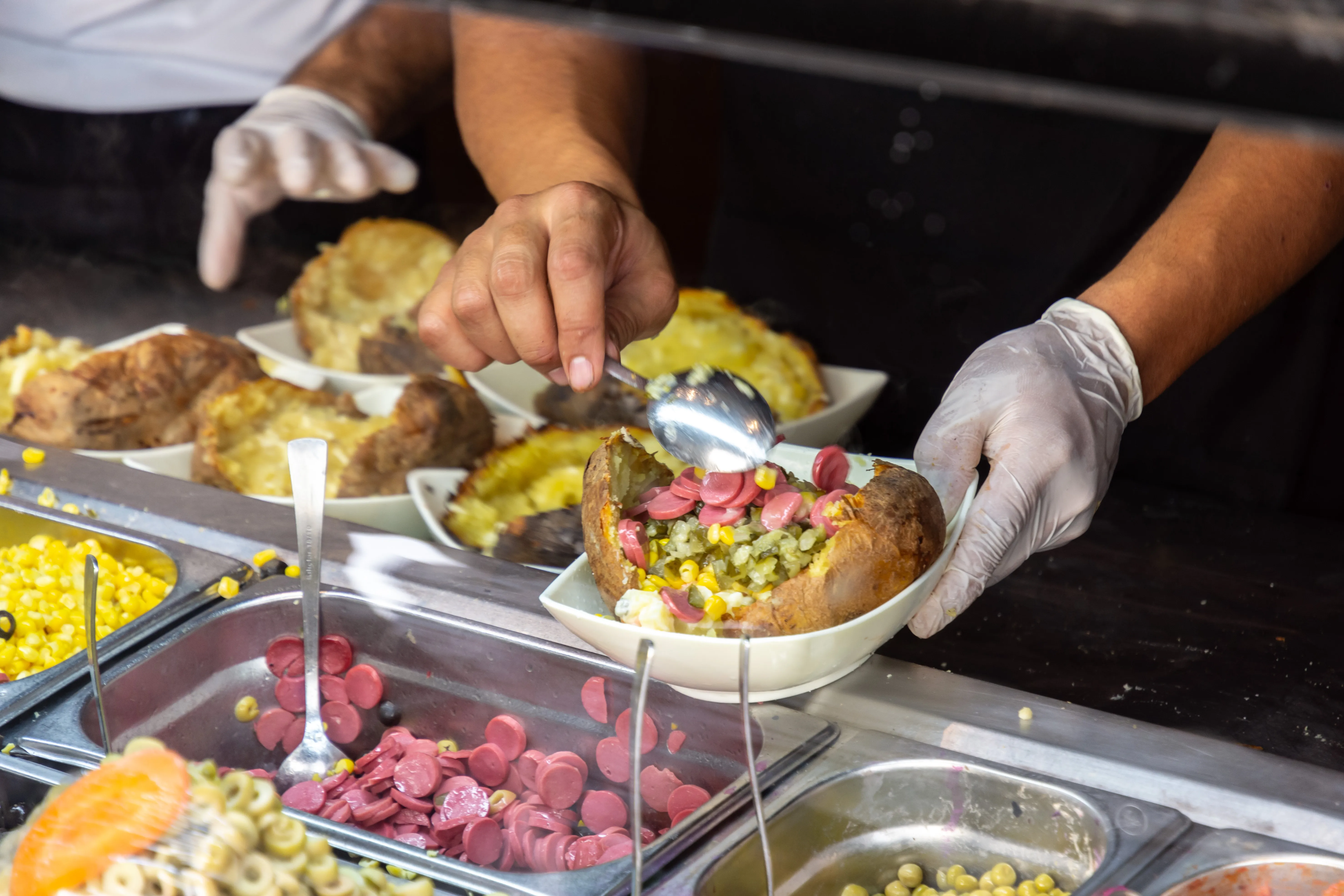
Ortaköy kumpir. Toppings go on until the potato disappears.
An enormous baked potato split open, mashed with butter and cheese inside the skin, and topped with everything in sight. Olives, corn, pickled cabbage, sausage, yogurt, hot sauces. Tourist-associated but legitimately good, especially after a long evening.
Best at: the cluster of stalls in Ortaköy, along the Bosphorus waterfront under the first bridge.
6. Börek (from a real bakery)
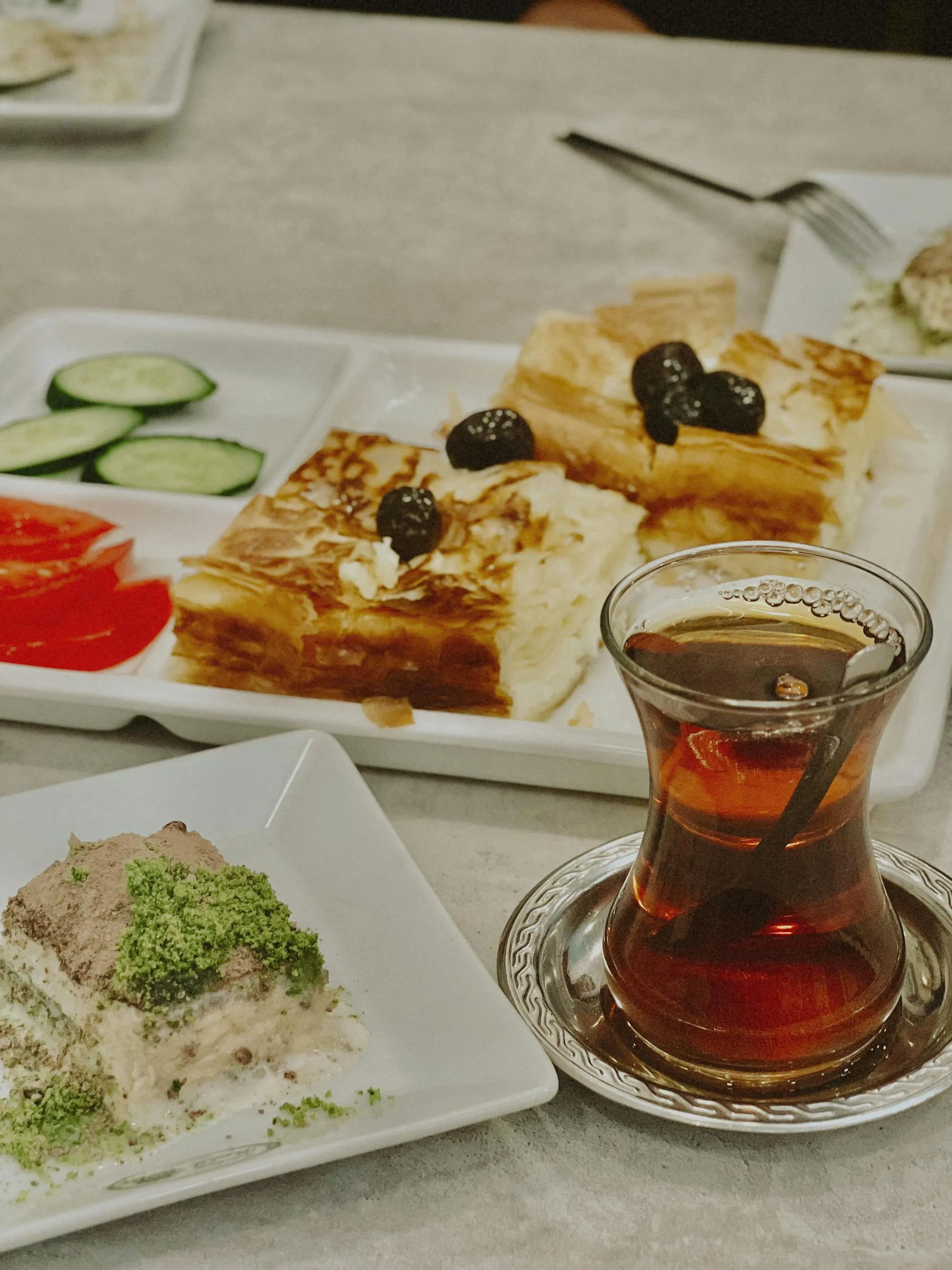
Börek from an actual fırın at 8am. The breakfast-café version is fine; the bakery version is better.
Layered cheese or spinach pastry, baked in a tray, sliced into squares. “From a real bakery” is the operative phrase. The börek at breakfast restaurants is fine. The börek from a dedicated fırın at 8am is a different food.
Best at: any neighborhood fırın with a queue of Turkish retirees. If there is an English menu on the window, walk next door.
7. Lahmacun
Thin flatbread topped with spiced minced lamb, onion, and parsley. Squeeze lemon, roll tight, eat hot. Half the price of a sit-down lahmacun if you order it from a takeaway bakery.
Best at: specialty lahmacuncu shops in Fatih and the working-class parts of Kadıköy.
8. Turkish ice cream (dondurma), the un-theatrical version
You will see the showmen at the Galata Bridge flipping ice-cream balls on long sticks. Skip them. A real dondurma from a Maraş-style shop, without the performance, is genuinely excellent: chewy, resistant, almond-flavored. The theatre is not the product.
Best at: established Maraş dondurması shops, especially in Moda.
9. Çiğ köfte
Bulgur, spices, pepper paste, and pomegranate molasses, hand-mixed into a stiff paste and wrapped in lettuce with a squeeze of lemon. Today’s version is almost always vegetarian, despite the “raw meatball” name. A three-dollar snack that is satisfying out of all proportion to its size.
Best at: the city-wide Komagene chain is consistent. Small independent çiğ köfteci shops in Beyoğlu are better.
10. Kestane (roasted chestnuts)
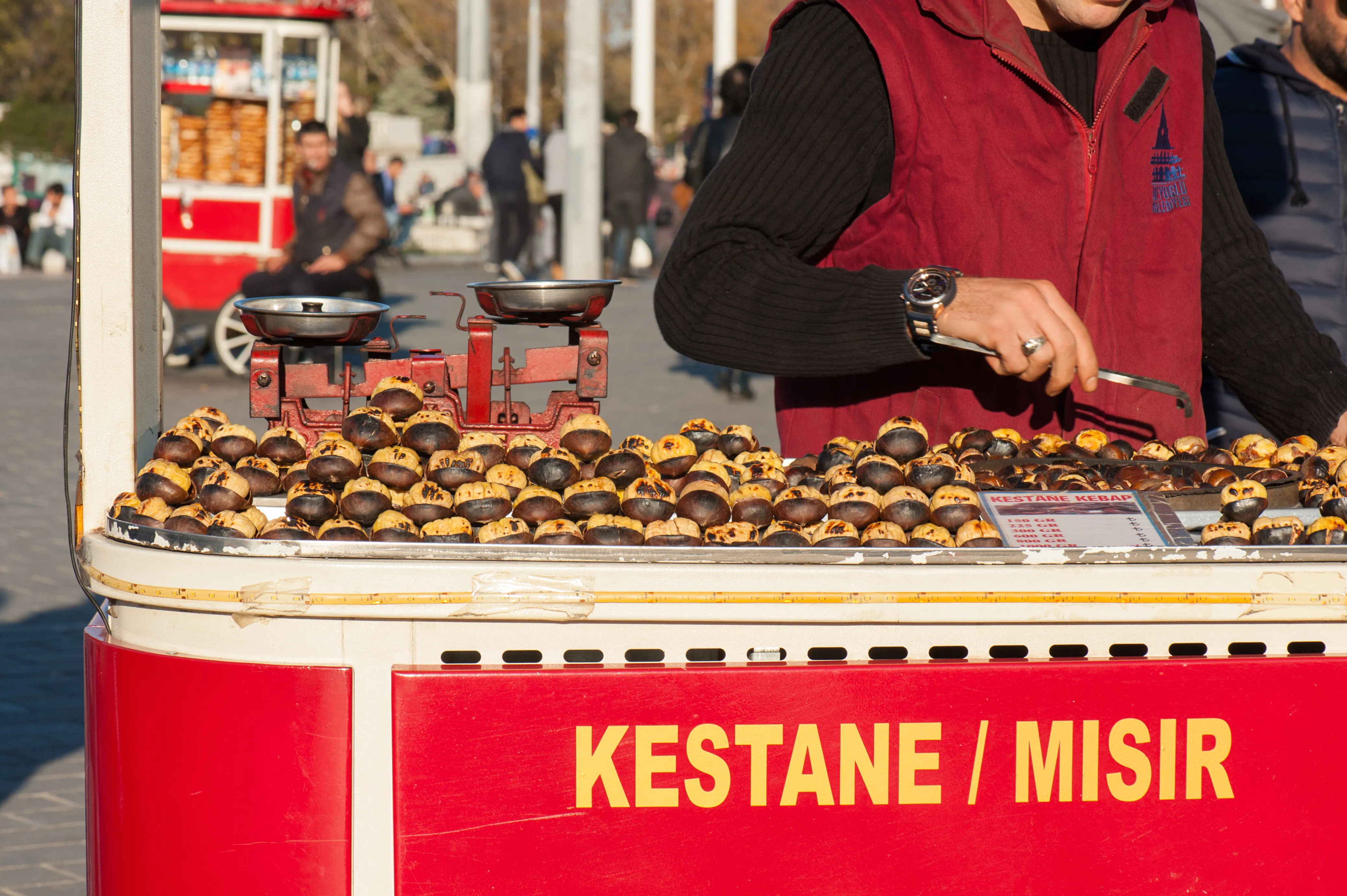
The winter-only kestane cart. You smell the smoke a block before you see it.
A winter-only pleasure. Carts set up from October through March. You will smell the smoke from a block away. A paper cone of hot chestnuts on a cold walk along the Bosphorus is hard to beat.
Best at: almost any winter street corner in Beyoğlu or Beşiktaş.
11. Mısır (grilled corn)
Reliable filler. Husked ears roasted over coals and brushed with salty butter. Not spectacular. Not bad. Common along the Bosphorus parks.
12. Tavuk pilav (chicken and rice)
Cart vendors sell styrofoam boxes of butter-yellow rice with shredded chicken and chickpeas for about three dollars. A classic cheap lunchtime eat. Heavy. Eat before a long walk, not after.
13. Salep
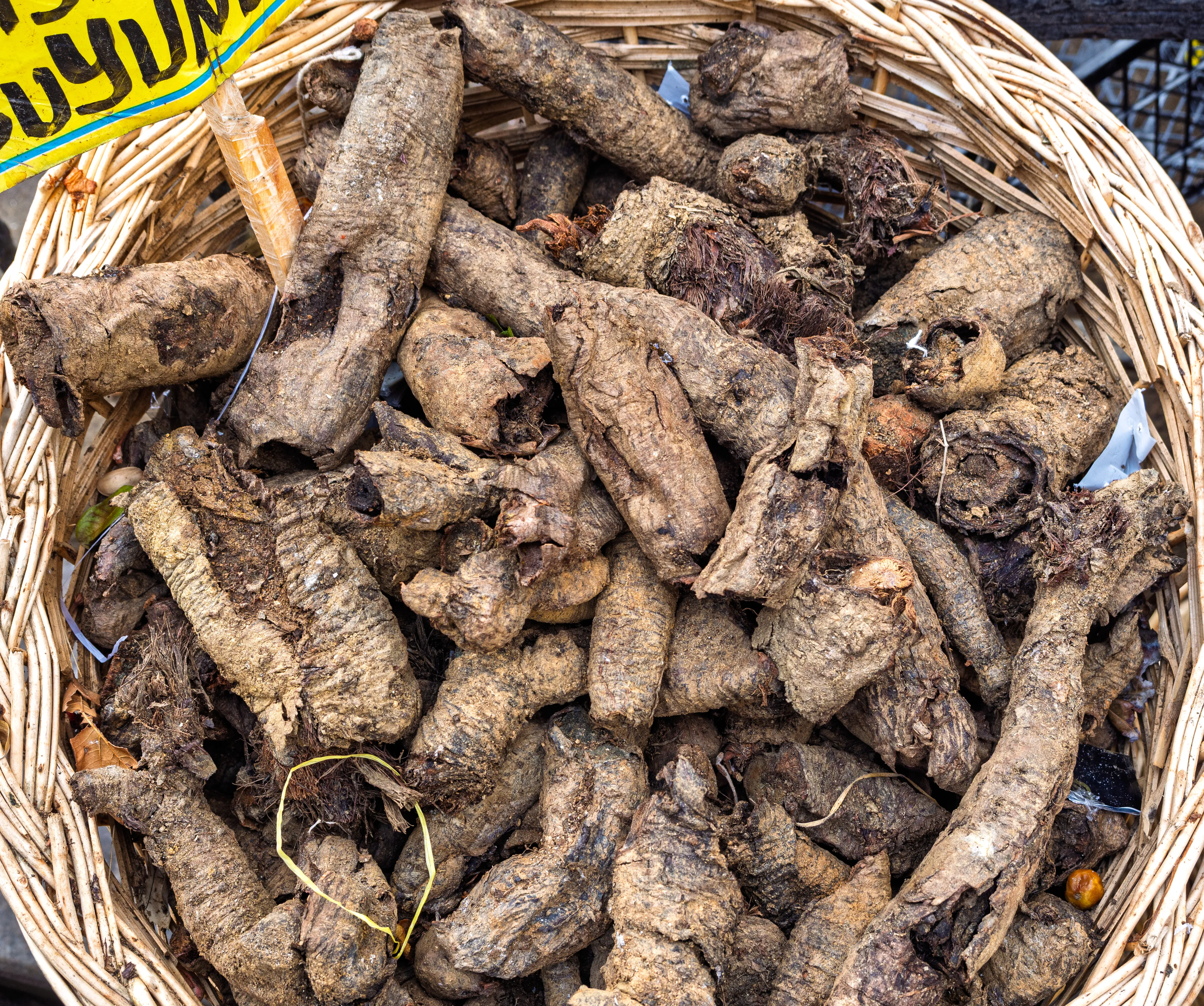
Real salep roots. Almost everything sold on the street is cornstarch impersonating this.
Not food, but a hot winter drink made of milk thickened with orchid-root powder and dusted with cinnamon. Rich, slightly viscous. A small cup from a street cart is perfect in January.
Best at: the Karaköy waterfront in winter.
14. Döner (from a proper kebabçı)
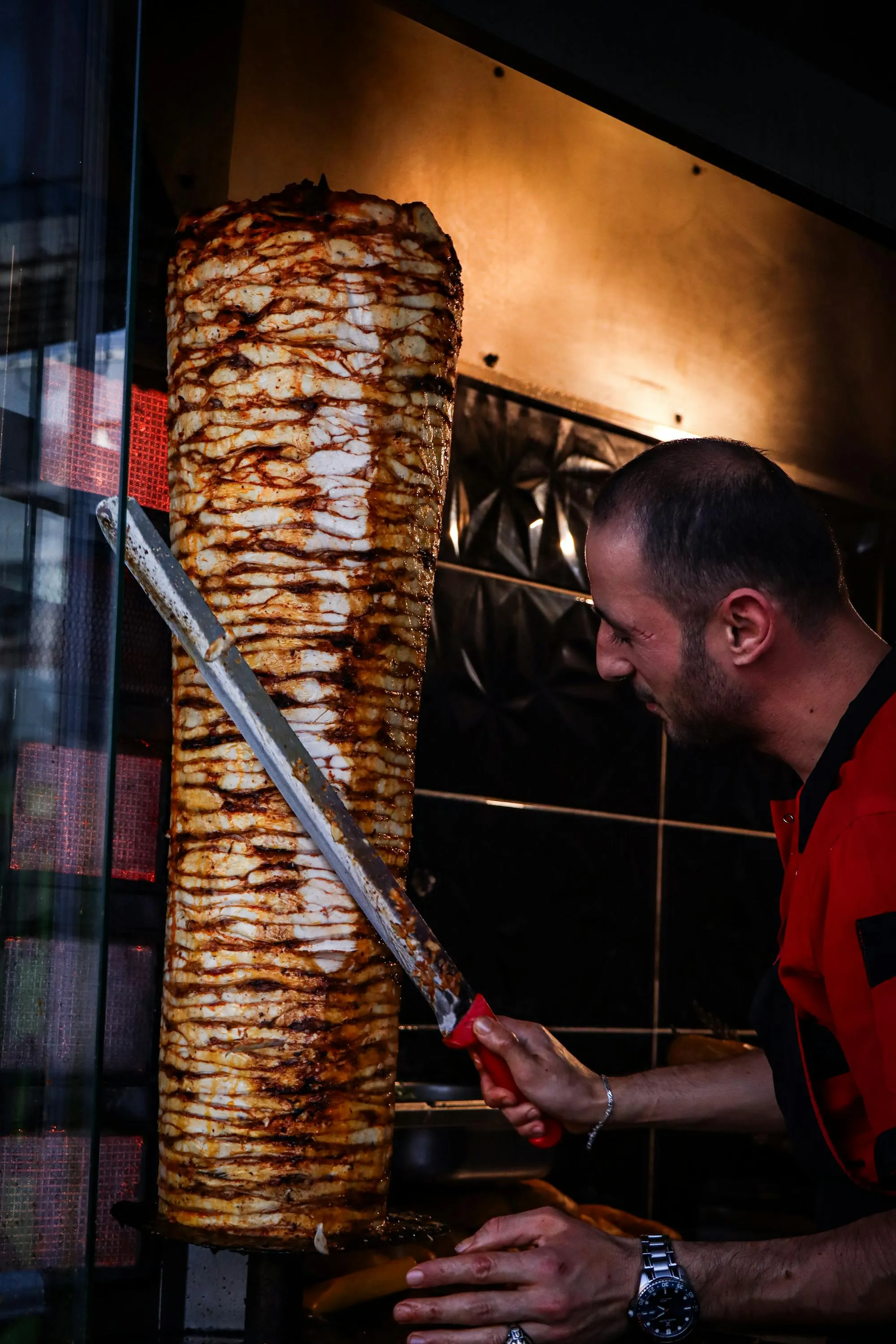
A proper dönerci slices off the spit, not out of a bag. The difference is night and day.
Street-cart döner exists but is often sad. A real döner, sliced from a rotating spit at a dedicated dönerci, belongs on this list only because bad versions have given the whole category a reputation. For the real thing, go inland, away from the tourist drag.
What to skip
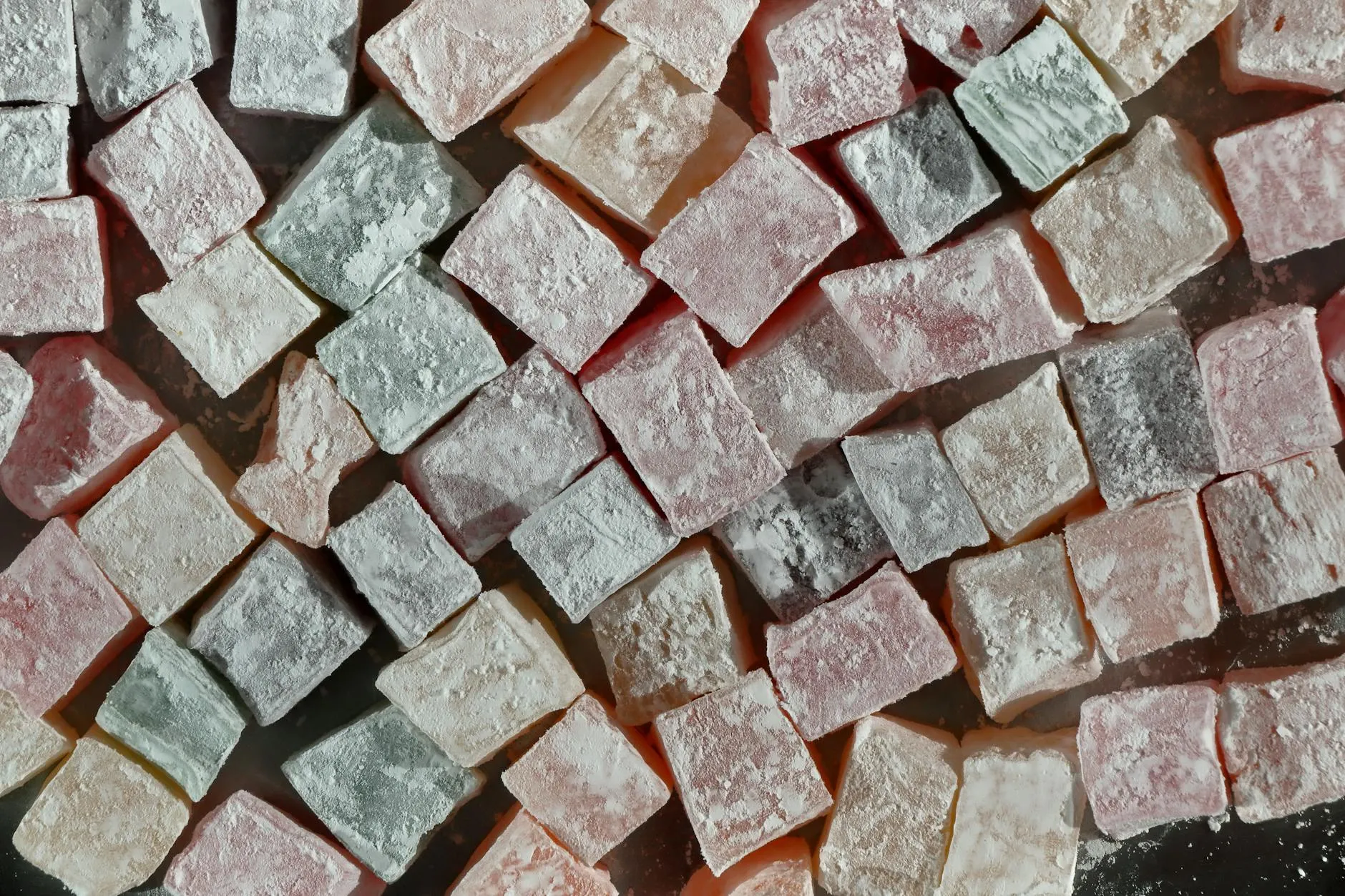
Real lokum at a proper sweet shop. Soft, not rubbery. Bought at the counter, not in shrink-wrap.
Three things the city is happy to sell you and I would rather you did not buy:
- “Turkish delight” in souvenir packaging. The rubbery, dusted-sugar version sold in shrink-wrapped trays at tourist shops is the mass-market edition. Real lokum comes from a dedicated shop, is softer, and is not pre-packaged. The Spice Bazaar stalls are fine. The airport gift-shop trays are not.
- “Authentic” kebab wraps near Hagia Sophia. The signs are in five languages. The price is triple. Walk two blocks in any direction.
- Overpriced fish sandwiches at cruise-ship docks. Balık ekmek is meant to be four dollars. If it is 12, you are paying for view.
A half-day street-food route
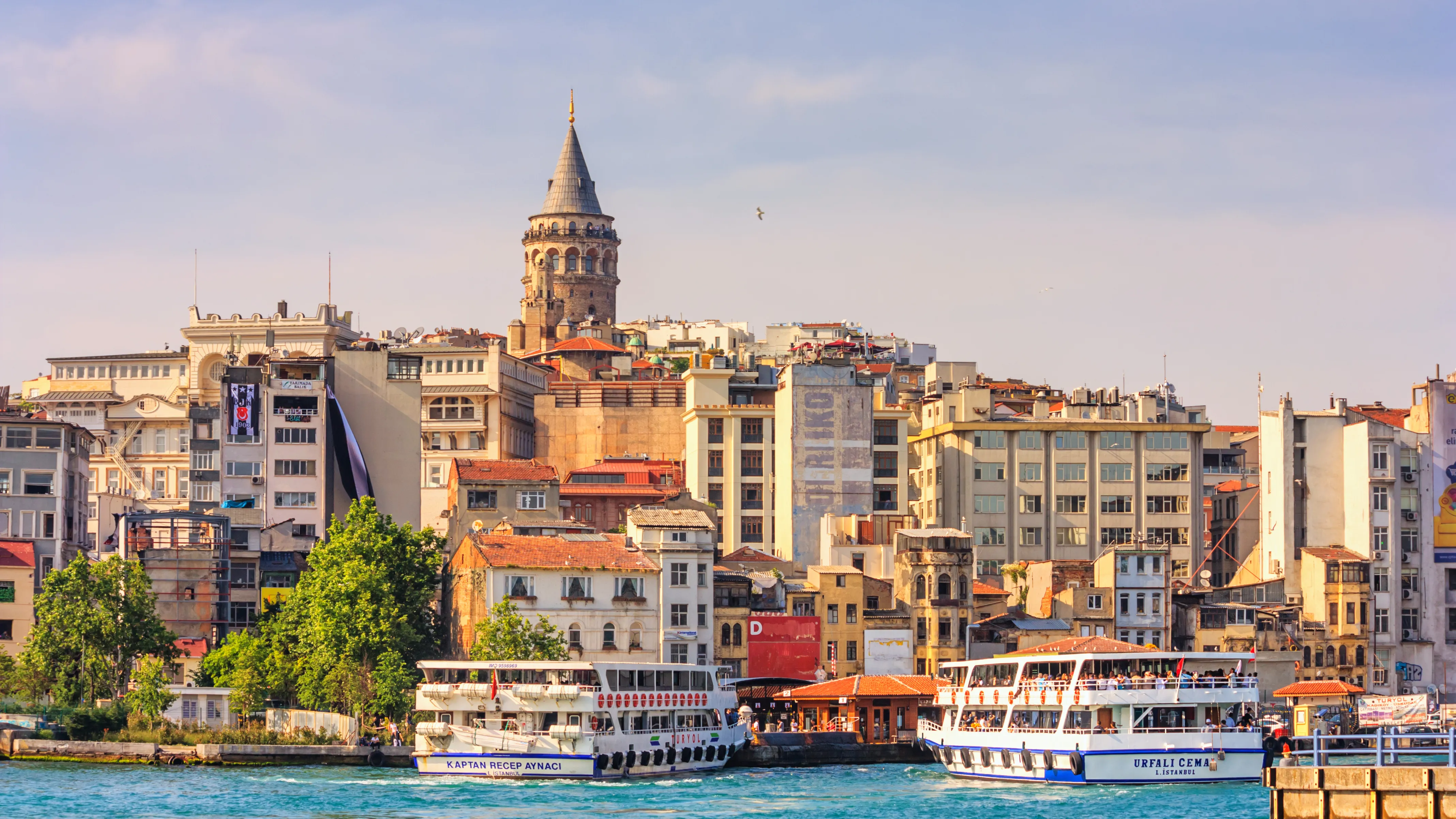
The route in one frame: Eminönü to Karaköy across the bridge, ferry to Kadıköy, graze the market.
If you want a route: start at Eminönü in the morning, cross the bridge to Karaköy for a coffee and a better fish sandwich, ferry to Kadıköy, and graze through the market.
The self-guided Istanbul food tour covers almost exactly this, with timing. Or, if you would rather a local guide point you at the good stalls, the ranking of the best Istanbul food tours is where to start.
Either way: eat the midye dolma. That is the one.
Keep reading
This is an editorial review. Some links on this page are affiliate links. If you book through them we may earn a small commission at no extra cost to you. It never changes which tours we recommend.