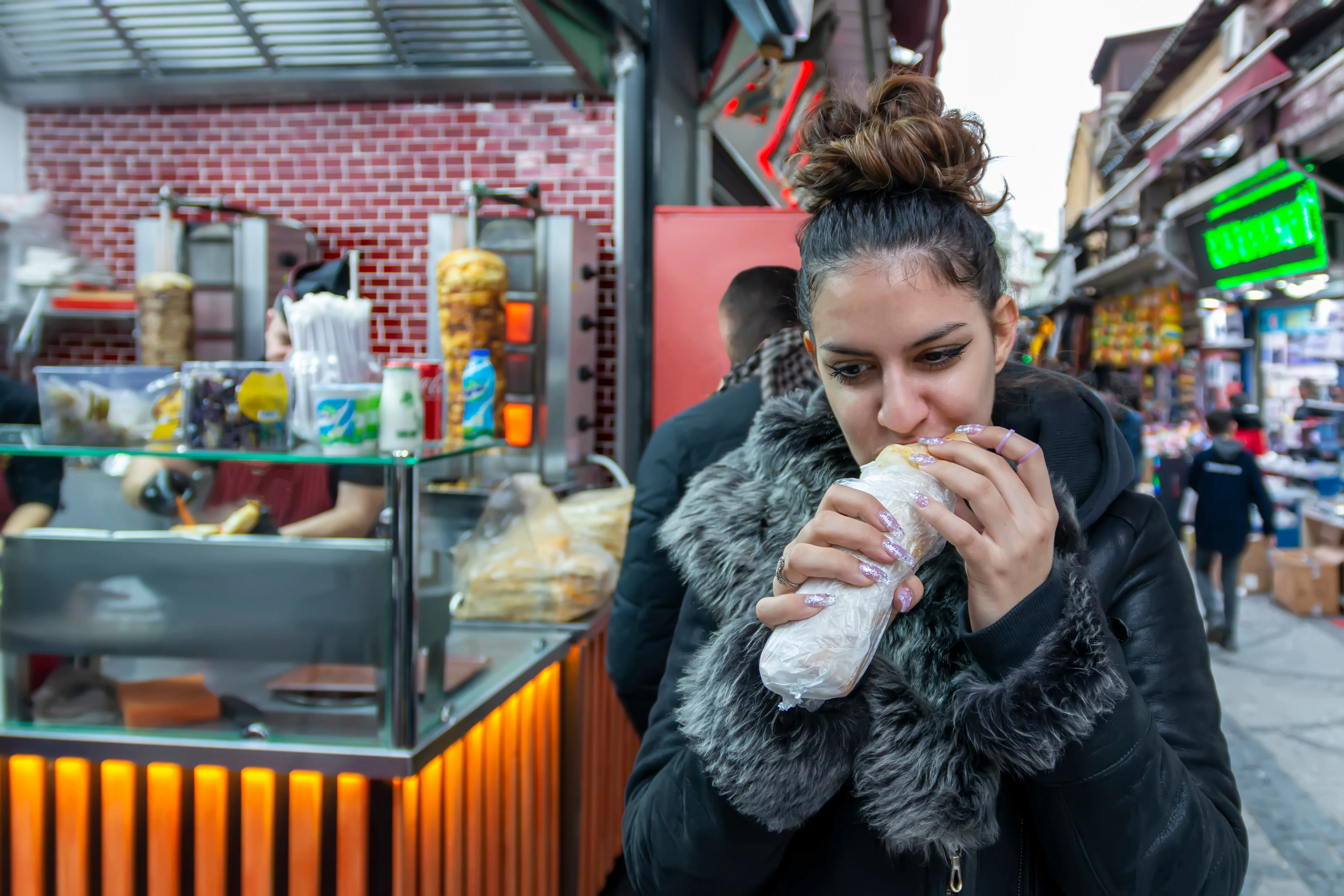
A food tour in Istanbul runs between 60 and 180 dollars depending on whether you go group or private. That is not a trivial line on a travel budget, and the real answer to “is it worth it?” is not yes for everyone. Below is how I actually think about it. Who a food tour is built for. Who it is not. And the one situation where I would tell a friend to skip the whole thing.
The short version
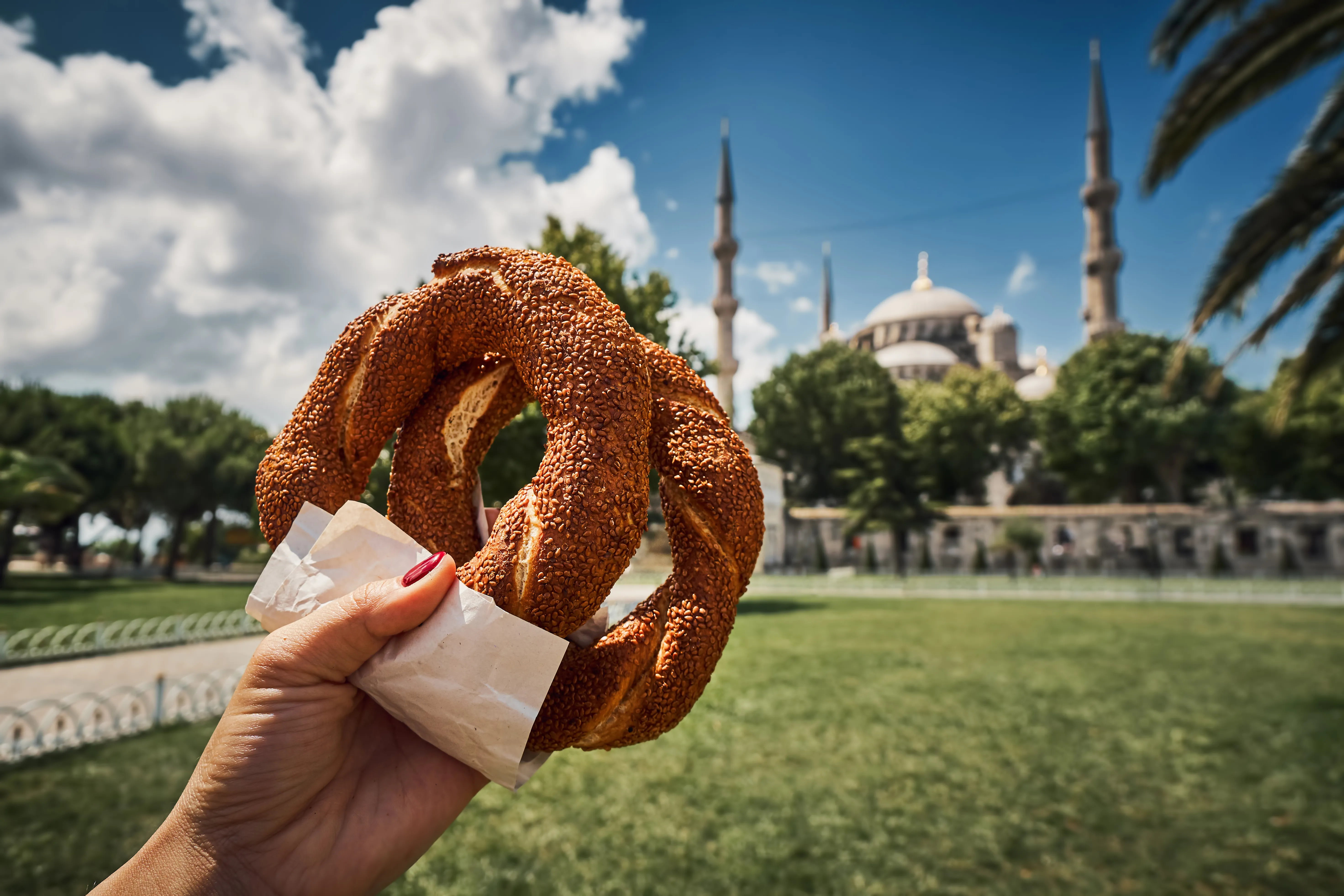
The food most travelers try first. After a few days, you want to know what to try next.
If it is your first time in Istanbul, you have fewer than three days, and you are not a confident eater, a food tour is almost always worth it. If you are on your second or third Istanbul trip and already know what simit tastes like, it usually is not.
Everything else falls somewhere in between, depending on what kind of traveler you are. Here is the long version.
What a good food tour actually gets you
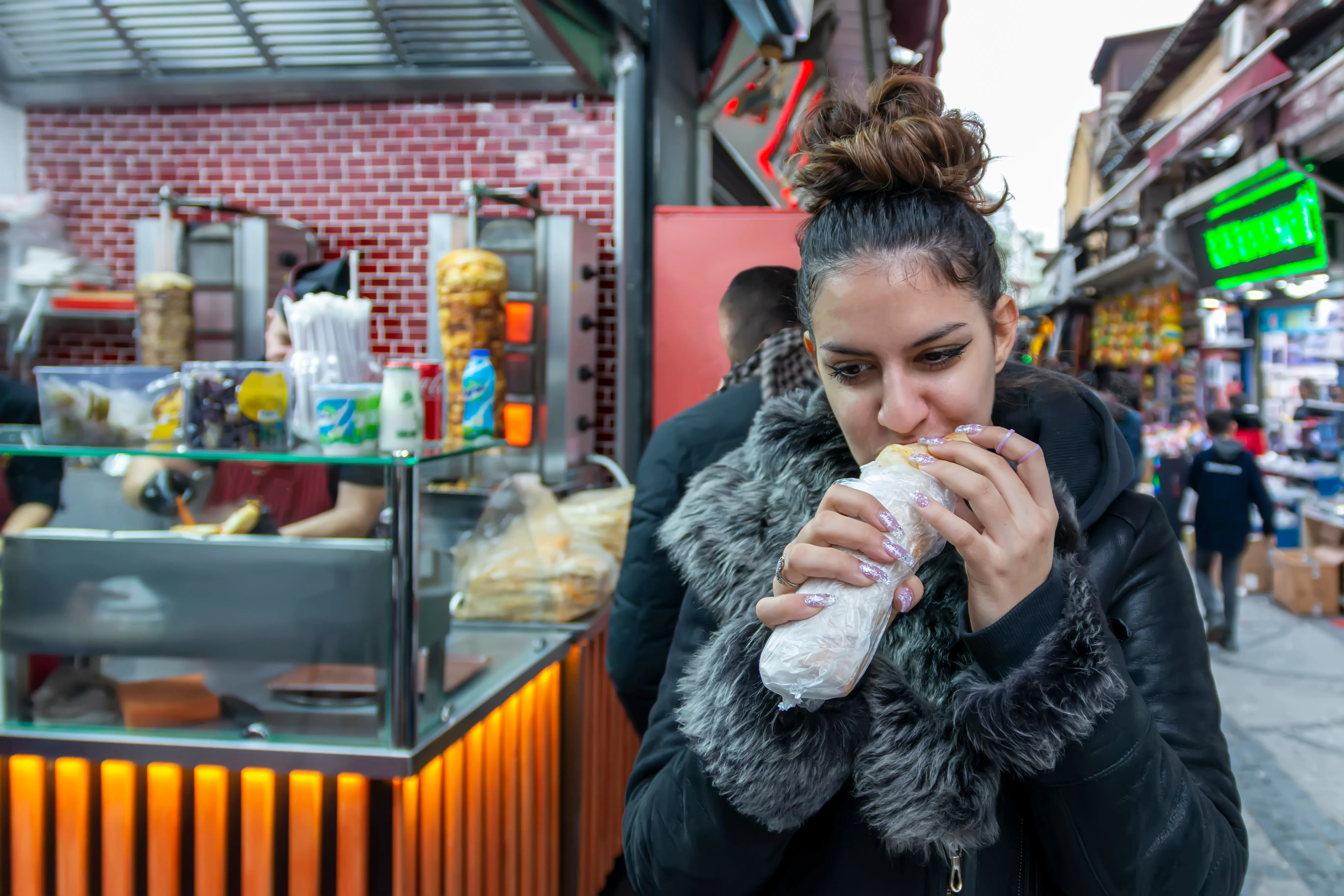
The real value of a food tour: someone who lives here ordering for you at a stall that has no English menu.
Food tours sell themselves on the food, but the food is maybe the third-most-valuable thing you pay for. The real value is:
Decision fatigue, eliminated. Istanbul has thousands of restaurants. A tour gives you a three-hour window where you do not make a single decision about where to go, what to order, or whether the prices are reasonable. For a lot of travelers, especially on the first day of a trip, this is worth 70 dollars by itself.
Context most food writing skips. A good guide can explain why lakerda is only made in Istanbul, why the Balat meyhane you are sitting in used to be Greek-owned, or what a specific stall’s family has been making for four generations. None of that is on Google Maps.
Access to stalls that do not reward walk-ins. A handful of the best street-food stalls in the city operate in Turkish, with no English menu and no interest in explaining themselves. A guide orders for you, and you get the good pickles.
A built-in social group. Group tours put you in a room with six to ten other travelers who opted into the same kind of day. You might meet people you have dinner with later in your trip.
Who gets the most value
First-time visitors
By a large margin, the biggest winners. You compress a week of food-education into four hours, try eight to twelve things you would not have ordered on your own, and leave with a working vocabulary for the rest of the trip. Most first-time visitors come back saying it was the single best thing they did.
Solo travelers
The group-tour format solves two problems at once: company and food. Meyhane dinners in particular are built for groups and feel melancholy solo. A tour that ends at a meyhane is a clever way around that.
Couples on short trips
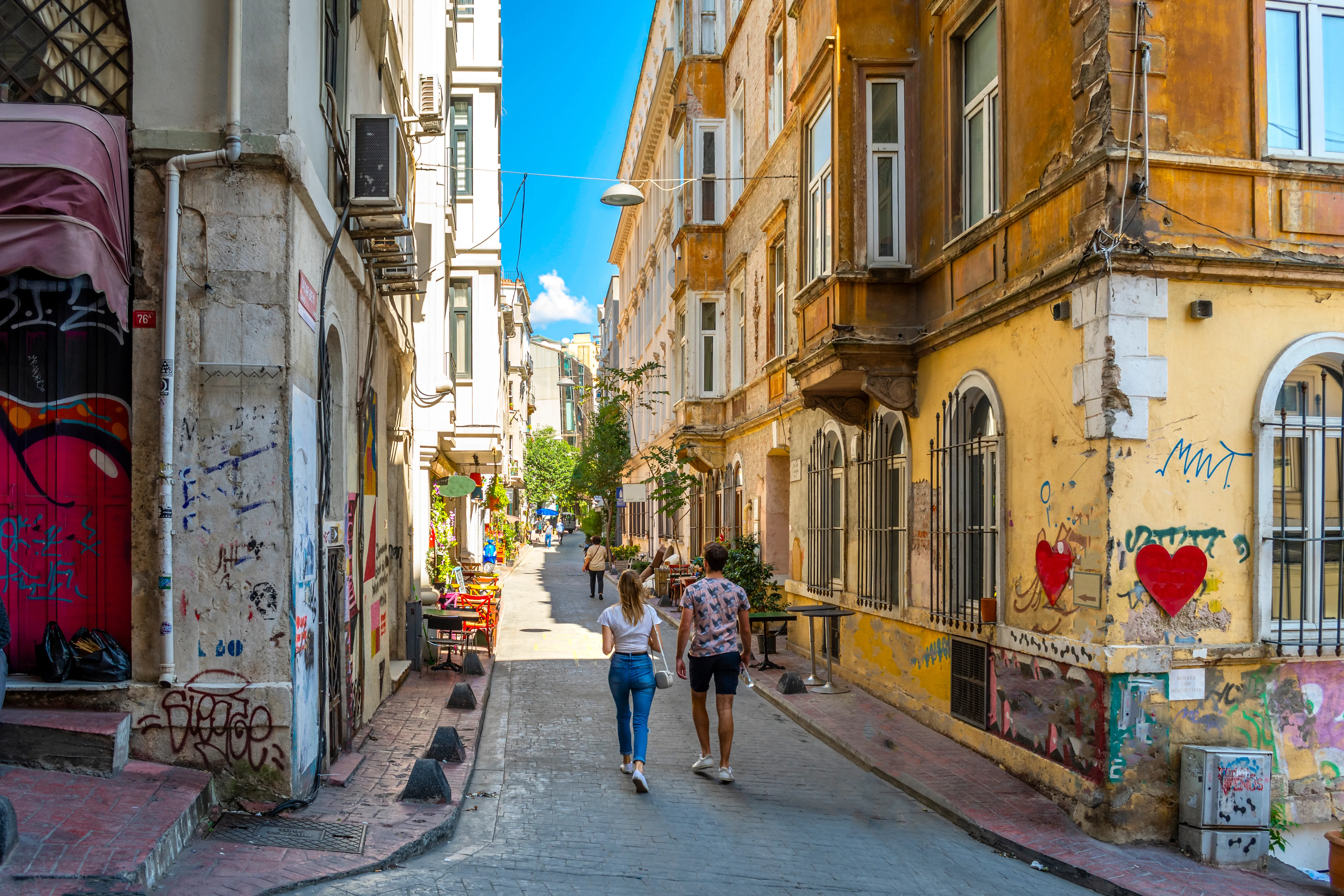
A short-trip couple in a Galata alley. A tour is the social contract that gets both of them to try kokoreç.
If you have 48 hours and one of you is less food-adventurous, a tour is a good social contract. You have both committed to try whatever shows up, and the guide handles any disagreements about where to eat.
People who hate logistics
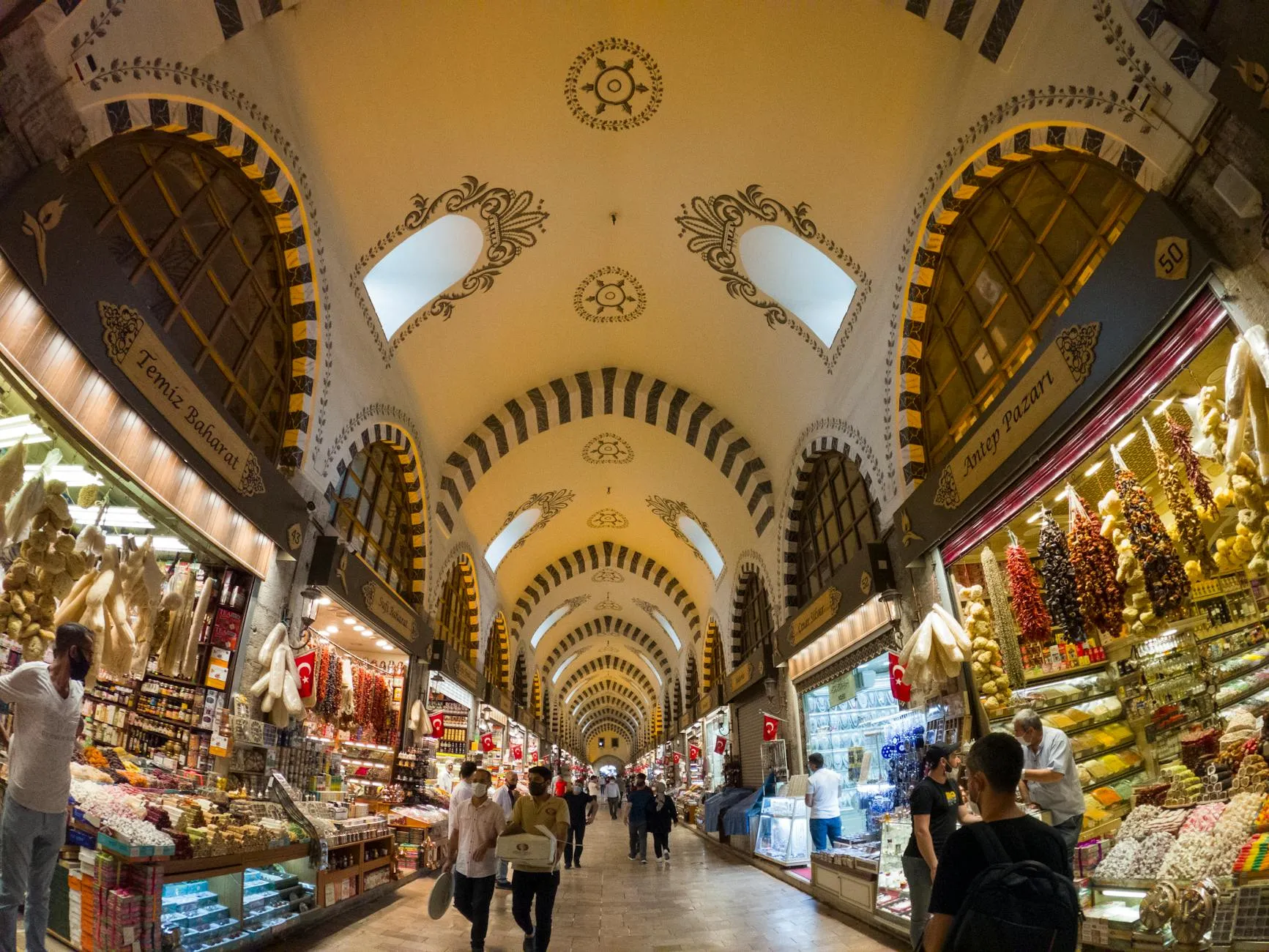
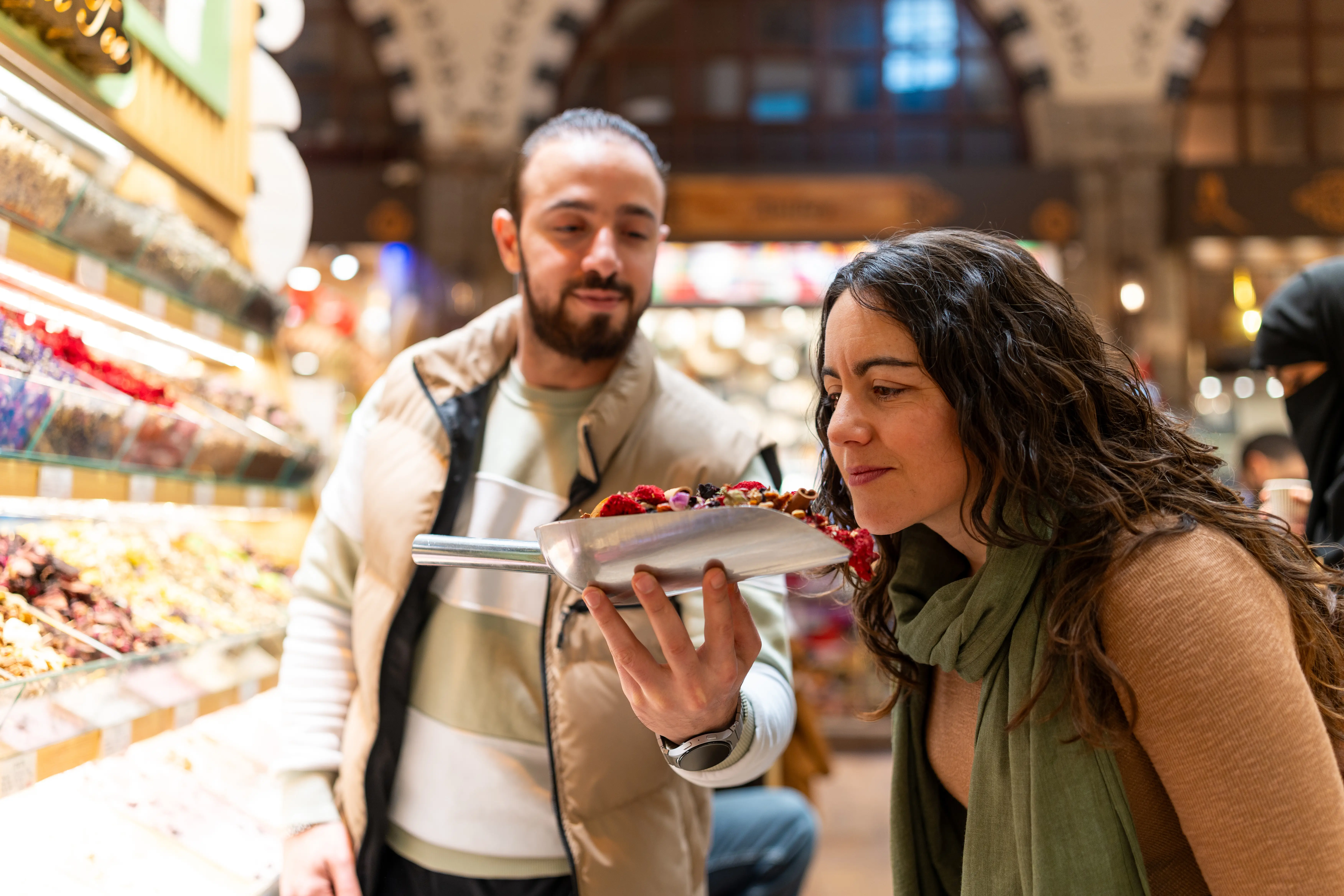
The Spice Bazaar interior. Beautiful and genuinely disorienting on a first visit if you are trying to buy something.
This is more people than admit it. If the idea of navigating the Spice Bazaar in your fourth language and haggling over Turkish delight fills you with low-grade dread, pay the 70 dollars and let someone else do it.
Who should skip it
Return visitors
If you have been to Istanbul before and eaten reasonably adventurously, a standard food tour will feel like a greatest-hits album. Skip the Kadıköy-market-and-meyhane format and look at Balat, Fener, or a dedicated seafood-focused walk instead. The best Istanbul food tours ranking flags which tours work for return visitors.
Long stays (seven days or more)
At a week or more, you have time to do your own food research, and the discovery itself becomes part of the trip. A tour on day one is still useful, but the math of “tour per day” stops working. Better to take one tour early and spend the rest of the week working a list.
Travelers on a tight budget
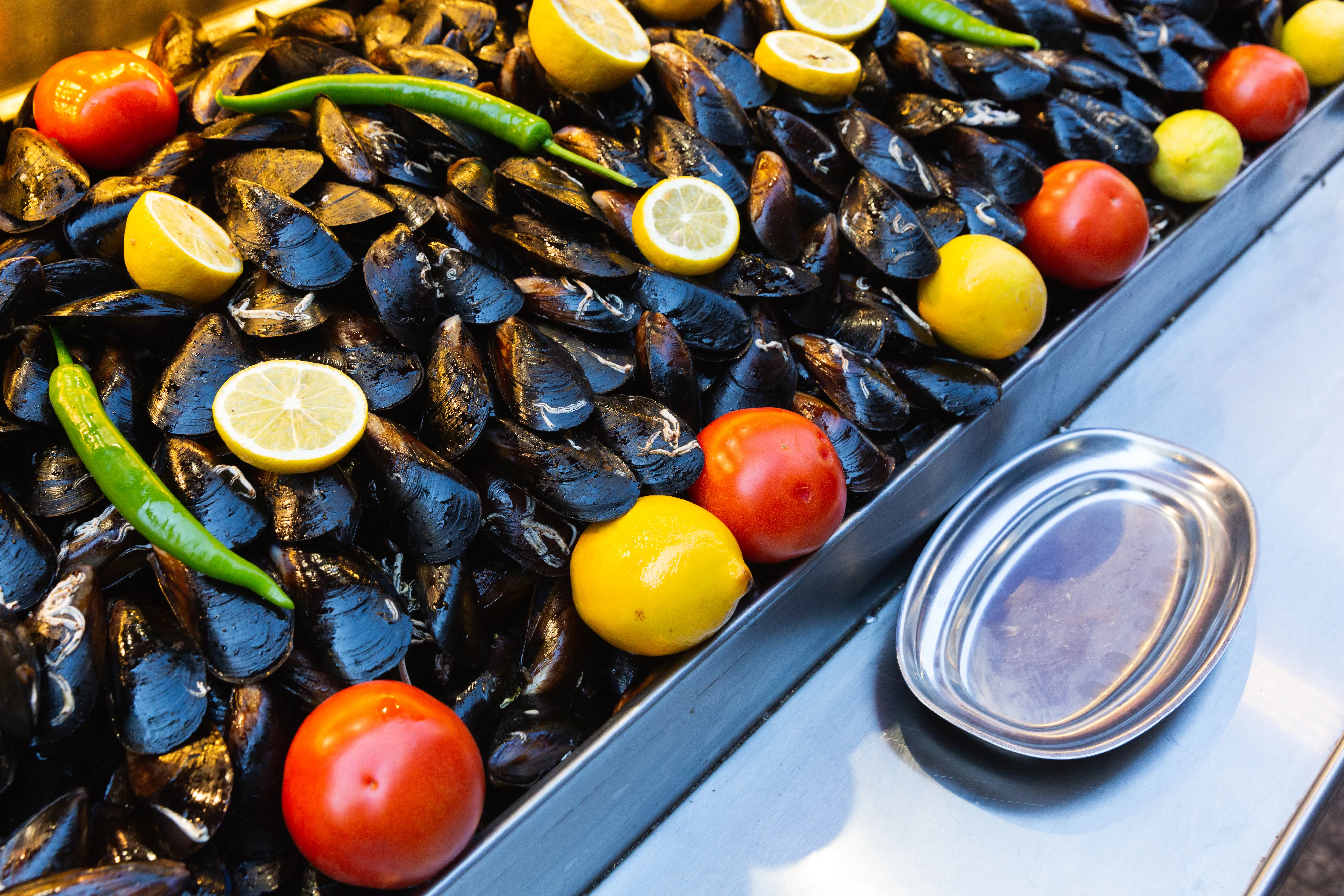
Midye dolma, about 70 cents each. You can build a very good Istanbul food day for the price of a sandwich at home.
Tours are not cheap. If you have 300 dollars total for food over a three-day trip, burning 75 dollars on a tour is a quarter of your budget. You can eat very well in Istanbul for 15 dollars a day, and the self-guided Istanbul food tour covers most of the same ground for the cost of the food itself.
Serious eaters
People who read restaurant criticism, know their Sichuan peppercorns, and travel specifically to eat have probably outgrown the format. A well-chosen meal at a chef-driven place (Çiya, or anything Musa Dağdeviren touches) will teach you more in two hours than a four-hour tour will.
The one situation where I would actively skip it
If you have a real dietary restriction (serious allergies, strict kosher or halal, coeliac) and you are trying to get it accommodated on a group tour, I would skip it. The format is designed around a fixed menu and a fixed route. Asking the guide to reroute around your constraints usually means you get pared-down versions of what the group is eating, or you watch a lot of things pass by your plate.
A private tour handles this without trouble. A group tour often does not, even when the provider says it will.
The cost question
Let’s do the napkin math. A group food tour averages 70 dollars for three to four hours and 8 to 12 tastings. If you did those same tastings on your own, you would spend roughly 20 dollars on the food. So you are paying about 50 dollars for the guide, the planning, and the context.
Is 50 dollars for four hours of expert-led time in a foreign city a good deal? By the standard of almost any other tour in any city, yes. Walking tours in European capitals run 40 to 60 dollars for two hours with no food.
The bad deal is not the tour. It is paying 70 dollars for a tour and then repeating the same ground (balık ekmek, Spice Bazaar, Turkish delight) on your own the next day, because the tour overlapped with your own plans. Front-load the tour on day one and use what you learned for the rest of the trip.
How to choose
If you are sold, the next question is which tour. The ranking of the best food tours in Istanbul keeps a running list with price breakdowns and which tour fits which kind of traveler. The short answer for most first-time visitors is a four to five hour tour that covers both the European and Asian sides. It gives you the broadest sample and includes a ferry crossing, which also works as a city orientation.
For context on the dishes themselves before you book, the Istanbul food guide is the primer.
Final thought
A food tour is not a substitute for eating in a city. It is a shortcut through the first 30 percent of the learning curve. If that shortcut is worth 70 dollars to you, take it. If you would rather learn it yourself, spend the money on three extra dinners and walk around.
Both are legitimate ways to eat Istanbul. Just do not pretend you did one while doing the other.
Keep reading
This is an editorial review. Some links on this page are affiliate links. If you book through them we may earn a small commission at no extra cost to you. It never changes which tours we recommend.